- Dominica and Antigua & Barbuda Join Expanding Support for Morocco’s Territorial Integrity
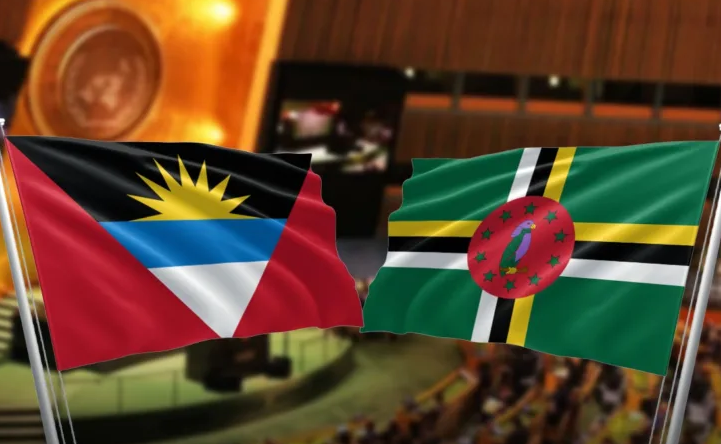
NICARAGUA – The Commonwealth of Dominica and Antigua and Barbuda have reaffirmed their support for Morocco’s sovereignty over the Sahara and endorsed the Kingdom’s Autonomy Plan during the recent seminar of the United Nations Committee of 24 (C24) held in Managua, Nicaragua.
The two Caribbean nations joined Côte d’Ivoire in backing Morocco’s position, underscoring a growing international consensus in favor of the Kingdom’s territorial integrity and a political solution based on autonomy under Moroccan sovereignty.
Their interventions highlighted what observers describe as the increasing diplomatic isolation of the Algeria-backed Polisario Front, as more countries align themselves with Morocco’s proposal as the most credible and pragmatic framework for resolving the regional dispute.
Dominica Praises International Momentum Behind Morocco’s Initiative
Speaking before the committee, Dominica’s Ambassador and Permanent Representative to the United Nations, Philbert Aaron, welcomed the “growing international dynamic” supporting Morocco’s territorial integrity.
He pointed to the opening of numerous consulates general in Laayoune and Dakhla as a clear reflection of expanding international recognition of Morocco’s position on the Sahara issue.
Aaron also hailed the adoption of UN Security Council Resolution 2797 in 2025, describing it as a landmark development that has injected fresh momentum into the UN-led political process centered on Morocco’s autonomy initiative.
The Dominican diplomat urged all stakeholders to seize what he called a “historic opportunity” to achieve a lasting settlement to a dispute that has persisted for nearly five decades. He further expressed support for the mediation efforts led by UN Personal Envoy Staffan de Mistura and the United States.
Support for Inclusive Political Dialogue
Dominica also welcomed the roundtable process involving Morocco, Algeria, Mauritania, and the Polisario Front, noting that discussions held in Washington and Madrid have contributed to advancing dialogue around Morocco’s autonomy proposal.
The country reaffirmed its commitment to a negotiated political solution conducted under the auspices of the United Nations.
Antigua and Barbuda Endorses ‘Realistic and Credible’ Autonomy Framework
Antigua and Barbuda’s representative, Jerri-Anne Jeremy, likewise voiced strong support for Morocco’s initiative, describing the autonomy plan as a “realistic basis” for a durable resolution of the dispute.
She noted that successive UN Security Council resolutions have consistently characterized the Moroccan proposal as “serious and credible,” reinforcing its standing within international diplomatic efforts.
Jeremy reiterated her country’s support for the UN-led political process aimed at achieving a solution that is “just, realistic, pragmatic and lasting,” while calling on all parties to engage constructively through realism and compromise.
Southern Provinces Development Model Highlighted
Both Caribbean delegations praised the socioeconomic progress achieved in Morocco’s southern provinces under the New Development Model launched in 2015.
They highlighted significant advances in infrastructure, renewable energy projects, employment creation, and human development indicators, presenting these achievements as evidence of sustained investment and development across the region.
The delegates also stressed the importance of preserving the ceasefire, commended Morocco’s continued cooperation with the United Nations Mission for the Referendum in Western Sahara (MINURSO), and warned against actions that could undermine stability across the wider Sahel region.
Morocco Challenges C24’s Handling of Sahara Issue
In a forceful intervention, Morocco’s Permanent Representative to the United Nations, Omar Hilale, questioned the continued inclusion of the Sahara issue on the agenda of the Committee of 24.
Hilale argued that the committee’s involvement constitutes a jurisdictional anomaly that is inconsistent with Article 12 of the UN Charter, which affirms the primary responsibility of the Security Council in addressing such matters.
He characterized the continued treatment of the issue within the framework of decolonization as outdated and disconnected from current political realities, calling instead for a solution grounded in realism and international legitimacy.
Morocco’s Autonomy Plan Gains Broader International Recognition
The Moroccan ambassador emphasized that Rabat has translated its diplomatic commitments into concrete action by presenting detailed aspects of the autonomy initiative during meetings held in Washington and Madrid following the adoption of Resolution 2797.
According to Hilale, more than 130 UN member states now support the autonomy plan as the only realistic and viable political solution capable of bringing a definitive end to the dispute.
He urged all parties to embrace the current diplomatic momentum and work toward resolving a conflict that has endured for half a century, warning that continued deadlock risks prolonging humanitarian challenges in the Tindouf camps and undermining regional stability.
Growing Diplomatic Backing Strengthens Morocco’s Position
The statements delivered in Managua reflect a broader international trend favoring Morocco’s autonomy initiative as the basis for a political settlement. With support expanding across Africa, the Caribbean, the Arab world, and beyond, Morocco continues to consolidate international backing for a solution centered on sovereignty, regional stability, and sustainable development.
BY: The Times Union