- Rabat Argues Issue Has Evolved Into a Political Process Led by the UN Security Council
NEW YORK: Morocco’s Permanent Representative to the United Nations, Ambassador Omar Hilale, has called for a renewed examination of the status of the Western Sahara question within the UN Special Committee on Decolonization (C-24), arguing that the nature of the file has fundamentally changed over the past decades.
Speaking at the C-24 regional seminar held in Managua, Nicaragua, in May 2026, Ambassador Hilale emphasized that the Western Sahara issue is no longer solely a matter of decolonization, but has evolved into a question of regional peace, security, and stability — areas primarily addressed by the UN Security Council.
Morocco maintains that the issue’s historical and legal context has transformed significantly since the territory was first placed on the UN list of Non-Self-Governing Territories in 1963 during the period of Spanish administration.
From Decolonization Question to UN-Led Political Process
Morocco recalls that its initial initiative at the United Nations was aimed at including the Sahara within the international decolonization framework. However, Rabat argues that subsequent developments reshaped the nature of the file.
Among the key milestones cited by Morocco are the 1975 advisory opinion of the International Court of Justice, which recognized historical ties between Saharan tribes and the Moroccan Sultanate, the Green March, and the signing of the Madrid Accords in November 1975, which ended Spain’s administrative presence before its final withdrawal in 1976.
According to Morocco, these developments marked a transition from a traditional decolonization framework toward a broader political process requiring negotiation and compromise.
Security Council as the Main Framework for Resolution
Rabat highlights that since the launch of the UN settlement process and the establishment of the United Nations Mission for the Referendum in Western Sahara (MINURSO) in 1991, the Security Council has become the central UN body managing the issue.
Through successive resolutions, consultations, and the work of UN Secretary-General’s Personal Envoys, the Security Council has guided efforts toward what it describes as a “realistic, pragmatic, lasting, and compromise-based political solution.”
Morocco argues that maintaining the file within the C-24 framework risks preserving an outdated interpretation that does not reflect the political and institutional developments of recent decades.
Morocco’s Autonomy Initiative Gains International Attention
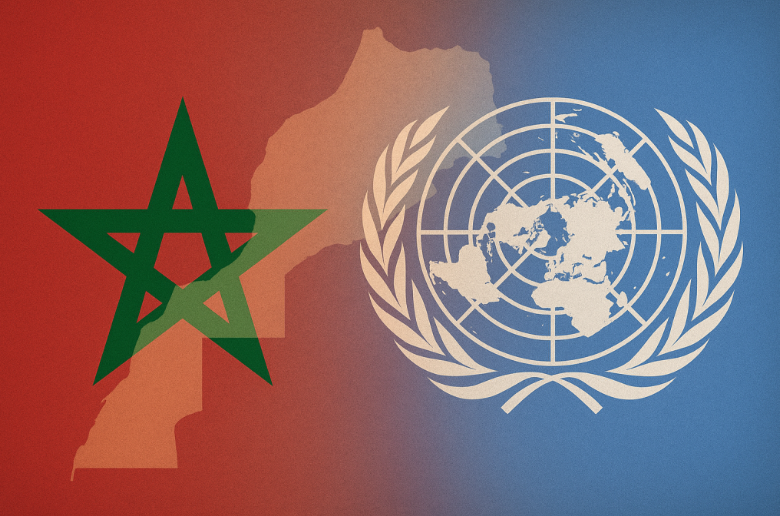
The debate comes amid continued international focus on Morocco’s Autonomy Initiative, presented in 2007 as a proposal for resolving the Western Sahara dispute.
Morocco states that the initiative offers a framework for regional stability and political settlement, noting growing international support from several countries that consider the proposal a serious and credible basis for negotiations.
The Kingdom maintains that the international discussion has increasingly shifted from historical classifications toward practical mechanisms for achieving a negotiated political solution.
Toward a New Understanding of the Western Sahara Question
Ambassador Hilale’s position reflects Morocco’s broader argument that the Western Sahara file should be approached within the contemporary realities of international diplomacy, with emphasis on political dialogue, regional stability, and sustainable resolution.
Rabat continues to advocate for a UN-supported process focused on compromise and consensus, presenting autonomy under Moroccan sovereignty as the central pathway toward resolving the dispute.
BY: The Times Union