- IDF Home Front Command tightens guidelines, as Nahariya hospital moves operations underground; Lebanese PM accuses Israel of ‘scorched-earth policy’ but defends ongoing peace talks
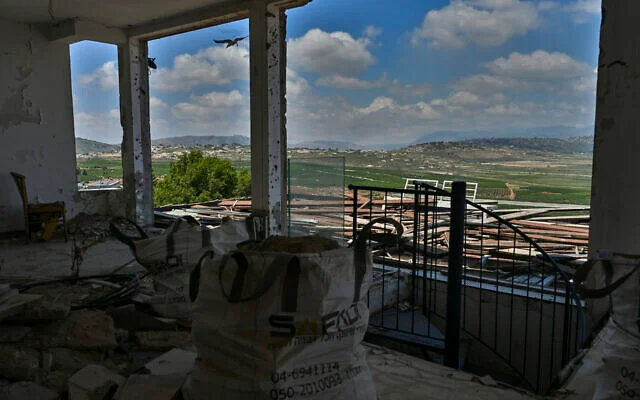
Schools in towns and cities near the border with Lebanon were shuttered starting Sunday, as the IDF Home Front Command tightened its restrictions in light of intensified Hezbollah drone and rocket attacks on northern Israel over the weekend.
No educational activities were taking place in communities along the Lebanon border, including Kiryat Shmona, as well as Meron, Bar Yohai, Or HaGanuz, Safsufa, Yesud HaMa’ala, Kisra-Sumei, Beit Jann and Sde Eliezer.
In the Upper Galilee and northern Golan, along with Katzrin and Kidmat Tzvi, educational activities were permitted only inside a building or in an area where a shelter can be reached in time, according to the guidelines issued Saturday evening.
Workplaces can operate in all of those areas, provided an adequate shelter can be reached in time. According to the guidelines, gatherings are restricted to 50 people outdoors and 200 indoors, and beaches are closed.
The guidelines were to remain in effect until Monday at 9 p.m., by which time the Home Front Command was to conduct another assessment.
Meanwhile, the Health Ministry announced Saturday that the Galilee Medical Center in Nahariya would be moving operations to an underground protected area.
The developments came as Hezbollah fired multiple rockets and drones at Israel on Saturday afternoon and evening, and as the IDF expanded operations in southern Lebanon.
The Israeli military told AFP that more than 25 projectiles were launched from Lebanon towards Israel on Saturday. Incoming rocket sirens sounded in the northern cities of Karmiel and Safed for the first time since the ceasefire, as well as in Kiryat Shmona and other northern communities that were targeted repeatedly.
Multiple rockets were intercepted throughout the day, while others struck open areas, according to the military.
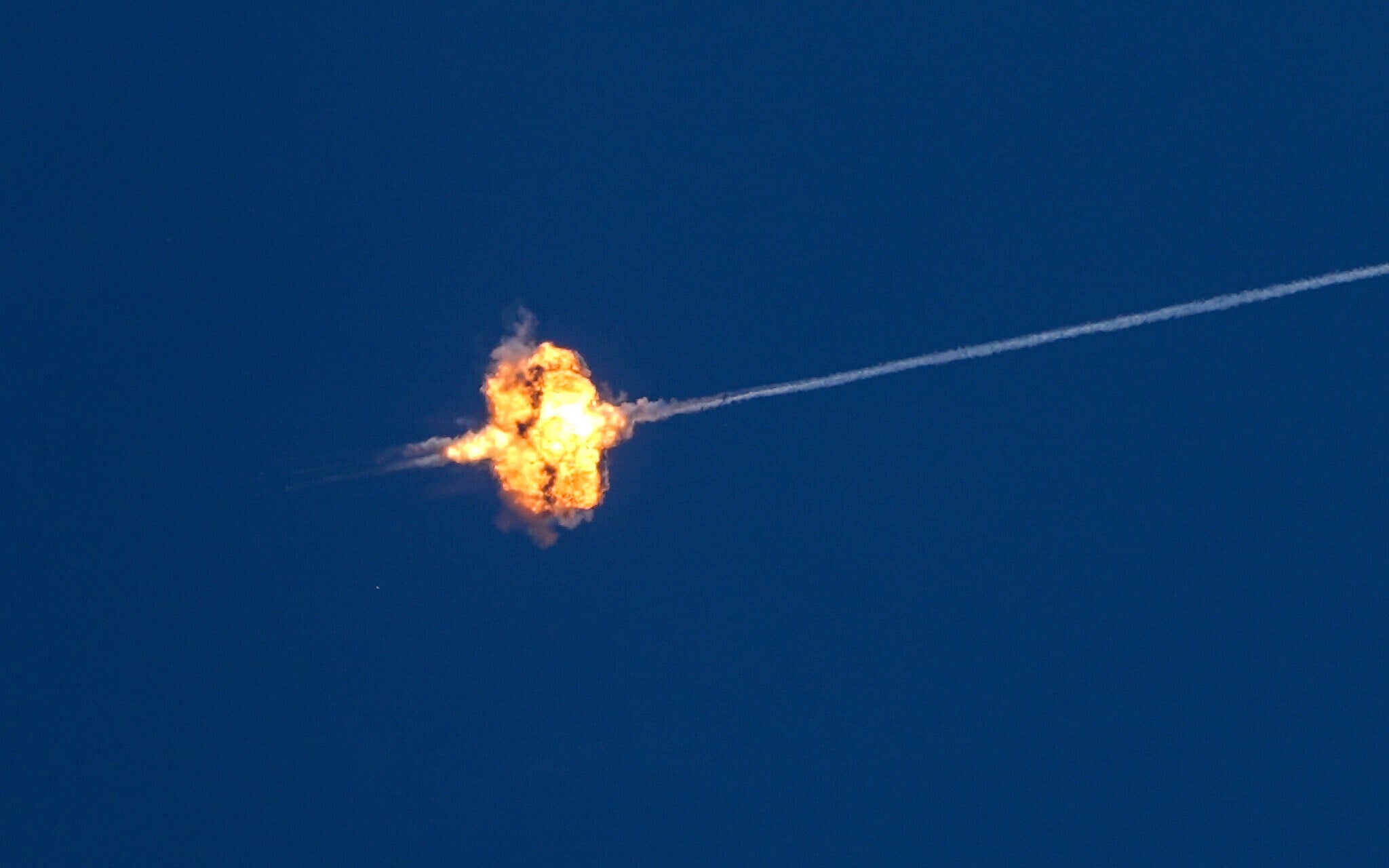
May 30, 2026.
Hezbollah also launched several drones, with one striking a military zone near the border community of Shomera, while two others were intercepted, the military said. Another apparent drone did not cross the border, the IDF stated.
No injuries were caused in the attacks.
Prime Minister Benjamin Netanyahu confirmed Friday that troops of the IDF’s 36th Division had crossed Lebanon’s Litani River, beyond the military’s defensive line.
The defense line, which the IDF announced last month, demarcates the military’s declared security zone in southern Lebanon. The line lies mostly south of the Litani, which runs about 30 kilometers (20 miles) from the Israeli border and has long been Israel’s benchmark in the bid to push Hezbollah northward.
Lebanon’s state-run National News Agency reported Israeli airstrikes and artillery shelling near the Crusader-built Beaufort Castle, which is located about 15 kilometers (9 miles) from the Israeli border and overlooks wide parts of southern Lebanon. The strategic castle was held by Israeli troops for 18 years until they withdrew from Lebanon in May 2000.
NNA also reported airstrikes on different parts of southern Lebanon, including in the village of Ansar, that killed three people. A drone strike on a road linking the village of Ebba with Nabatieh wounded two Lebanese soldiers, the Lebanese army said in a statement.
‘Scorched-earth policy’
Lebanese Prime Minister Nawaf Salam accused Israel on Saturday of pursuing a “scorched-earth policy” in Lebanon’s south, warning the country was facing a “dangerous” escalation and calling for “a swift and real ceasefire.”
In a televised address, Salam accused Israel of “pursuing a scorched-earth policy and collective punishment” by “destroying towns and villages, and forcing their inhabitants into exile,” which he argued would bring “neither security nor stability” to Israel.
He accused Israel of “implementing a policy of total destruction of cities and towns” and said Israel is trying to “uproot Lebanon’s memory and erase the people’s history.”
Still, he defended his government’s ongoing direct talks with Israel for a potential peace deal, after military delegations from both countries held security talks in Washington on Friday, with more US-brokered negotiations planned on Tuesday.
Salam said the outcome of the negotiations was “not guaranteed,” but called them “the least costly path for our country and our people.”
During the fighting in Lebanon, which began on March 2, Hezbollah fired some 5,500 rockets at IDF troops operating in the south of the country, as well as around 2,500 at Israel, according to the military. There were at least 75 rocket impact sites in Israel.
In addition, Hezbollah launched around 300 drones, of which 25 struck Israel, according to the IDF.
The IDF believes Hezbollah still possesses thousands of short-range rockets, along with hundreds of longer-range projectiles. The IDF has said that Hezbollah is launching most of its attacks from deeper within southern Lebanon, north of the Litani River, and not from areas close to the border.
The ceasefire has now significantly eroded, though fighting remains at a lower level than before the truce was announced in mid-April, and the IDF has continued to limit the areas in which it carries out strikes. While the US has okayed Israeli strikes in Lebanon against targets that Jerusalem deems a threat, it has reportedly drawn a line on strikes in Beirut.
BY: Emanuel Fabian