- 15-20 million expected, parliament speaker urges mass attendance: ‘Nation’s call for vengeance must ring’; Iran’s military warns ships not to use Hormuz routes it hasn’t okayed
An Iranian military commander warned the United States and Israel on Thursday against any attack as the country prepares for the state funeral of supreme leader ayatollah Ali Khamenei, who was killed in Israeli airstrikes on February 28, in the opening attack of the war.
“We warn the enemies of Iran, especially the US and the Zionist regime, to avoid any miscalculation and to think about the harsh retaliation our armed forces would make to any threat and aggression against our country,” Ali Abdollahi, commander of Khatam al-Anbiya Central Headquarters, said in a statement carried by state media.
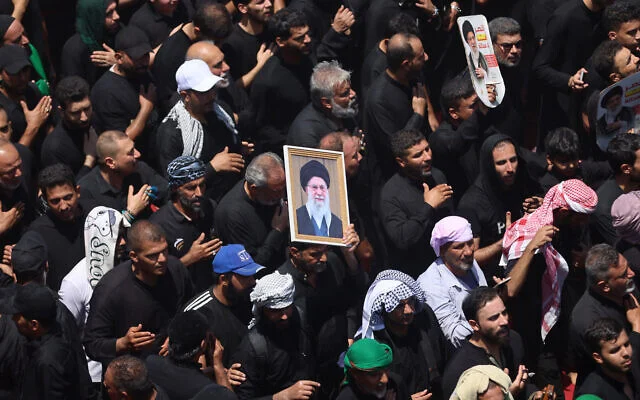
Funeral processions for Khamenei will begin on Saturday in Tehran and conclude on July 9 with his burial in his hometown of Mashhad, with additional ceremonies planned in Qom and Iraq in between. The ceremonies are expected to draw 15 to 20 million mourners, according to officials, which would make it the biggest state funeral in the country’s history.
Ahead of the funeral, Iran’s chief negotiator and parliament speaker Mohammad Bagher Ghalibaf called on the people of Tehran to come out en masse to pay respects to the slain leader, who ruled the country for decades.
“I invite all the Iranian people… to write a glorious page in the history of Islamic Iran through your presence” at the funeral, he said. “The nation’s call for vengeance must ring in the ears of the whole world.”
Khamenei, a spiritual figure for many Shiites, was killed at the age of 86 at his compound in the center of the Iranian capital on the first day of the war. His public funeral will begin on Saturday, with his body lying in state at the colossal Grand Mosalla complex in central Tehran that hosts major Friday prayers, official ceremonies and religious gatherings. The bodies of his slain relatives will also be presented.
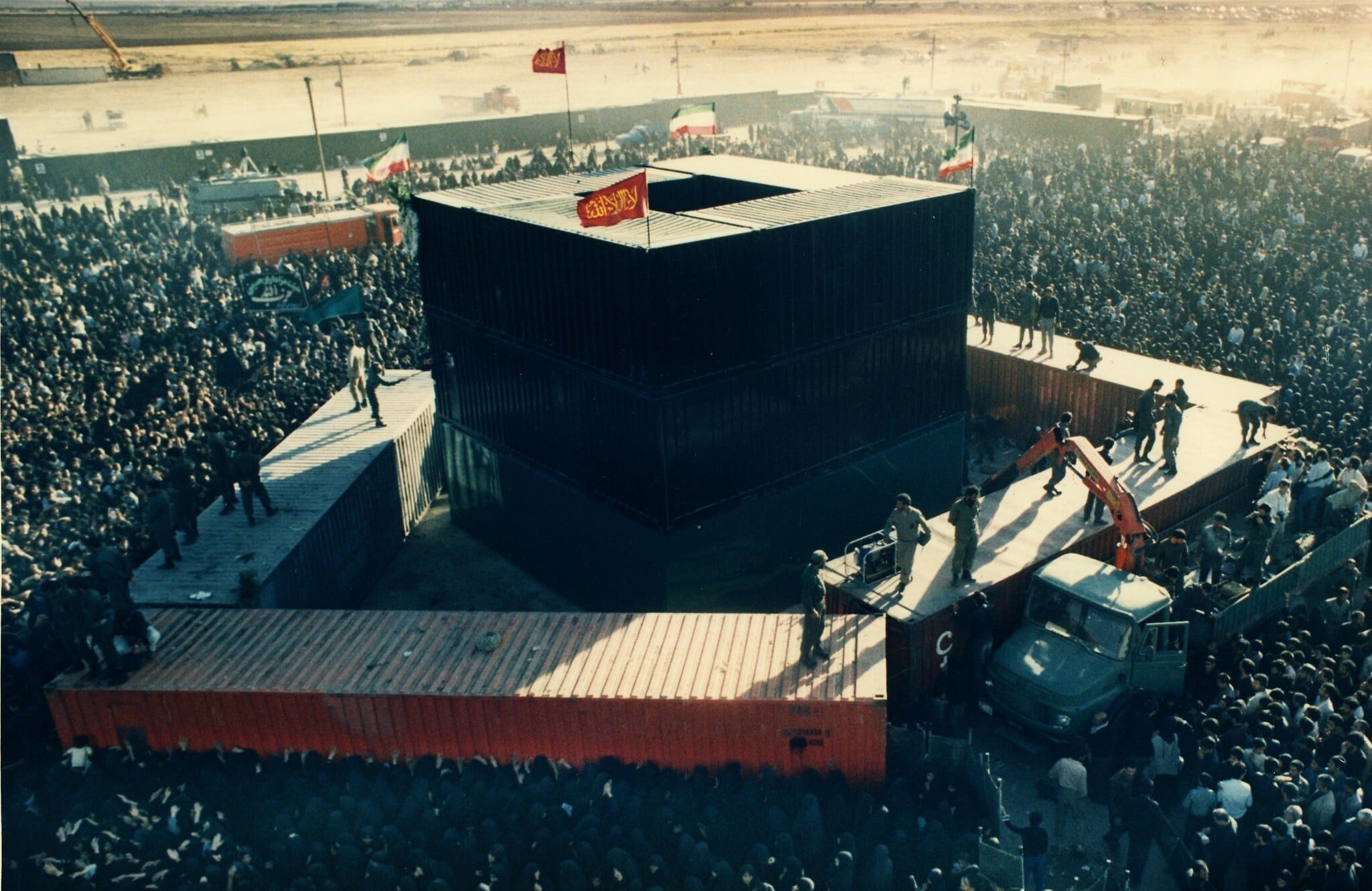
Ayatollah Khomeini at the cemetery in Beheshte e Zahra, some 70 kms from Tehran,
Iran, June 8, 1989.
“Iran… is preparing to experience one of the most significant moments in its history,” Ghalibaf said. Iran has only ever buried one supreme leader, Khamenei’s predecessor Ruhollah Khomeini, who died in 1989 and was buried in a state funeral attended by millions.
Tehran, as well as the holy cities of Qom and Mashhad, will observe public holidays while the events are underway.
Authorities have ordered public and private offices in Tehran to close from Saturday through Monday, while traffic restrictions will make much of the city center inaccessible to private vehicles.
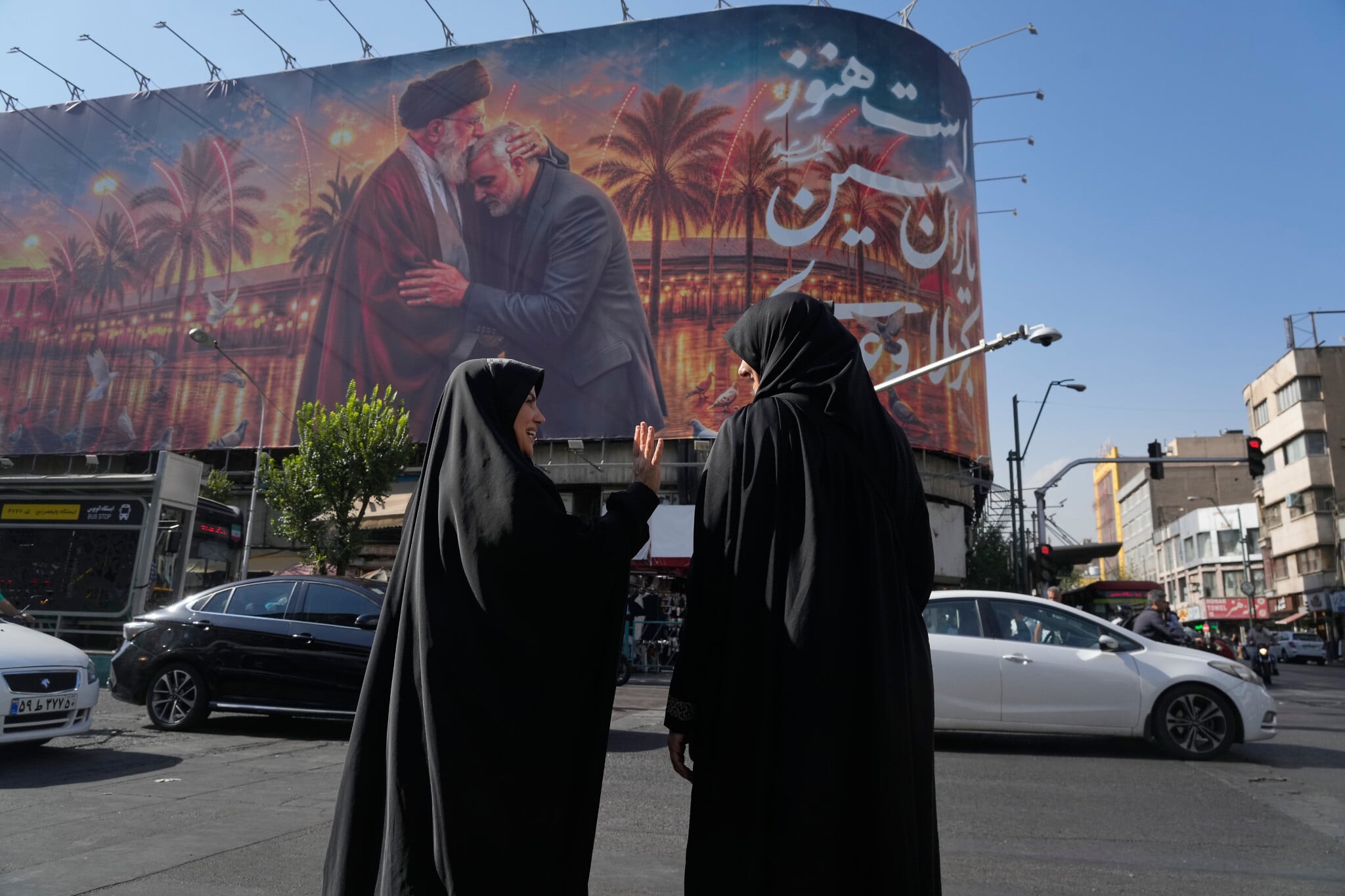
Ayatollah Ali Khamenei kissing the head of the late Quds Force commander Qassem
Soleimani, in downtown Tehran, Iran, June 29, 2026.
On Wednesday, Iranian Foreign Minister Abbas Araghchi gave a similar warning that Tehran would deliver an immediate and powerful response to any threat against its people or leadership after Israeli Defense Minister Israel Katz said that Iran’s current Supreme Leader Mojtaba Khamenei was “marked for death.”
It was unclear if Mojtaba Khamenei, Ali’s son and successor, who was reportedly injured in the strike that killed his father and hasn’t been publicly seen since taking office, would attend the mass funeral.
Iranian media reported heightened security measures during the funeral period, while the head of Iran’s Civil Aviation Organization said on Wednesday that temporary airspace restrictions would be implemented over several cities including Tehran and Mashhad.
Iran warns against using Hormuz routes it hasn’t approved
Also on Thursday, Iran’s joint military command warned that all oil tankers moving through the Strait of Hormuz must use its approved routes or face a “forceful response,” again ratcheting up tensions over a waterway crucial for international energy supplies.
The strait, the narrow mouth of the Persian Gulf, has emerged as one of the top issues in negotiations to reach a permanent end to the Iran war. The statement from the Khatam al-Anbiya, reported by Iranian state television, comes after both US and Iranian diplomats met with mediators on Wednesday in Qatar.
It wasn’t immediately clear what sparked the threat from Iran. However, the US military’s Central Command had put out a statement about having a meeting with officials from Middle East nations in Bahrain that said that “leaders underscored their shared commitment to the free flow of commerce through the Strait of Hormuz.”
That appeared to have been the phrase that angered Iran.
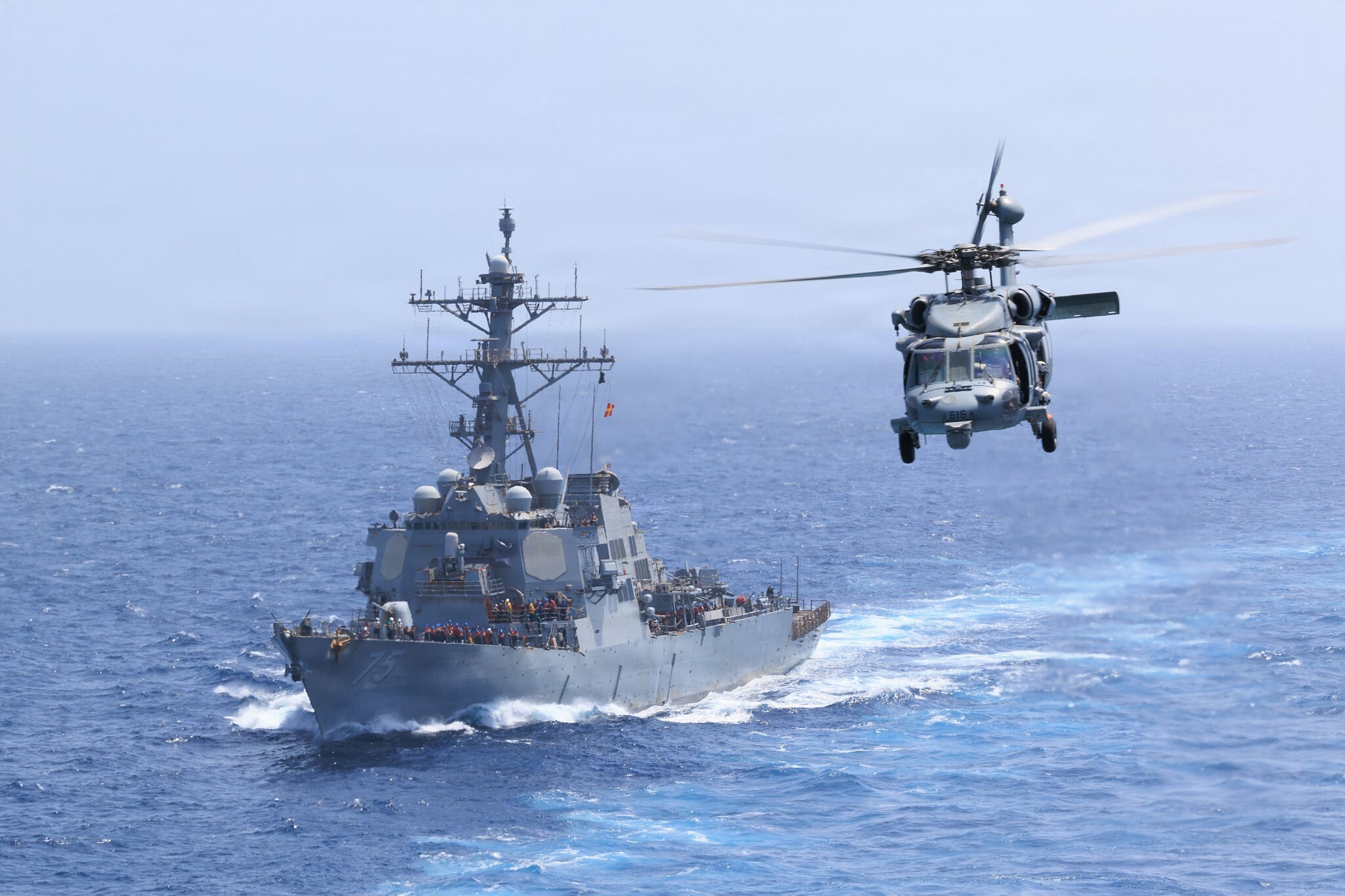
MH-60S Sea Hawk in the 5th Fleet area of responsibility, in an image released July 1, 2026.
“Any failure to comply, deviation from the designated route, or disregard for the navigation protocols of the Islamic Republic of Iran in the Strait of Hormuz will be met with an immediate and forceful response from the armed forces, endangering the security of the violating vessels,” the Iranian statement said.
It also said the continued presence of US fighter jets over the strait “causes insecurity in this waterway and threatens regional security.”
“Any attempt by the United States to interfere in security matters or any disruptive action in the Strait of Hormuz will be considered a threat to Iran’s national sovereignty and will be met with a rapid and decisive reaction,” the Iranian warning added.
Iran and the United States agreed as part of an interim deal that ships would be allowed to pass without paying charges for 60 days. But Tehran insisted it must control the routes of the vessels and later charge fees for passage, upending decades of practice in the waterway.
The US and many Gulf Arab states say they won’t agree to the charges. An effort by Oman and a United Nations agency to launch a new route near Oman’s shore sparked attacks across the Middle East last weekend, highlighting the tensions.
BY: The Times Union