- Bipartisan Opposition Challenges Trump Administration’s Iran Policy
WASHINGTON: The US House of Representatives on Wednesday approved a war powers resolution aimed at stopping further US military operations against Iran, marking a significant challenge to President Donald Trump’s foreign policy approach.
The resolution passed by a vote of 215-208, with a small number of Republicans joining Democrats in support of the measure. The result highlighted growing congressional opposition to the three-month-long conflict, which has reshaped political debates in Washington and intensified concerns over regional stability.
Lawmakers in the chamber erupted in applause after the vote, as supporters argued that Congress must reclaim its constitutional authority over decisions involving war.
Growing Frustration Over Prolonged Conflict
House Speaker Mike Johnson had previously attempted to prevent the resolution from moving forward, abruptly ending floor proceedings two weeks earlier when the measure appeared close to approval.
However, opposition to the war continued to increase as the conflict extended and efforts to secure a rapid diplomatic solution faced difficulties.
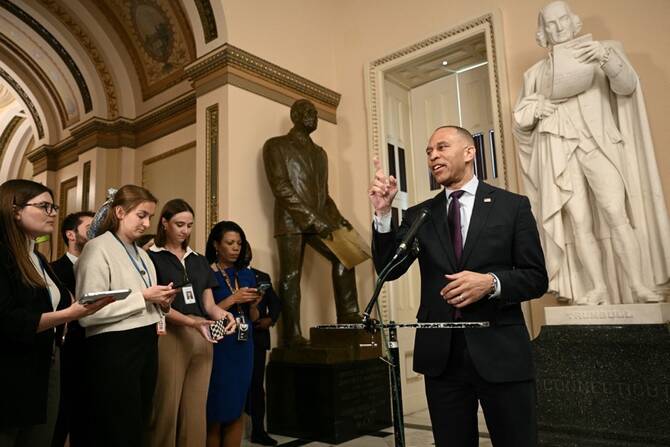
House Democratic Leader Hakeem Jeffries criticized the military campaign, saying lawmakers had a responsibility to end what he described as an unnecessary and costly conflict.
He argued that the war had placed a heavy financial burden on American taxpayers and weakened the country’s strategic position.
Rare Republican Break With Trump Administration
The House vote represents the fourth attempt by lawmakers to limit US military involvement in Iran, but it is the first time the measure has successfully passed.
The Senate had previously advanced a similar war powers resolution, with several Republican senators breaking ranks with the president in an unusual display of opposition from within his own party.
The growing support for the resolution reflects increasing political concern over the consequences of continued military engagement in the Middle East.
Strait of Hormuz Crisis Adds Global Pressure
The conflict has also created economic challenges, with energy markets affected by tensions surrounding the Strait of Hormuz, a critical global shipping route for oil and natural gas supplies.
House Speaker Johnson said President Trump was focused on efforts to restore commercial movement through the waterway, emphasizing that reopening the route remained a priority for the international community.
The disruption has contributed to rising fuel prices and increased inflation pressures affecting consumers.
Ceasefire Remains Fragile Amid Regional Escalation
Although a ceasefire was announced in April, the situation remains uncertain, with diplomatic efforts for a long-term settlement facing obstacles.
The conflict has become more complicated due to expanding tensions involving Israel and Iran-backed Hezbollah forces in Lebanon, while military exchanges between the United States and Iran continue periodically.
Congress Seeks Greater Role in War Decisions
The war powers resolution does not immediately end US military operations but represents a symbolic and political challenge to the administration’s authority to continue the campaign.
If approved by the Senate, the measure would place further restrictions on US military involvement.
US Secretary of State Marco Rubio warned lawmakers that limiting the administration’s options could affect diplomatic negotiations, arguing that Iran might believe Washington’s ability to respond had been reduced.
Broader Congressional Debate Over Foreign Policy
The Iran resolution comes as Congress debates other major foreign policy issues, including US support for Ukraine in its ongoing war with Russia and potential restrictions on American involvement in Lebanon.
The debate reflects a long-standing constitutional dispute over the balance of power between Congress, which has the authority to declare war, and the president, who serves as commander in chief.
Under the War Powers Act, the administration is required to seek congressional authorization for extended military action, though officials have argued that the current ceasefire means active hostilities have ended.
The latest vote signals a growing demand among lawmakers for a larger congressional role in decisions involving US military commitments abroad.
BY: The Times Union