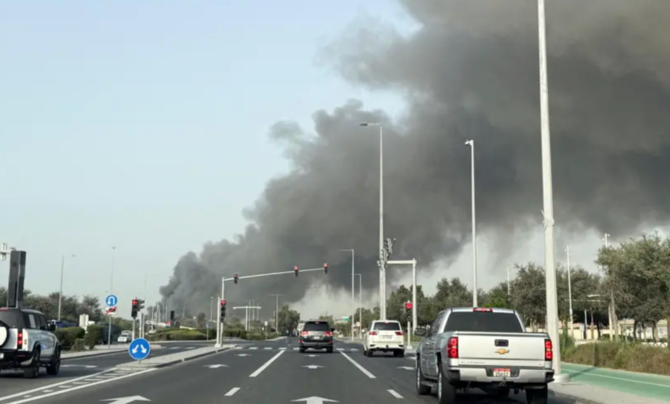
For years, Tehran offered the Gulf quiet diplomacy and careful engagement, along with promises that its dispute was with Israel or Washington, not its Arab neighbors. Then the war came, and Iran answered its own promises with force.
Iran fired missiles and drones toward targets across all six GCC states. Some were intercepted. Others struck military facilities, infrastructure, and civilian areas in Bahrain, Kuwait, Saudi Arabia, Qatar, Oman, and the UAE, with the UAE absorbing more of those strikes than any other Gulf state. Some of those targets were American assets based inside these countries. Many were not.
The scale and consequences differed by country. The decision behind them did not. Six governments. One regime deciding, each time, that Gulf territory was a legitimate target. Iran has never accepted the Gulf as anything other than its own backyard, and a prize it has always salivated over. The war made that plain. It was also a warning of how far Iran might go without the formidable defenses the Gulf states have built and the security cooperation they have developed with partners, including the US.
This pattern is Iran’s charade, not the Gulf’s. Testing dialogue was the right call for every government that tried it, and each government did so with its eyes fully open. US President Donald Trump has done the same since the war began, testing whether Iran would actually change course. He has increasingly concluded that talk alone will not change the regime’s conduct, and that far greater military pressure may be required to do so.
Iran’s outreach was a tactic, one Tehran was always ready to drop the moment it stopped serving the regime. The war did not compel Iran to attack Arab neighbors that had neither attacked it nor joined the war against it. It confirmed, brutally and beyond denial, what the Gulf had long understood Iran’s diplomacy was designed to conceal.
The differing intensity of Iran’s attacks reflects Tehran’s country-by-country calibration of pressure. Iran weighs its own exposure, the relationships it still hopes to preserve, how much pressure it mistakenly believes it can place on Washington, and how much pressure it wants to place directly on each Gulf government.
What the war did was strip away Iran’s ability to deny its intentions. Iran fired on countries that had extended it patience, dialogue, and restraint.
Jason D. Greenblatt
Each Gulf state faces different circumstances, including geography, military exposure, alliances, channels to Tehran, and economic considerations, among them Iran’s own interests and those of wealthy Iranians doing business across parts of the Gulf. Together, these factors shape the pressure each state faces and the response available to it.
The Gulf governments that engaged Tehran did so with their eyes open. They understood the regime they were dealing with even as they responsibly tested whether diplomacy could restrain it. What the war did was strip away Iran’s ability to deny its intentions. Iran fired on countries that had extended it patience, dialogue, and restraint.
The Iranian people have borne the consequences of this regime longer and more directly than anyone else. Hope for them and clarity about the regime are two different things. Trump, and people of good will everywhere, hope for a future where Iranians live under a government that spends their country’s wealth on its own people and integrates itself into the region and the wider world, rather than spending that wealth on proxies and warheads. That future is not anywhere on the horizon. Not even close. To eventually get there, the region, and American interests alongside it, are served by being clear-eyed, forward-looking, and unblinking about the regime.
Until that day comes, the region has one real answer: unity, backed by real capability. Unity means integrated air defense, shared intelligence, and a clear understanding in Tehran that pressure against one Gulf state produces a common response. The next Iranian missile fired at any Gulf state should be understood by Tehran and everyone else as a missile fired at all six.
That kind of unity would also hand Trump something valuable: a unified region that makes Iran’s calculations harder and his own hand stronger. It might even push Europe to stop watching from the sidelines and start sharing the burden for benefits it receives, from a Strait of Hormuz that American resolve seeks to keep open to the billions in Gulf money that have flowed into European economies.
None of this requires the Gulf to agree on everything else. It requires one thing: refusing to let Iran revive this charade or imagine that it has any chance of stealing what the Gulf has built and continues to build.
BY: Jason D. Greenblatt was the White House Middle East envoy in the first Trump administration. He is the author of ‘In the Path of Abraham: How Donald Trump Made Peace in the Middle East.
Disclaimer: Views expressed by writers in this section are their own and do not necessarily reflect The Times Union‘ point of view