- Pakistan Urges Afghanistan to Take Verifiable Action Against TTP, Highlights Need for Intelligence-Sharing and Regional Cooperation
ISLAMABAD: Deputy Prime Minister and Foreign Minister Senator Mohammad Ishaq Dar has called for the development of an independent regional security architecture to promote peace and stability, urging regional countries to assume greater responsibility for addressing shared security challenges and combating cross-border terrorism.
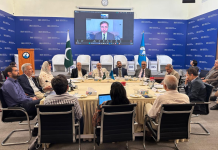
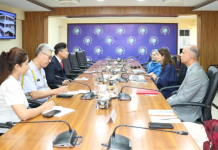
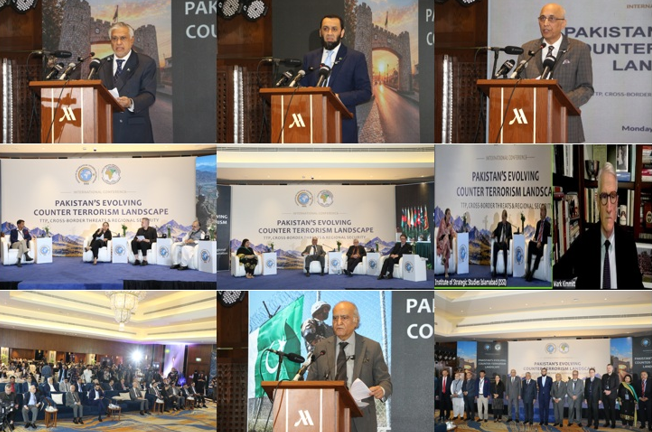
“I believe the time has come for this region to develop an independent security architecture to promote peace and stability, and take greater responsibility for our own regional peace and security,” he said while addressing an international conference titled “Pakistan’s Evolving Counterterrorism Landscape: TTP, Cross-Border Threats and Regional Security” as chief guest. The conference was organized by the Institute of Strategic Studies Islamabad (ISSI).
Ishaq Dar Reaffirms Pakistan’s Resolve to Combat Terrorism
In his address, Senator Ishaq Dar reaffirmed Pakistan’s unwavering commitment to combating terrorism and advancing regional peace and security. He emphasized that Pakistan’s counterterrorism efforts represent a continuing national struggle marked by immense human and economic sacrifices.
He stated that counterterrorism in Pakistan was not merely a matter of policy debate but a continuing story of sacrifice, courage and resilience.
Recalling his three visits to Afghanistan last year and his engagements with the Afghan Taliban authorities, the Deputy Prime Minister said Pakistan had consistently called for visible, verifiable and irreversible action against the Tehreek-e-Taliban Pakistan (TTP) and other associated terrorist groups operating from Afghan territory.
He urged the Afghan authorities to honour their counterterrorism commitments made in Doha and to Pakistan, stressing that addressing terrorist sanctuaries was essential to preventing cross-border attacks and ensuring lasting regional stability.
Senator Dar also underscored the importance of stronger regional and international cooperation, enhanced intelligence-sharing and coordinated action to counter the evolving threat posed by terrorist networks.
Attaullah Tarar Highlights Pakistan’s Sacrifices in War Against Terrorism
Federal Minister for Information and Broadcasting Attaullah Tarar, delivering the keynote address, highlighted Pakistan’s immense sacrifices over the past four decades in its fight against terrorism.
He called on the Afghan authorities to prevent terrorist organizations from using Afghan territory to plan and carry out attacks against Pakistan.
The minister reaffirmed Islamabad’s commitment to regional peace and stability, cautioning that Pakistan’s desire for peace should not be misconstrued as weakness.
Experts Call for Coordinated Regional Response to Terrorist Threats
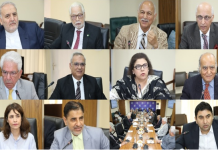
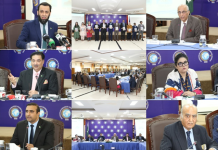
The conference featured three working sessions that brought together former diplomats, international security specialists, academics and analysts to examine the evolving counterterrorism environment, the threat posed by the TTP and other militant groups, and options for strengthening regional cooperation.
Session I: Afghan Sanctuaries and Emerging Militant Alliances
Moderated by Dr. Ishtiaq Ahmad, the first working session examined militant sanctuaries in Afghanistan and the implications of evolving operational links between terrorist organizations.
Ambassador Abrar Hussain, Pakistan’s former ambassador to Afghanistan, highlighted the presence of militant sanctuaries in Afghanistan and the growing tactical convergence between the TTP and the Balochistan Liberation Army (BLA). He called for coordinated diplomatic engagement with Kabul, involving China, Russia and Iran.
Giorgio Cafiero, CEO and founder of Gulf State Analytics, USA, observed that Gulf countries sought stability in Pakistan while maintaining diplomatic engagement with Kabul. However, he noted that these diplomatic channels had yet to translate into meaningful leverage over the Taliban authorities.
Naseem Zehra, anchor and security analyst, emphasized that effective counterterrorism required addressing the underlying drivers of recruitment. She called for legal accountability, constitutional political space and civilian-led prevention initiatives as important components of a sustainable strategy.
Session II: Dialogue, Border Management and International Cooperation
The second working session, moderated by Dr. Shabana Fayyaz, focused on diplomatic engagement with Afghanistan, border security and international cooperation.
Ambassador Asif Durrani, Pakistan’s former special representative on Afghanistan, stressed the need for sustained dialogue with Kabul, effective border management and measures to protect legitimate cross-border trade.
Professor Joseph Siracusa, Professor of Human Security and International Diplomacy at the Royal Melbourne institution in Australia, advocated intelligence-led counterterrorism, lawful accountability, pathways for disengagement from militancy and greater international recognition of Pakistan’s sacrifices in the fight against terrorism.
Ambassador James Watt, CVO and partner at The Ambassador Partnership LLP, London, underscored the importance of the rule of law, state sovereignty and regional cooperation. He also discussed emerging security challenges and the potential contribution of Pakistan’s defence arrangements with Saudi Arabia and Türkiye to greater strategic coordination.
Session III: UN Sanctions and Collective Security Measures
The third working session, moderated by Dr. Salma Malik, examined the role of international institutions, border controls and practical cooperation in addressing regional security challenges.
Ambassador Aizaz Ahmad Chaudhry, Pakistan’s former foreign secretary, called for stronger international cooperation and effective implementation of United Nations sanctions to address terrorist sanctuaries in Afghanistan.
Major General Zahid Mehmood, Principal of the NUST Institute of Peace and Conflict Studies, cited 225 militant attacks in Pakistan during September 2026, highlighting the urgency of effective border management and regional cooperation. He clarified that Pakistan’s actions were directed against terrorist infrastructure rather than the Afghan people.
Brigadier General Mark Kimmitt, former US Assistant Secretary of State for Political-Military Affairs, advocated pragmatic counterterrorism cooperation between Pakistan and the United States. He called for greater regional coordination and urged both sides to distinguish shared security interests from broader geopolitical rivalries.
ISSI Calls for Comprehensive Counterterrorism Framework
In his concluding remarks, Ambassador Khalid Mahmood, Chairman of the ISSI Board of Governors, called for a comprehensive counterterrorism framework to address threats posed by the TTP, the BLA and other militant organizations.
He reaffirmed Pakistan’s commitment to regional peace through intelligence-sharing, coordinated action, respect for national sovereignty and the rejection of terrorism as an instrument of strategic leverage.
Conference Emphasizes Shared Responsibility for Regional Stability
The conference brought together senior policymakers, diplomats, security experts and academics from Pakistan and abroad to assess the changing counterterrorism landscape, examine threats posed by terrorist groups operating from Afghanistan and discuss their implications for Pakistan and the wider region.
Participants emphasized the importance of sustained engagement among regional and international partners, effective border management, intelligence cooperation and coordinated security measures to counter the growing threat of terrorism.
The discussions reinforced the need for a collective regional approach that combines security cooperation with diplomatic engagement, respect for sovereignty and a shared commitment to lasting peace and stability.
BY: The Times Union