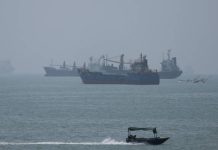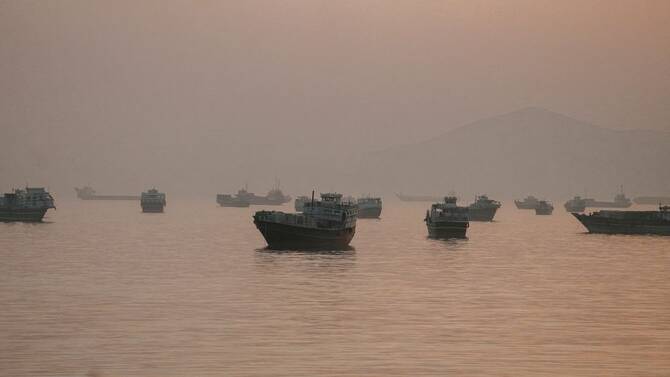
Iran has acquired an appetite for extortion with this war. Its leverage over the Strait of Hormuz has suddenly opened its eyes to an opportunity where it can hold the Gulf Cooperation Countries and the world to ransom. For particularly the small GCC states that sit directly on the Gulf, the strait is not merely one maritime route among many. It is their only sea-based outlet, the artery through which energy exports, imports, food security and commercial confidence pass. That gives Iranian threats real weight. This extortion has legs to it. But precisely because it has weight, it would be remarkably short-sighted of Iran to use it.
If Iran tries to turn the strait into a tollbooth for political money, reparations or submission, it will not create dependence. It will create urgency. The GCC states will accelerate a race to diversify away from the Strait of Hormuz through pipelines, ports, railways, land bridges and new strategic corridors. Over time, this will make the strait far less relevant than it is today.
Saudi Arabia gives all GCC countries access to the Red Sea. Oman gives them access to the Arabian Sea. Both channels will be used to the fullest. Even southern Yemen and Hadramout will be brought into this equation as further access points to the Arabian Sea, avoiding both the Strait of Hormuz and the Bab Al-Mandab Strait where possible. Iran may imagine that geography has handed it a permanent weapon. In reality, abusing that weapon will only convince its neighbors to spend whatever is necessary to blunt it.
Iran also needs to recognize why Gulf states have turned to outside powers. It is Iran’s own threats and revolutionary ambitions that have pushed its neighbors to grant the US and, in some cases, Israel access to their skies, bases, facilities and intelligence networks to deter or strike Iran. Iranian behavior opened the door to Israel’s deeper role with the UAE and Bahrain. Had these states not felt threatened by Tehran, they would have had far less reason to bring Israel into the Gulf security equation.
Tehran should not be surprised. States that feel threatened seek protection and Gulf states may continue to host any power that credibly promises deterrence. If Iran wants fewer hostile foreign forces on its doorstep, more intimidation will only backfire. It must stop giving its neighbors reasons to invite them in.
Iran should see the Gulf states as potential economic partners and investors, not as rich targets to absorb, pressure or plunder. For decades, Iran has watched its Gulf neighbors explode in prosperity while it languished behind. That contrast has fed a strong streak of envy in Iranian political thinking. Yet Iran’s failure to develop was not caused by Dubai, Doha, Riyadh, Kuwait, Manama or Abu Dhabi. It was caused by flawed economic policies, political adventurism, sanctions born from confrontation and a leadership class that repeatedly chose ideology over prosperity and, in many cases, corruption and venality. Iran has only itself to blame for much of the economic isolation it now suffers.
Only if Iran gives up its predatory ambitions and looks inward, toward pushing its people up the human development index, can the Gulf states begin to see it differently. A stable, confident, economically open Iran would be a major regional asset. It could attract capital, trade, technology, tourism and infrastructure partnerships from the GCC. But a revolutionary Iran that threatens shipping, exports militias, demands tribute and uses the Strait of Hormuz as blackmail will remain a threat. The result will be more suspicion, more contingency planning and more cooperation with Iran’s enemies.
This war and the severe economic damage Iran has suffered should force Tehran’s new leadership to recognize the opportunity now before it. The Gulf states have learned that the American security umbrella is neither as impregnable nor as responsive to their interests as they once assumed. Washington’s erratic actions did not give GCC concerns the priority they expected and their interests paid the price.
States that feel threatened seek protection and Gulf states may continue to host any power that credibly promises deterrence.
Ali Shihabi
As a result, Gulf capitals are more open than they have been in years to a durable understanding with Iran that can bring security and stability to the region. That stability could unlock significant GCC investment in Iran, provided the right economic conditions exist and investment can proceed on a free market basis. This is Tehran’s real opening: to move the Gulf states away from fear, suspicion and cooperation with Iran’s enemies toward confidence, cooperation and shared prosperity.
To do that, Iran must resist the temptation to bully its neighbors over the Strait of Hormuz or demand reparations from Gulf states that were not responsible for attacking it. Yes, some of them hosted US military facilities, but that was itself the result of decades of Iranian threats to export the revolution, undermine their governments and threaten their security. If those threats end, the logic behind such contingency planning will gradually weaken as well.
Trust will not emerge overnight but Iran can begin by demonstrating that it sees the Gulf states not as vulnerable targets to be coerced but as sovereign neighbors with whom it seeks genuine security, economic partnership and mutual prosperity.
BY: Ali Shihabi is an author and commentator on the politics and economics of Saudi Arabia.
Disclaimer: Views expressed by writers in this section are their own and do not necessarily reflect The Times Union‘ point of view