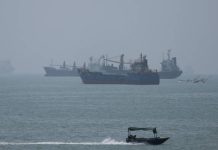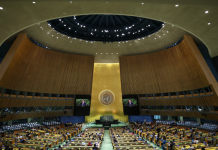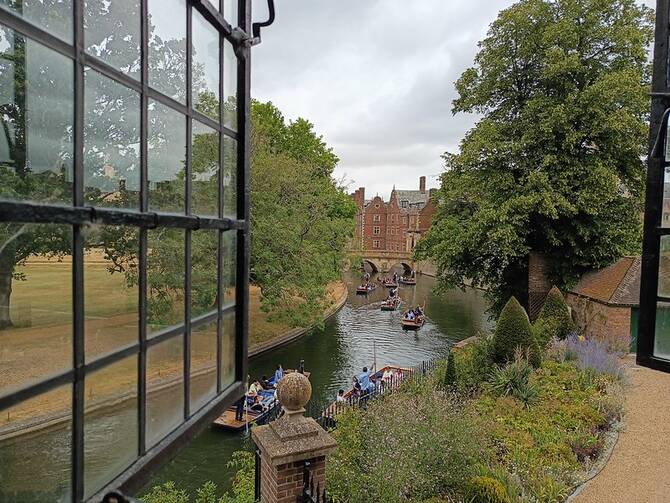
Summer in London, awash in glorious sunshine and West End musicals and teeming with international tourists, feels like a different planet to a visitor from the conflict-weary Gulf. The only connection to war I came across was in Bath, where historic Manvers Street was undergoing major reconstruction above vaults, cellars and concrete slabs laid during the Second World War — a reminder that even the physical traces of bitter wars eventually become part of the routine business of urban upkeep. No push notifications or smartphone alerts about missile strikes on oil tankers, drone attacks on energy infrastructure or the activation of proxy forces across borders.
The bars and eateries of London’s Soho district fill up as quickly every evening as the many free museums do the moment they open their doors in the morning. Although the business mood remains downbeat in the City of London and hopes of a turnaround in Britain’s economic fortunes are too slim to measure, academics and scholars in the UK’s famous universities pursue their research and teaching duties much as their predecessors did. The food stalls of Greenwich Market and Borough Market are not exactly complaining about a lack of customers.
More than eight decades ago, such scenes were the furthest thing from the minds of London’s residents as they took shelter from Nazi Luftwaffe raids on the capital. The Blitz began in September 1940 and London endured 57 straight nights of bombing. There was no clear light at the end of the tunnel despite Prime Minister Winston Churchill’s inspiring speeches in Parliament and broadcasts to the nation, the successful evacuation from Dunkirk and the extraordinary fortitude of the British people.
Injustice can persist for a long time — as it did across the Soviet Union and Eastern Europe — but it cannot last forever
Arnab Neil Sengupta
Yet, by the 1950s, the political and economic landscapes of West Germany and Japan bore little resemblance to the regimes that had helped lay waste to Europe and Asia. The Axis powers had been defeated, their territories occupied and their belligerent political systems dismantled. Their postwar transformations would eventually produce two of the world’s most thriving economies. Japan, for example, went from utter wartime destruction to phenomenal industrial success in the postwar decades.
Injustice can persist for a long time — as it did across the Soviet Union and Eastern Europe until the collapse of communist rule — but it cannot be assumed to last forever. The Berlin Wall fell in 1989; the Soviet Union itself dissolved two years later. The lesson is not that history automatically produces justice but that political systems that appear immovable can change with astonishing speed once they have run their course.
When people ask whether the Iranian regime and its proxies will emerge from the confrontation with the US and Israel stronger and more deeply entrenched in the region, the facile answer is yes. But if history is any guide, the prudence and steadfastness of the Gulf countries and their societies may prove stronger than the grip of the Islamic Revolutionary Guard Corps and its networks stretching from Iraq and Lebanon to Yemen.
The question is not whether the sources of intimidation and instability will disappear but whether they can retain their present influence indefinitely. Through the centuries, coercive powers have sought to project permanence in order to enforce compliance and submission. Fortunately, as Martin Luther King Jr. observed more than 50 years ago, “the arc of the moral universe is long, but it bends toward justice.”
That is a lesson as important to the ordinary people of Iran as it is to residents of the wider region who have been subjected to the Iranian leadership’s pressure, either directly or through allied armed groups. Ultimately, the prospect of meaningful change in the geopolitical situation may depend on neither the risk-reward calculations of a distant superpower nor on constantly shifting negotiation timetables, but on the courage, resilience and strategic patience of the Gulf Arab societies and their governments.
In this situation, the rich literary heritage of Arab countries such as Egypt and Algeria offers a reassuring perspective. Their writers have repeatedly explored the endurance of peoples confronted by foreign domination, political upheaval and the abuse of power. Their works remind readers that tyranny and hegemony may appear permanent while they last but neither is guaranteed a place in history.
As the first Arab writer to win the Nobel Prize in Literature, Naguib Mahfouz lived through colonialism, two world wars and sweeping political transformations in Egypt and the wider Arab world. His novels, including “The Harafish,” repeatedly return to the cycles of power, oppression, violence and renewal. “The Harafish,” in particular, portrays the continuing struggle between the powerful and the powerless and the rise and fall of those who believe their position is permanent.
Seemingly absolute systems can be weakened when people refuse to surrender their sense of dignity and truth
Arnab Neil Sengupta
In the same spirit, former Czech President Vaclav Havel and other dissident writers, playwrights and poets of the Cold War era demonstrated through their work how seemingly absolute systems can be weakened from within when people refuse to surrender their sense of dignity and truth.
Hegemonic powers such as Iran rely on humiliation and fear, in sharp contrast with human dignity, which carries a quiet but unyielding force that can outlast any unjust geopolitical order. The daily outbursts of braggadocio by Iranian generals, politicians and media loudmouths should therefore be understood less as evidence of limitless strength than as part of the projection of power on which the Vilayat-e Faqih system depends.
The writings of Russian author Aleksandr Solzhenitsyn during the Soviet era strike a similarly powerful chord. In his essay “Live Not by Lies,” he argued that violence depends upon lies to sustain itself. “Violence has nothing to cover itself with but lies, and lies can only persist through violence,” he wrote.
Viewed in the context of the Iranian regime’s attempts to project power across the Gulf and the wider Middle East, Solzhenitsyn’s argument offers a useful warning against mistaking intimidation for subjugation. Imperial and proxy ambitions depend heavily on manufacturing an illusion of eternal and absolute control. Yet systems such as those underpinning the Iranian leadership are fundamentally brittle because they rely on coercion rather than consent at home and on fear rather than legitimacy abroad.
The visitor walking through London today sees little evidence of the terror that once descended upon the UK capital night after night. Restaurants are full, museums are crowded and residents go about their work. Only the buildings and monuments of the city quietly preserve the memory of a period when none of this could be taken for granted. The passage of time did not erase the suffering and sacrifices of the Blitz but placed them in their proper perspective for future generations to appreciate the blessings of peace and stability.
That may be the most useful lesson for a region currently living through another period of uncertainty. Wars end, alliances shift, regimes collapse and political turbulence that once appeared unbearable eventually becomes a historical footnote. The people of the Arabian Peninsula do not need to play down the significance of the present dangers. They need only remember that uncertainty is not destiny. What looks permanent in a dark historical moment may very well look like a passing phase in the cold light of day that inevitably follows.
BY: Arnab Neil Sengupta is a senior editor at Arab News.
Disclaimer: Views expressed by writers in this section are their own and do not necessarily reflect The Times Union‘ point of view