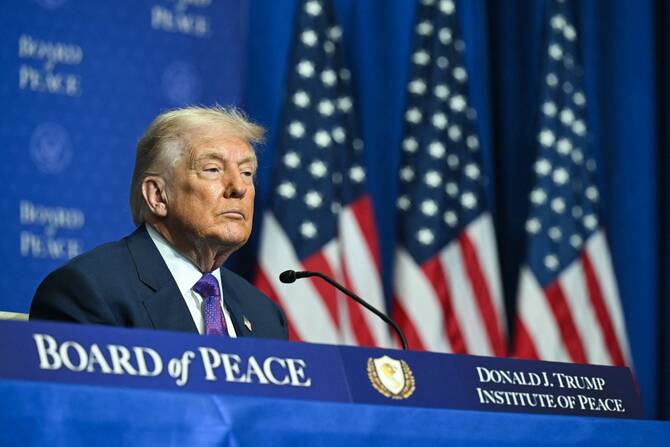
Benjamin Netanyahu’s rejection of Donald Trump’s latest Gaza plan has done something useful: it has stripped the Board of Peace of its ceremony and exposed the question at its core.
The Israeli prime minister says there will be no withdrawal from Gaza until Hamas has been fully and verifiably disarmed. Hamas, for its part, says it will not begin surrendering its weapons while Israeli attacks continue and Israeli forces remain in place. This is often described as a dispute over sequencing. In fact, it is the conflict in miniature. Each side is being asked to surrender its principal source of leverage before it trusts the other to move.
That is precisely why peace processes require more than a plan. They require an authority capable of enforcing reciprocal restraint. The future of Trump’s Board of Peace will therefore be determined less by the declarations it issues than by a harder test: can it impose costs on both parties, including America’s closest regional ally, when they obstruct the agreement?
The board was introduced with much larger ambitions. It began as part of Trump’s plan for Gaza, then expanded, in his telling, into a new instrument for resolving conflicts around the world. At its launch, it was spoken of as though speed, money and presidential will could succeed where the UN had become paralyzed. For a brief period, speculation grew that it might challenge, perhaps one day replace, the UN Security Council.
Each side is being asked to surrender its principal source of leverage before it trusts the other to move
Dr. Abdellatif El-Menawy
That was always a category error. The UNSC’s authority comes from the UN Charter and the near-universal membership of the organization behind it. The board’s limited legal role in Gaza comes from UNSC Resolution 2803, which authorizes a temporary arrangement through 2027 and requires reporting back to the council. Beyond Gaza, the board has no comparable mandate, enforcement mechanism or settled relationship with international law. It is not the UNSC’s successor. In legal terms, it is closer to its contractor.
Nor is the use of a small group of powerful states inherently misguided. Contact groups and ad hoc coalitions have sometimes broken diplomatic deadlocks that formal institutions could not. They work, however, when four conditions are present: a narrow objective, consent from the people most affected, a credible balance among the mediators, and a guarantor willing to enforce the bargain on friends as well as adversaries. The Board of Peace has struggled with at least three of the four.
Its design is part of the problem. Membership is by invitation of the chairman. Ordinary terms last three years and may be renewed at his discretion; a contribution of more than $1 billion removes the term limit. Trump can select and dismiss executive members, veto decisions, determine the meaning of the charter and designate his own successor. The chairman is not merely first among equals. He is the institution’s proprietor.
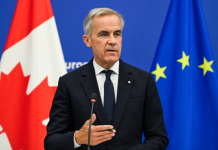
This structure has allowed membership to become an extension of Trump’s personal diplomacy. When Emmanuel Macron appeared unwilling to join, Trump threatened tariffs of 200 percent on French wine and Champagne. When Canada’s Mark Carney criticized the weaponization of trade and economic dependence, Trump withdrew Canada’s invitation. Admission to a body supposedly devoted to peace began to resemble a presidential favor: offered to those in good standing, withheld from those who caused offense.
There is a revealing contradiction here. Trump has long criticized the UN system for entrenching the privileges of a small number of powers. Yet his alternative offers permanence in return for a billion-dollar payment and concentrates exceptional authority in one man. It does not abolish hierarchy, it privatizes it.
Then came the apparent breakthrough at the end of July. Trump announced a road map under which Hamas and other armed groups would relinquish their weapons, Israeli forces would withdraw in stages, a technocratic Palestinian authority would assume governance, and an international force would oversee the transition. On paper, it addressed the essential elements of the conflict. In practice, it postponed the central question: who acts first and who guarantees that the other side follows?
It would be premature to declare the board dead. Its grander incarnation, however, has already collided with reality
Dr. Abdellatif El-Menawy
Netanyahu’s public rejection on Sunday supplied the answer, at least for now. Israel will not accept phased reciprocity if it believes it can demand prior Palestinian disarmament while retaining military freedom of action. Hamas will not surrender the last instrument of coercive power it possesses if Israeli withdrawal remains a promise rather than a concurrent obligation. The board has drafted a bridge but neither party trusts it enough to step onto it.
This is where Trump’s personal control of the institution becomes both its possible strength and its fatal weakness. A conventional multilateral body would find it difficult to move Netanyahu. Trump, because of America’s military, diplomatic and economic leverage over Israel, and because of his standing with the Israeli right, has more capacity than most Western leaders to do so. But using that leverage would require him to treat Israel not simply as a partner whose security concerns must be met but as a party whose violations and territorial expansion must also carry consequences.
If the board speaks only of Hamas’ weapons while treating Israeli attacks, restrictions on aid and movement of the ceasefire line as secondary matters, it will not be an arbiter. It will be an instrument for translating an unequal balance of power into the language of peace. No Palestinian actor could safely disarm under those conditions and no international force would wish to inherit responsibility for policing the resulting arrangement.
The board should therefore be judged against a short list of visible tests: a sustained halt to Israeli strikes and Palestinian attacks, a verified freeze on changes to the lines of control, unimpeded humanitarian access, the entry of a genuinely empowered Palestinian administration, deployment of the international force and a synchronized timetable linking weapons decommissioning to Israeli withdrawal. Progress must be measured by independent verification, not presidential announcement.
It would be premature to declare the board dead. Its grander incarnation, however — a Trump-led alternative to the UN and a new center of global authority — has already collided with reality. What may still survive is a more modest and potentially useful body: a temporary implementation group for Gaza, backed by American power and regional participation.
But even that narrower role depends on a principle the board has not yet proved it accepts: peace requires the strong to be constrained as well as the weak. If Trump cannot use his own institution to demand compliance from Netanyahu, the board will have failed its first real test.
BY: Writer Dr. Abdellatif El-Menawy has covered conflicts worldwide. He is the author of “The Copts: An Investigation into the Rift between Muslims and Copts in Egypt.”
Disclaimer: Views expressed by writers in this section are their own and do not necessarily reflect The Times Union‘ point of view