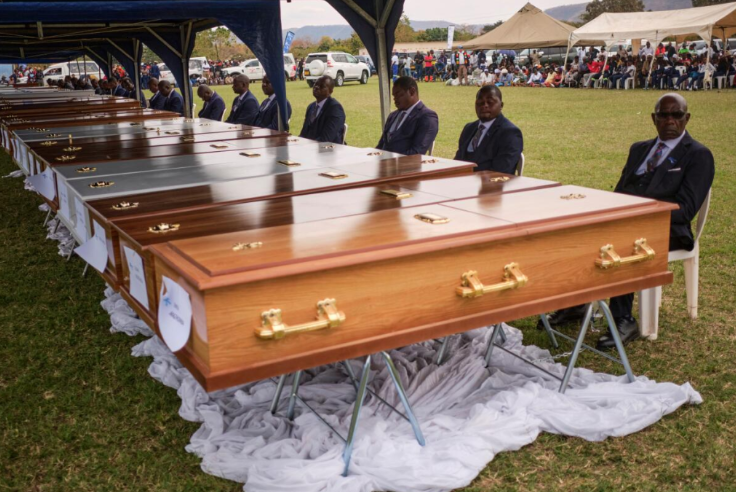
- Overloaded Ferry Capsizes in Strong Waves as Rescue Teams Recover More Bodies
HARARE, Zimbabwe: At least 72 people, including 18 children, have died after an overloaded ferry capsized on Zimbabwe’s Lake Kariba, authorities said Saturday, as rescue teams continued their search for victims.
The ferry overturned in strong waves on Tuesday while travelling from the town of Kariba toward remote rural and fishing communities in northwestern Zimbabwe, where damaged roads and limited public transportation leave many residents dependent on water transport.
Police said 26 additional bodies were recovered during rescue operations, raising the confirmed death toll to 72. Authorities have yet to establish the exact number of passengers aboard the vessel or determine how many people remain missing.
Initial estimates suggested that as many as 153 people may have been on the ferry, far exceeding its stated capacity of 90 passengers. Zimbabwe’s disaster management authorities said 77 people were rescued following the accident.
The tragedy has been particularly devastating for families after authorities confirmed that 18 children were among the victims. A police list showed that 16 of the child victims were aged 10 or younger, with the youngest victim only one year old.
The disaster has raised renewed concerns over passenger safety and the challenges faced by communities around Lake Kariba, where limited road infrastructure and inadequate public transport make ferry services an essential lifeline.
Lake Kariba: A Vast Waterway Shared by Zimbabwe and Zambia
Lake Kariba, created by the damming of the Zambezi River in the late 1950s and early 1960s, is the world’s largest human-made lake by volume. It stretches for more than 200 kilometres and reaches widths of up to 40 kilometres in some areas.
The lake is shared by Zimbabwe and Zambia, with the international border running through its centre.
As rescue operations continue, families are facing the heartbreaking loss of loved ones in one of the region’s deadliest recent maritime disasters.
BY: The Times Union