- Islamabad Talks Focus on Nuclear Commitments, Regional Stability and Middle East Ceasefire
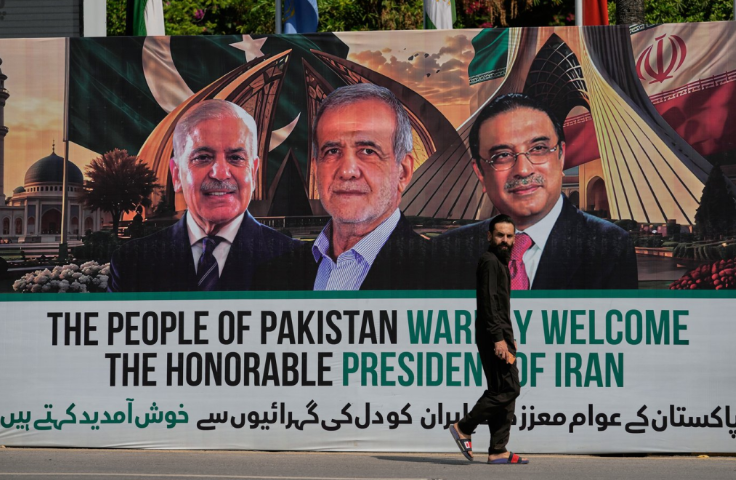
ISLAMABAD: Iranian President Masoud Pezeshkian arrived in Pakistan on Tuesday for high-level talks with Pakistani leadership as Islamabad continues its diplomatic role in facilitating negotiations between Tehran and Washington aimed at achieving a long-term agreement to end the Middle East conflict.
The visit comes amid ongoing technical discussions between Iran and the United States following high-level negotiations in Switzerland, while fresh concerns emerged over the details of the proposed framework and renewed tensions in Lebanon.
Pezeshkian’s trip marks his first visit to Pakistan since the conflict began with US and Israeli strikes on Iran on February 28.
Nuclear Deal Talks Enter Technical Phase
Disagreements Surface Over IAEA Access to Iranian Sites
Technical teams from Iran and the United States are currently working on the details of a potential agreement after Monday’s talks in Switzerland led by US Vice President JD Vance and Iranian parliamentary speaker Mohammad Bagher Qalibaf.
Vance said the discussions resulted in an understanding allowing International Atomic Energy Agency (IAEA) inspectors to visit Iranian nuclear facilities.
However, Iranian Foreign Ministry spokesperson Esmail Baghaei later said that no inspection visits had been scheduled for nuclear sites previously targeted by US strikes.
The UN nuclear watchdog has maintained contact with Iran since the 2025 conflict but has not been granted access to enrichment facilities damaged during the attacks.
Pakistan Hosts Key Diplomatic Engagement
Pezeshkian Meets Zardari and Sharif Amid Regional Tensions
Security measures were increased across Islamabad ahead of Pezeshkian’s meetings with President Asif Ali Zardari and Prime Minister Shehbaz Sharif.
The Iranian leader and Prime Minister Sharif were expected to hold a joint press conference following their discussions.
Pakistan has played a mediating role in the Iran-US talks, seeking to encourage diplomatic solutions and prevent further escalation in the region.
New Framework Addresses Lebanon Conflict and Strait of Hormuz
Negotiators Create Mechanisms to Reduce Regional Risks
The initial talks between Washington and Tehran launched a 60-day diplomatic process designed to establish a permanent agreement.
As part of the discussions, Iran and the United States agreed to establish a “de-confliction cell” aimed at reducing tensions in Lebanon, where fighting continues between Israel and Hezbollah, an Iran-backed group.
The two sides also discussed mechanisms to ensure the Strait of Hormuz remains open, a vital global energy route that Iran had effectively restricted during the conflict.
Ahead of his Pakistan visit, Pezeshkian warned that the success of negotiations would depend on implementing agreed commitments.
“The effectiveness of the talks depends on full commitment to the agreed obligations and their precise implementation,” he said.
Iran Details Proposed Negotiation Structure
Iranian officials said the technical talks in Switzerland have resulted in the creation of specialized working groups covering sanctions relief, nuclear matters, reconstruction efforts, and monitoring mechanisms.
Deputy Foreign Minister Kazem Gharibabadi said negotiators also established communication channels regarding maritime traffic through the Strait of Hormuz and developments in Lebanon.
The state-run IRNA news agency reported that these mechanisms are intended to support implementation of any future agreement.
Lebanon Ceasefire Faces New Challenges
Israel and Hezbollah Remain Outside US-Iran Agreement
Despite diplomatic progress, uncertainty remains over whether the proposed coordination mechanism can prevent renewed fighting between Israel and Hezbollah.
Mediators Pakistan and Qatar said the mechanism would include Lebanon’s government and would work to ensure an end to military operations in Lebanon.
However, Israeli Prime Minister Benjamin Netanyahu said Israel would maintain the ability to conduct military operations against perceived threats.
Neither Israel nor Hezbollah is a party to the US-Iran agreement, and both sides continue to hold opposing positions over security arrangements and military withdrawals.
Trump Says Lebanon Situation Will Be Resolved
US President Donald Trump said he would review Netanyahu’s comments, adding that he expected the situation to be resolved.
“I’m a problem solver, I get problems solved real fast,” Trump said, referring to his diplomatic approach.
The latest Lebanon ceasefire, brokered on Saturday, appeared to remain in place, with no new Israeli or Hezbollah attacks reported overnight.
Lebanon and Israel were also scheduled to hold another round of direct talks in Washington, focusing on a possible roadmap for an Israeli withdrawal from southern Lebanon.
BY: The Times Union