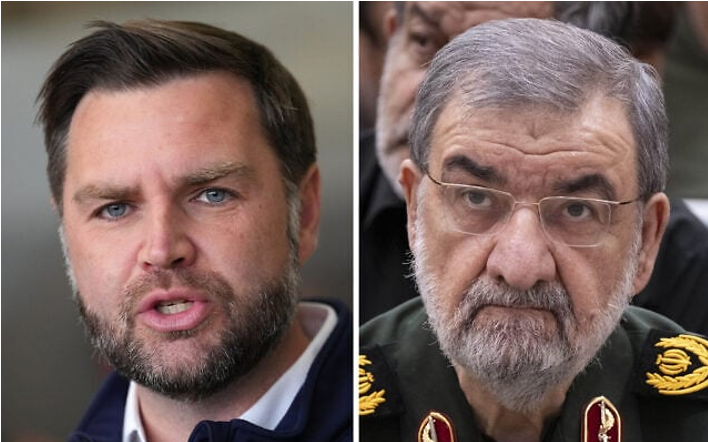
- Top security official who US vice president reportedly wants to meet stresses that Iranian nuclear program not up for discussion; Trump claims war already won but US now wants ‘total victory
US Vice President JD Vance is weighing direct talks with a top Iranian security official, according to a report on Wednesday that said President Donald Trump empowered him to resume negotiations on ending the war that they have cited as a key reason for the Republican’s steep losses in the midterm elections.
But Mohsen Rezaei, secretary-general of Iran’s Supreme National Security Council, said earlier Tuesday that there are no plans to meet Vance.
US officials told the Wall Street Journal that Vance has taken the lead role in diplomatic efforts to reach an agreement with Iran, eclipsing White House envoys Steve Witkoff and Jared Kushner.
Despite supporting renewed diplomacy, Trump has been privately criticizing the June memorandum of understanding with Iran that Vance helped negotiate, two US officials said, insisting that it was a mistake and allowed Iran to recover and bring in oil revenues.
Meanwhile, US Secretary of State Marco Rubio and White House Chief of Staff Stephen Miller back maintaining the blockade on Iran until it gives, said two US officials, amid deliberations over what comes next.
The Journal report noted that unlike Rubio and Hegseth, who have defended Trump over the war, Vance has publicly blamed the conflict for the GOP’s drubbing by Democrats in last week’s elections, with officials quoted by the newspaper describing his decision to make himself the face of diplomacy with Iran as a politically high-risk, high-reward effort depending on how the talks turn out.
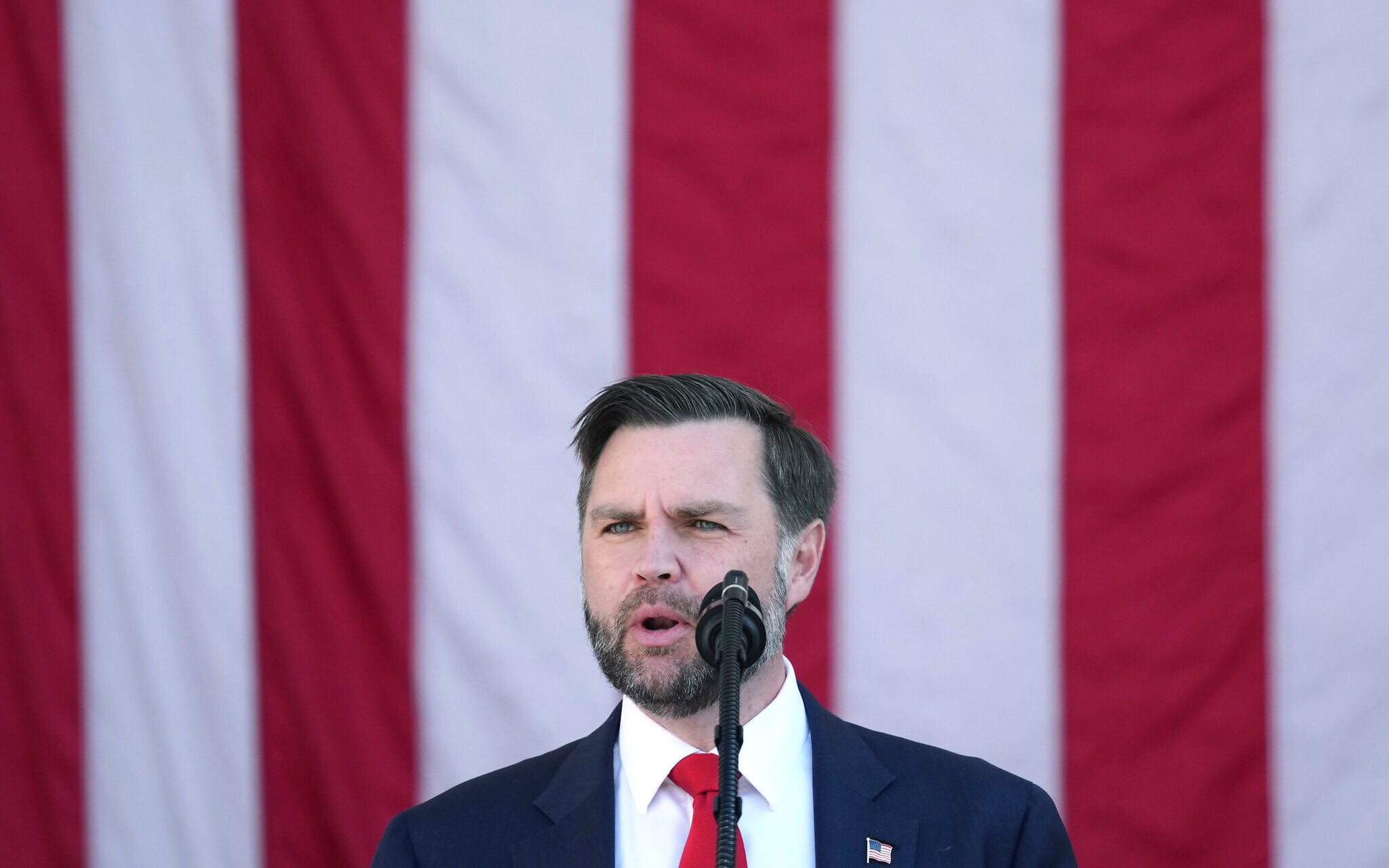
Arlington National Cemetery in Arlington, Va., November 11, 2026.
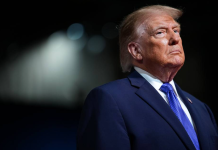
Trump has expressed agreement with Vance’s assessment about the electoral consequences of the the war, but has continued to defend it, including on Wednesday as he claimed the US already won but does not want to pull out until there has been a knockout.
“We fought back… and we won. [It’s] just a question of when we want to end it,” he said in a Veterans Day address at Arlington National Cemetery.
“We want to make sure we have a total victory — not a 93% victory. It’s going to be total,” Trump added.
Trump again asserted that the war will end shortly — something he has been asserting for months.
“When this conflict is over — and it will be soon — the entire world will be a much safer and better place, more peaceful place, and a place without the kind of danger that we had to suffer,” he declared.
The war, which began on February 28 with US and Israeli strikes against Iran, has so far cost the lives of 23 US service members and wounded several hundred more, according to the latest Pentagon figures.
Trump said in his remarks that the conflict was started not by Washington but by Tehran, which “has been waging war on America since 1979,” while stressing that US forces were acting in order to halt Iran’s capacity to build a nuclear weapon.
‘Not always the popular choice’
David Barnea, who headed the Mossad when Israel and the US launched the war against Iran earlier this year, acknowledged Wednesday that the fighting hurt Trump at the ballot box.
“[Trump] proved that doing the right thing is not always the popular choice,” he told the Israel Hayom conference in New York, according to a statement on his remarks.
Barnea said that Israel “achieved an unprecedented result” against Iran in the war this year and the 12-day conflict a year earlier, but admitted Iran will continue to pursue nuclear weapons “as long as this regime exists.”
“They are still trying to recover the nuclear program” as the only way to safeguard “their crumbling regime,” the ex-spymaster said of the Iranians.
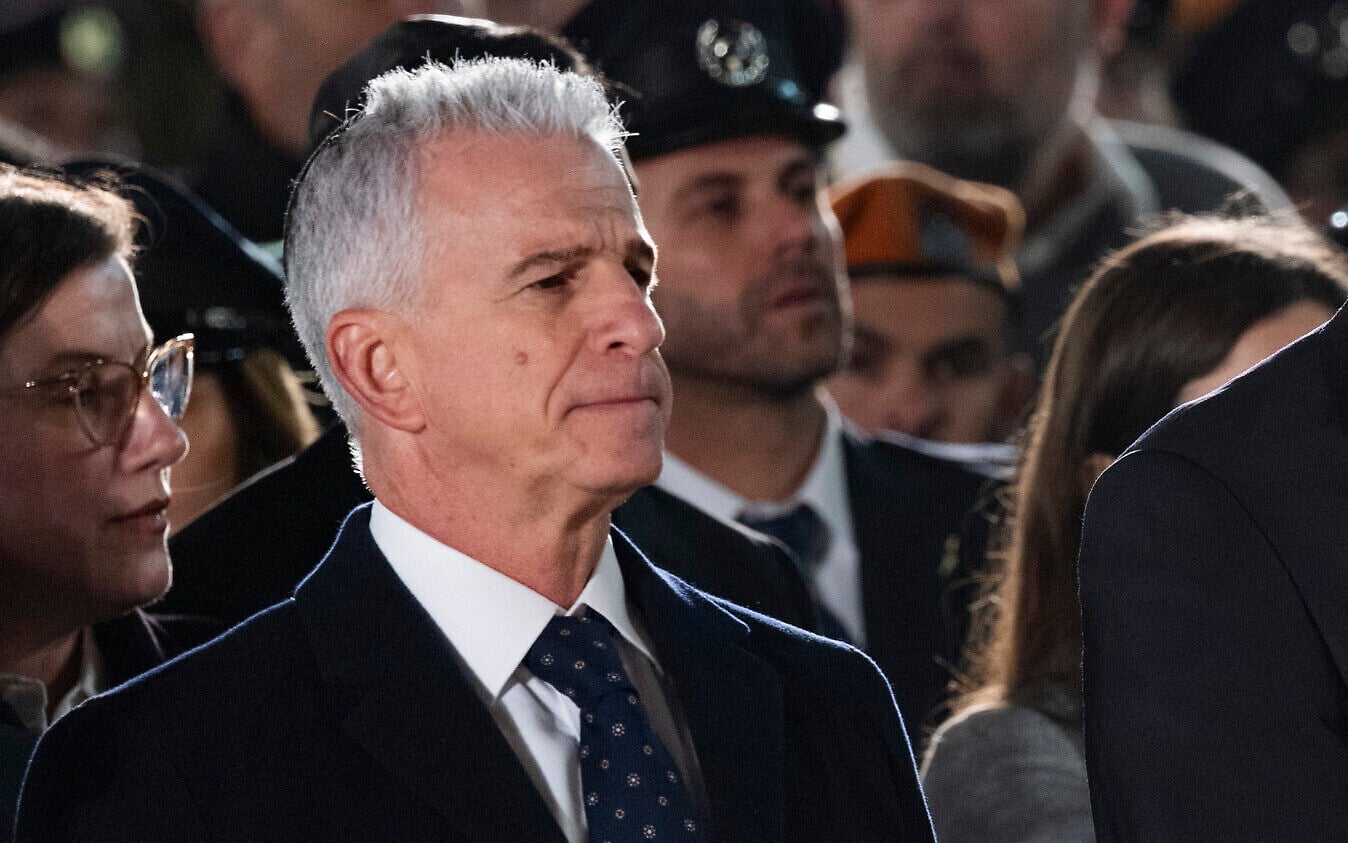
in Jerusalem’s Old City, April 20, 2026.
He predicted that the chance of a deal being reached with Iran was “very low” due to its nuclear ambitions. While “war is a very highly effective option,” Barnea warned of the consequences for the world economy energy prices, but said it would accelerate the regime’s collapse.
“But there is another way,” Barnea proffered, pointing to sanctions and an economic blockade, though he acknowledged these would take time to have an effect.
‘Ending the war on all fronts’
Also Wednesday, Rezaei threatened that Iran would attack “distant” American bases if US President Donald Trump strikes the Islamic Republic again.
“If the Americans make a mistake and attack us, we will not content ourselves with targeting nearby bases, but will strike all nearby bases, and we will also target distant American bases,” Rezaei told Lebanese Al-Mayadeen television channel.
He said that any base from which US planes take off will be considered a target, which would include European bases.
Rezaei asserted that Trump and Prime Minister Benjamin Netanyahu no longer have the political ability to wage even a 10-day war.
Iran was not negotiating directly with the US right now, claimed Rezaei. “I affirm that we are not conducting any talks with the Americans at the present time. There are no negotiations between the United States and us at present.”
He said that reports of talks in Qatar were “lies and slander, and its aim is to ease economic pressures and lower oil prices.”
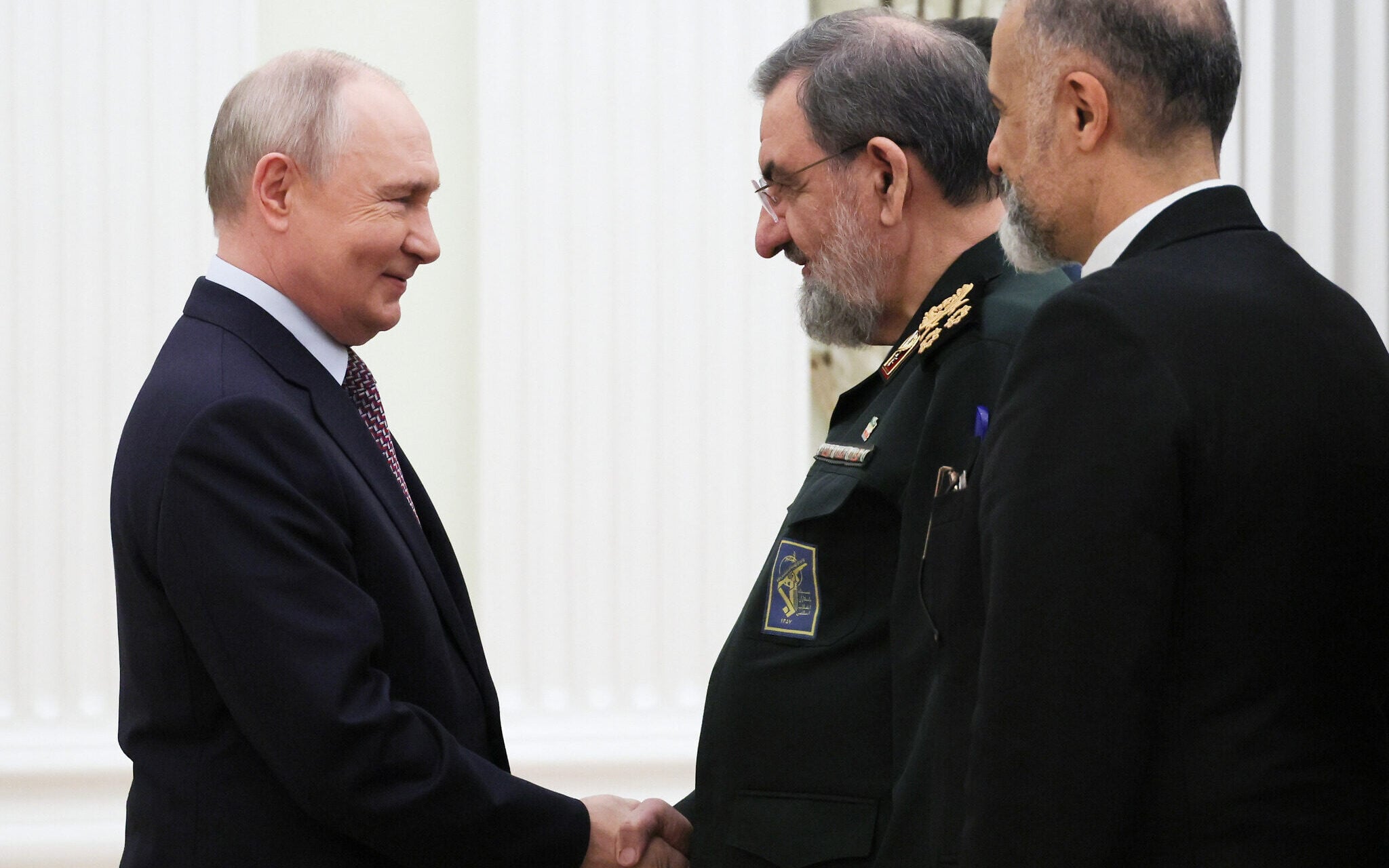
Council Secretary Mohsen Rezaei shake hands during a meeting at the Kremlin in
Moscow, November 5, 2026.
Rezaei said that Iran was not even discussing its nuclear program with mediators, and that Tehran was determined to keep all its enriched material for nuclear-powered ships and submarines he claimed the country was developing.
“The response we received from the Americans was a deceptive response and was marred by much ambiguity and confusion,” he said. “We asked them to give a frank and clear response to our conditions, and to this day they have not provided it, and they may provide this response in the future.”
He reiterated that the US must accept all seven core Iranian positions — including a lifting of US sanctions and blockade, reparations, and an Israeli withdrawal from Lebanon — for the Strait of Hormuz to be opened.
“The first item in our diplomacy with the United States is ending the war on all fronts, particularly in Lebanon,” he said.
Rezaei claimed that IDF soldiers “do not currently approach Hezbollah’s lines at a distance of less than twenty kilometers. Indeed, they do not approach even within ten kilometers. The same applies to their confrontation with Hamas.”
Navigation systems attacked in Hormuz
Three sources with knowledge of the matter confirmed Wednesday that Iran has attacked ship navigation systems on the Omani island of Didamar in the Strait of Hormuz, showing Tehran’s ability to target infrastructure used to restore Gulf oil flows.
The three sources did not provide a damage assessment and Reuters could not determine independently if any navigation systems were destroyed in the attacks that Tehran had claimed on Tuesday.
Gulf exporters have been increasingly using workarounds to increase oil flows via Hormuz, such as ship-to-ship transfers (STS) off the coast of Oman and the United Arab Emirates.
The US military has been aiding commercial vessels transiting the Strait after Iranian attacks disrupted traffic since the war began.
The attacks on Didamar island would likely have limited impact on commercial shipping in the Strait, two other shipping sources and an additional maritime security source said. One said that was because other systems were in place elsewhere.
Iranian state media said on Tuesday that the Islamic Revolutionary Guard Corps had carried out strikes destroying “enemy navigation systems” on Didamar island.
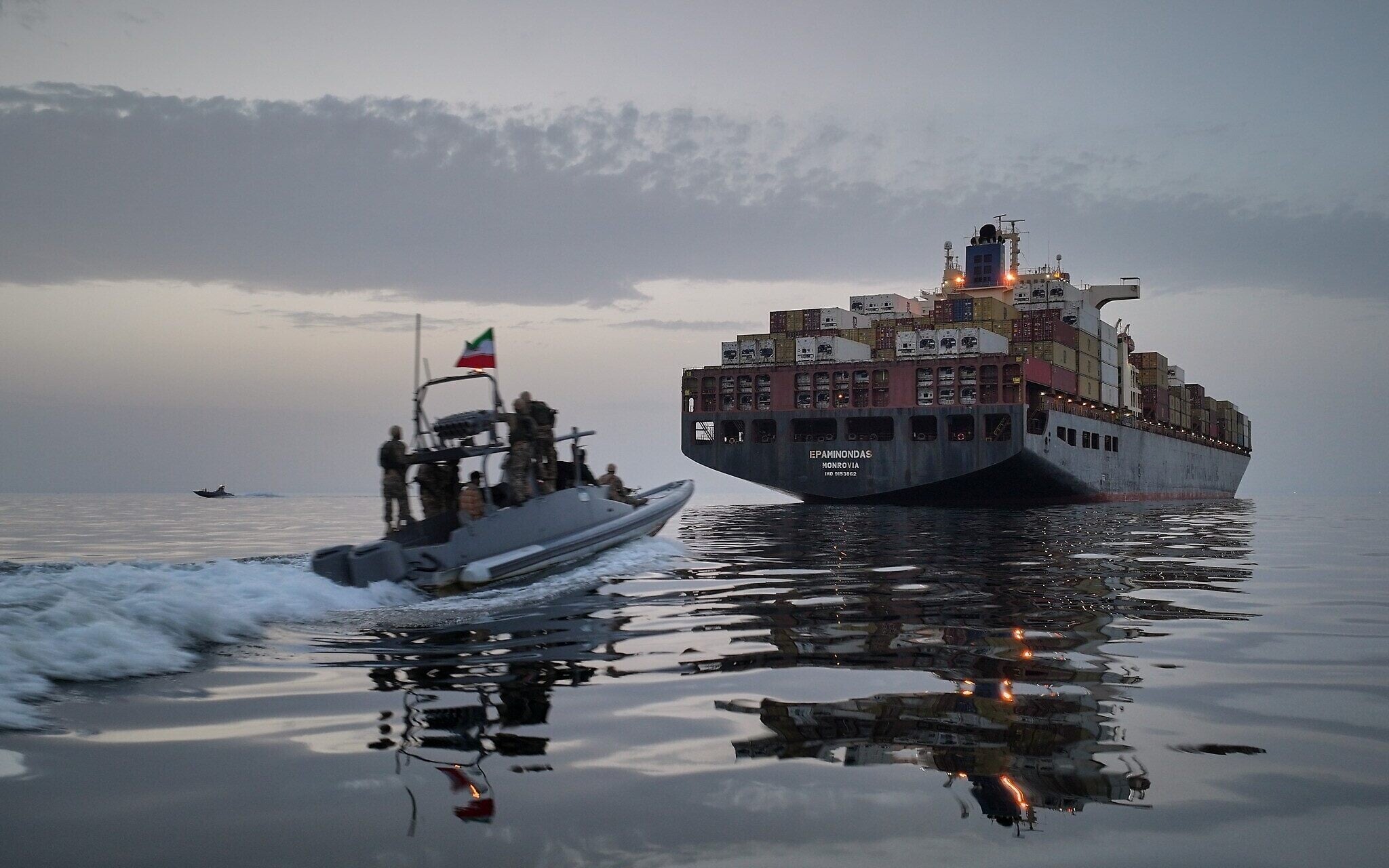
Navy (IRGC) speedboat approaches the cargo ship Epaminondas during what state
media described as the seizure of one of two vessels accused of violations in the
Strait of Hormuz, April 21, 2026.
Reuters confirmed smoke rising from the island in video footage but it was unclear what was burning. An image from the EU’s satellite program Copernicus also showed thermal activity.
The attacks come as Gulf oil exports recovered to over 80% of pre-war levels in September and October, aided by US military-assisted flows through the Strait and higher Saudi exports via the Red Sea port of Yanbu.
The US military’s Central Command and Oman’s media ministry did not immediately respond to requests for comment.
Bigger tankers, mostly very large crude carriers (VLCCs), shuttle oil from Gulf ports to ship-to-ship transfer locations near Oman’s Sohar and the UAE’s Fujairah.
BY: Lazar Berman and Jacob Magid contributed to this report.