- Washington Demands Tehran Guarantee Safe Maritime Passage as Ceasefire Faces Growing Strain
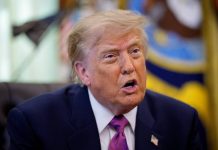
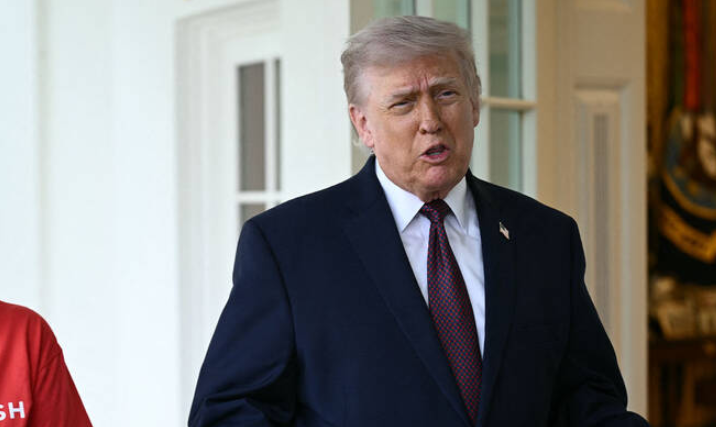
DUBAI: US President Donald Trump on Saturday issued a stern warning to Iran, threatening an overwhelming military response after mourners at the funeral of Supreme Leader Ayatollah Ali Khamenei openly called for his assassination. The latest exchange of rhetoric underscored escalating tensions in the Middle East, where an interim ceasefire agreement is increasingly under pressure from continued hostilities.
Trump’s remarks came after senior US officials urged Tehran to publicly guarantee the safety of international shipping through the Strait of Hormuz, one of the world’s most strategically important maritime corridors.
Iran has so far declined to issue such assurances, maintaining that the strait should remain under its control and insisting that vessels transiting the waterway should pay fees to Tehran. The position challenges decades of international practice that recognizes the Strait of Hormuz as an international waterway.
The renewed diplomatic confrontation follows several days of US airstrikes against Iranian targets and retaliatory Iranian attacks across the region. The latest round of military action was triggered after Iran allegedly attacked three commercial vessels in the strait earlier this week.
Trump Issues Strong Warning
In a post on his Truth Social platform, Trump warned Iran against any attempt to target him.
“1,000 missiles are locked and loaded and aimed at the Islamic Republic of Iran, with thousands more ready to immediately follow should the Iranian government act on its threat,” Trump wrote.
The US president linked his warning to repeated calls during Khamenei’s funeral for his assassination. Demonstrators at the funeral carried banners and posters calling for the deaths of both Trump and Israeli Prime Minister Benjamin Netanyahu.
Khamenei, who was killed in an airstrike at the outset of the conflict on February 28 at the age of 86, was laid to rest this week following a multi-day funeral procession across cities in Iran and Iraq.
Trump also vowed that the US military would “completely decimate and destroy” Iranian targets if Tehran acted on the threats.
Washington Presses Iran on Strait Security
Senior US officials, speaking on condition of anonymity, said Washington expects Iran to publicly affirm that international shipping through the Strait of Hormuz will not be threatened.
The officials argued that the latest military escalation resulted from what they described as hardline factions within Iran attempting to derail the fragile ceasefire between Tehran and Washington.
Iran, however, has rejected suggestions of internal divisions, insisting the country’s leadership remains united under its new Supreme Leader, Ayatollah Mojtaba Khamenei.
US officials said President Trump has given negotiators limited time to pursue a diplomatic solution but retains a broad range of options should negotiations fail.
Tehran Reasserts Control Over Strategic Waterway
Shortly before the US briefing, Iran’s representative to the United Nations reiterated that all activities in the Strait of Hormuz, including navigation and demining operations, remain under Iran’s exclusive authority.
Iran has further argued that commercial vessels should begin paying transit fees to Tehran, a proposal that would significantly alter long-standing international maritime norms.
Before the conflict, approximately one-fifth of global oil and liquefied natural gas shipments passed through the narrow waterway, making it one of the world’s most critical energy chokepoints.
Although disruptions during the conflict contributed to sharp increases in global energy prices, oil markets have since eased from wartime highs.
Regional Security Situation Remains Fragile
Despite the completion of the latest US airstrikes on Thursday, additional attacks reportedly targeted Iranian territory, raising fresh uncertainty over the identities of those responsible.
Israel did not claim responsibility for the reported strikes, prompting speculation that some Gulf Arab states may have carried out operations aimed at deterring further Iranian attacks. Earlier this week, Iran launched retaliatory strikes against Bahrain, Jordan, Kuwait and Qatar following US military action.
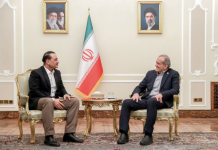
Iranian Foreign Minister Abbas Araghchi is scheduled to meet his Omani counterpart in Muscat to discuss security in the Strait of Hormuz. Turkish Foreign Minister Hakan Fidan expressed optimism that talks between Iran and Oman could help ease tensions surrounding the vital waterway.
However, Araghchi also accused Washington of undermining the interim agreement by ending waivers that had allowed Iran to sell crude oil on international markets using US dollars.
“Reality check: There can only be mutual compliance,” Araghchi wrote on the social media platform X.
The United States continues to advise commercial shipping to use a southern route through Omani territorial waters to minimize exposure to Iranian-controlled areas, a move Tehran strongly opposes.
Nuclear Talks Face Major Obstacles
US officials also said any future nuclear agreement would require Iran to surrender its stockpile of highly enriched uranium—a demand Tehran has consistently rejected.
According to the officials, Washington retains military options to ensure Iran cannot use its enriched uranium if negotiations collapse, although they declined to provide further details.
The uranium, enriched to near weapons-grade levels, is believed to remain at facilities targeted by US airstrikes in 2025.
Iran continues to insist its nuclear programme is exclusively peaceful. However, the International Atomic Energy Agency has repeatedly stated that Iran remains the only non-nuclear-weapon state enriching uranium to such high levels.
US officials stressed that a comprehensive nuclear agreement would remain impossible unless Iran first halted attacks on commercial shipping in the Strait of Hormuz.
BY: The Times Union