- NATO chief, President Zelensky and European leaders to discuss security guarantees, defence cooperation and long-term support for Kyiv
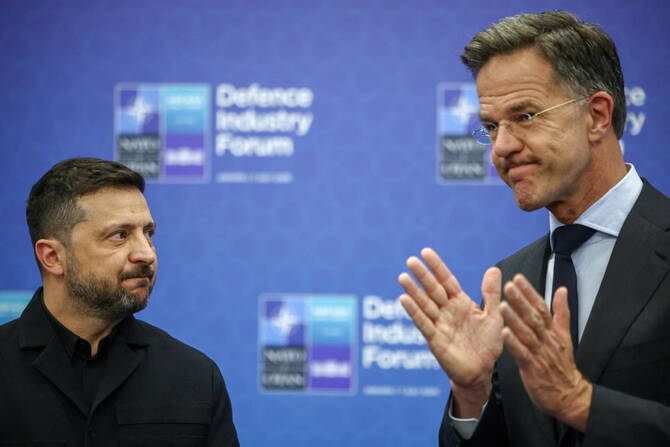
PARIS: France will host a high-level meeting of the “Coalition of the Willing” in Paris on Monday, bringing together NATO Secretary General Mark Rutte, Ukrainian President Volodymyr Zelensky, and key European leaders to reinforce international support for Ukraine and strengthen collective security efforts. The French presidency announced on Friday that the summit will build on the momentum generated at this week’s NATO Summit in Türkiye and further coordinate allied assistance for Kyiv.
According to the Élysée Palace, discussions will focus on preparations for long-term security guarantees for Ukraine once a ceasefire is reached with Russia. French President Emmanuel Macron said the meeting would unveil new defence initiatives, expanded joint military exercises, and measures aimed at enhancing Europe’s ability to assume greater responsibility for its own security. He added that the summit would also address efforts to counter Russia’s so-called “shadow fleet,” accelerate the development of new military capabilities for Ukraine, strengthen defence industrial cooperation, and deepen operational coordination among Kyiv’s international partners.
Macron described the gathering as another important step in reinforcing European unity and ensuring sustained support for Ukraine amid ongoing security challenges. The meeting follows recent diplomatic engagements at the G7 and NATO summits, where U.S. President Donald Trump signalled a more supportive approach toward Kyiv in its defence against Russia.
The French presidency also announced that Moldova and North Macedonia have joined the Coalition of the Willing, expanding the alliance of countries committed to supporting Ukraine. European Commission President Ursula von der Leyen and European Council President Antonio Costa are also expected to participate in the summit, underscoring the broad international commitment to Ukraine’s sovereignty, regional stability, and European security.
BY: The Times Union