- UAE Visit and European Engagement Underscore India’s Push for Energy Security, Trade Expansion and Global Leadership
NEW DELHI: Narendra Modi on Friday embarked on a significant five-nation diplomatic tour spanning the Gulf and Europe, reflecting India’s growing global stature amid rising geopolitical tensions and economic uncertainty triggered by the ongoing Iran conflict.
The six-day visit begins in the United Arab Emirates before continuing to the Netherlands, Sweden, Norway and Italy, highlighting New Delhi’s strategic effort to strengthen international partnerships, secure critical energy supplies and position India as a leading global manufacturing and technology hub.
The visit comes at a crucial moment as disruptions in Gulf shipping routes and instability around the Strait of Hormuz continue to create volatility in global oil and gas markets, increasing pressure on major energy-importing economies such as India.
Despite the challenges, Modi’s diplomatic outreach is being viewed as a proactive effort to deepen economic cooperation, expand trade opportunities and reinforce India’s role as a reliable global partner in an increasingly uncertain world order.
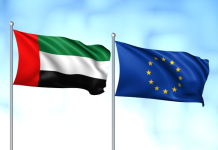
India’s engagement with Europe has gained fresh momentum following the landmark India-European Union Free Trade Agreement signed earlier this year — a deal Prime Minister Modi described as the “mother of all deals.” The agreement is expected to significantly boost trade, investment, innovation and industrial collaboration between India and Europe.
According to India’s Ministry of External Affairs, the Prime Minister’s visit will further strengthen trade and investment relations with European nations while opening new avenues in advanced technologies, clean energy, semiconductors, defense and sustainable development.
A major focus of the tour will be energy cooperation with the UAE, home to more than 4.5 million Indians and one of India’s most important strategic partners in the Gulf region.
Talks in Abu Dhabi are expected to focus on enhancing long-term energy security, including agreements related to liquefied petroleum gas (LPG) supplies and strategic petroleum reserves aimed at protecting India from global supply disruptions and sudden price fluctuations.
Analysts say the visit demonstrates India’s pragmatic and forward-looking foreign policy under Modi’s leadership, balancing strong ties with Gulf nations, Europe and major global powers while safeguarding national economic interests.
Former Indian ambassador Anil Wadhwa said India’s engagement with Nordic and European countries is strategically timed as global companies seek to diversify supply chains beyond China.
He noted that India is increasingly emerging as a trusted economic, technological and clean energy partner in a rapidly evolving international landscape.
Prime Minister Modi will also participate in a high-level Nordic summit in Oslo during his first visit to Norway — the first by an Indian prime minister in more than four decades — reflecting expanding cooperation between India and Northern Europe in innovation, sustainability, climate action and Arctic research.
In Sweden, Modi is expected to address a major European business leaders’ forum alongside Ursula von der Leyen, focusing on investment, economic resilience and technological partnerships.
The final leg of the tour will take Modi to Italy, where he is scheduled to hold talks with Italian Prime Minister Giorgia Meloni aimed at further strengthening bilateral ties in trade, defense, manufacturing and strategic cooperation.
Observers say the extensive diplomatic tour reinforces India’s ambition to play a larger leadership role in shaping global economic stability, energy security and international cooperation during a period of rapidly changing geopolitical dynamics.
BY: The Times Union