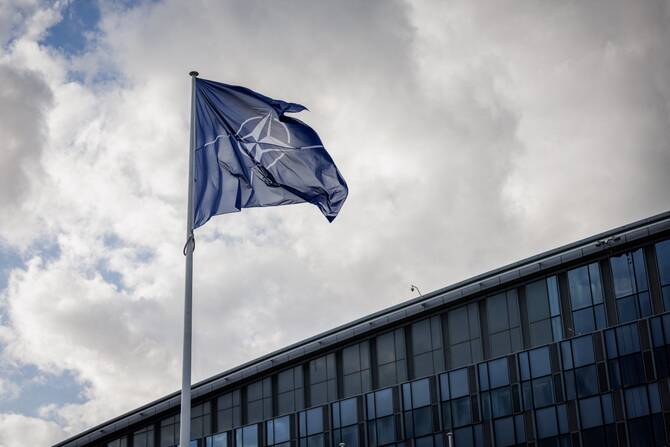
During a press conference last week in Montenegro, NATO Secretary General Mark Rutte said he was “extremely optimistic” about NATO’s future, pointing to recent increases in defense spending across the alliance, and adding that US President Donald Trump’s reelection “played a large role here.”
This was followed by comments from Matthew Whitaker, the US ambassador to NATO, who said the upcoming NATO summit in Turkiye will serve as a “report card” for the progress European allies are making on defense spending.
Heading into the summit this July, several issues will be on the agenda, from continued support for Ukraine to air defense across the alliance and the implications of the war with Iran. But top of Trump’s mind will be defense spending and burden sharing. There is no doubt he will want to see meaningful progress on this issue, one he has been consistent about since the early days of his first term.
The US leader is not alone among American presidents in criticizing Europe for failing to spend enough on its own defense, but he has certainly been the most vocal. At the 2006 NATO summit in Riga, alliance members first committed to spending 2 percent of gross domestic product on defense. However, progress did not materialize. By the time Russia annexed Crimea in 2014, only three NATO members — the US, UK, and Greece — met this benchmark.
Trump will want to see progress at the Ankara summit
Luke Coffey
Later that same year, at the Wales summit, the alliance recommitted itself to reaching the 2 percent target by 2024. Since then, real but slow progress has been made. European defense spending has increased year on year in real terms since 2014, but this has not been enough. By the 2024 deadline, which also coincided with NATO’s 75th anniversary, almost one third of member states still had not met the 2 percent benchmark.
When Trump returned to office in 2025, he made defense spending the cornerstone of that year’s NATO summit and convinced allies to agree to spend 5 percent of GDP on defense and defense-related items by 2035. Of this, 3.5 percent would go toward core defense spending, while 1.5 percent would be allocated to related areas such as cyber defense, infrastructure improvements, and projects that support military operations.
Even though it has been only one year, Trump will want to see progress at the summit in Ankara. At a minimum, he will expect each member state to present a concrete roadmap for how it plans to reach the 5 percent goal — and the sooner, the better.
Every NATO member agreed to this except Spain, which secured an exemption and has become a source of frustration for the Trump administration, not only on defense spending but also over Iran. Even though every country other than Spain committed to the new benchmark, only a handful of allies — Poland, Lithuania, Latvia, and Estonia — currently meet the broader 5 percent benchmark or have a credible near-term path to do so.
As the alliance prepares for its July summit, there are several concrete steps it should take to demonstrate to Trump that it is serious about increasing defense spending.
Leaders of the alliance must show up with a plan
Luke Coffey
First, NATO leaders need to know that optics and symbolism are important in international affairs. Leaders of the alliance must show up with a plan and be prepared to present it to Trump. More than anything else, the US president will be looking for strong headlines coming out of the summit. If NATO leaders can show that there is still unity and support for reaching the 5 percent target, coupled with individual and tailored plans to do so, this will go a long way toward addressing many of his concerns.
Second, in addition to the usual meetings of heads of state and government, the summit should include a special session for member states’ finance ministers or their equivalents. In many of the parliamentary democracies found across Europe, the finance minister is often the most important and influential member of the government after the prime minister. Yet in recent years, these important Cabinet ministers have been largely left out of the debate. If finance ministers had a formal role at NATO meetings, they would have more ownership of the process and a better understanding of why spending on defense-related matters is so expensive but also so important.
Finally, NATO members should arrive in Ankara with a plan to enshrine the 5 percent target into domestic law. Quite a few European countries have similar laws on the books regarding minimum amounts of GDP to be spent on international aid, but they have failed to do the same for defense spending. In the case of the recent 5 percent benchmark, only Latvia has enshrined this commitment into law. NATO should encourage all members to do the same, with associated timelines to achieve this goal. This would increase transparency and political accountability, while also making defense spending less politically controversial for domestic audiences.
It is important that NATO members continue to spend more on their defense capabilities, and right now the alliance is heading in the right direction. Perhaps the pace is not as fast as Washington would like, but Trump can take credit for doing something no other US president has been able to do.
Looking beyond the summit, while Ankara may be used as a report card to determine where each member state stands, the alliance needs to think beyond this summer. Many of the geopolitical challenges NATO faces today are likely to remain in place and could become even more complex in the future. It is better late than never that NATO gets its spending back on track.
BY: Writer Luke Coffey is a senior fellow at the Hudson Institute. X: @LukeDCoffey
Disclaimer: Views expressed by writers in this section are their own and do not necessarily reflect The Times Union‘ point of view