- Eisenkot, Bennett, Ben Gvir, Winter file independent lists, leaving landscape largely unchanged; Likud expected to submit Tuesday; Smotrich slams Winter for ‘gambling’ with political right
Speculation of any further shakeup in Israel’s political landscape faded Monday night, as a series of large and small parties submitted their final slates for next month’s election, confirming that they will each run alone.
Talk of possible mergers had mounted in both the pro- and anti-Benjamin Netanyahu camps in recent days, fueled by a succession of polls that showed neither bloc winning a majority of the Knesset, alongside fears that small parties could fall short of winning office entirely.
But with a Tuesday deadline looming for parties to confirm their lists of candidates, several declined to unite, leaving the electoral picture much the same as it has been for weeks.
The biggest question mark now concerns the prime minister’s own Likud party, which is expected to submit its slate on Tuesday, hours before the deadline.
The bloc hoping to unseat the prime minister appears to be all but set in stone, as frontrunner Gadi Eisenkot’s Yashar party submitted its roster on Monday. So did B’Yachad, the opposition party led by former prime ministers Naftali Bennett and Yair Lapid, which had announced its list on Sunday. The two other main opposition parties, the hawkish Yisrael Beytenu and left-wing Democrats, also submitted their slates.
The separate Yashar and B’Yachad submissions ruled out any possibility of the two parties joining. Had they done so, they would have almost certainly been the top vote-getter by a considerable margin. The merger would have also conclusively cemented Eisenkot’s status as the opposition bloc’s candidate for prime minister — a mantle Bennett has also sought to claim.
But there were concerns — reportedly raised in in-depth unpublished opinion surveys — that the two parties would receive fewer votes together than they would by running separately, a scenario that could help deliver reelection to Netanyahu.
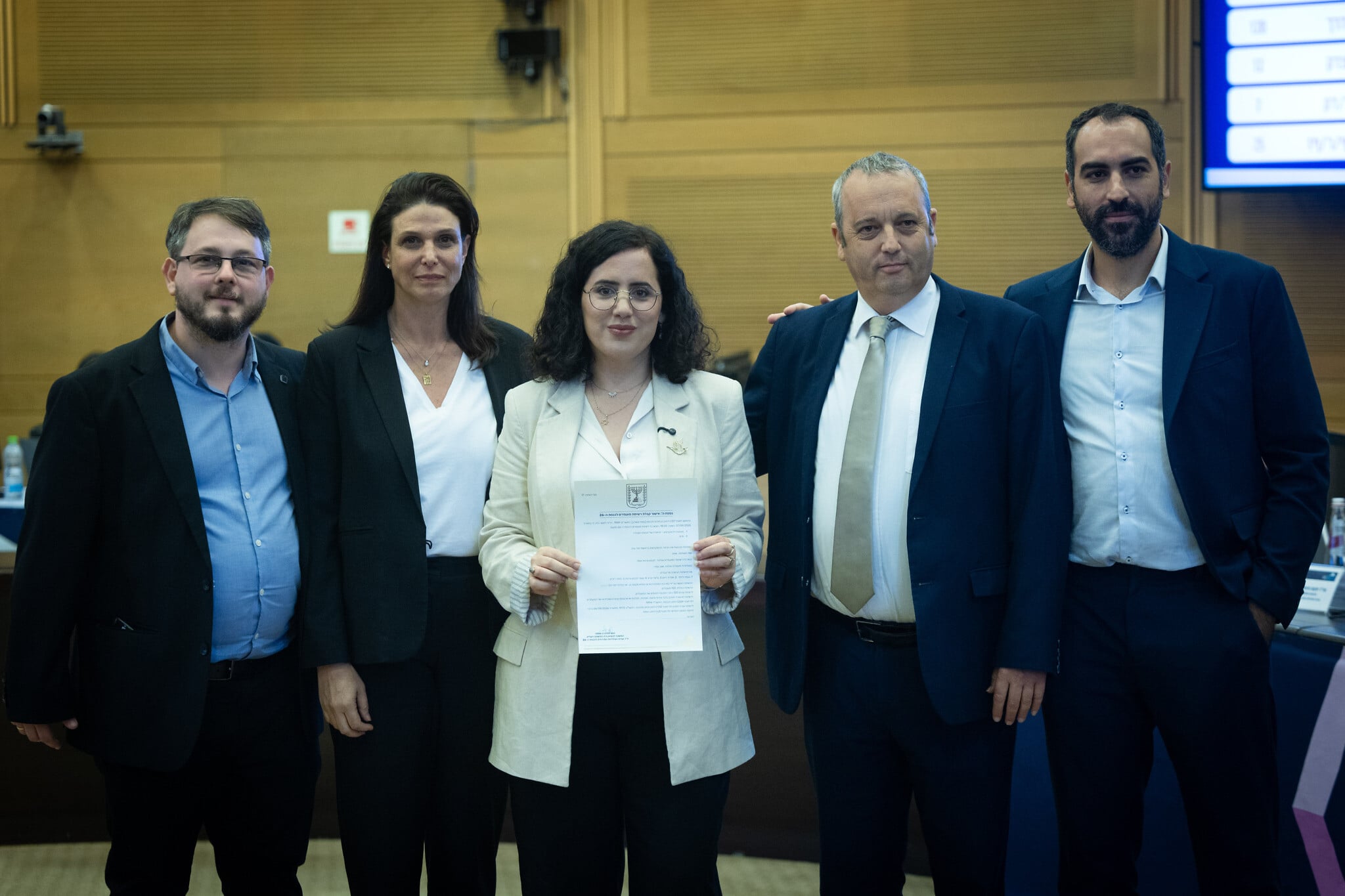
Committee ahead of the upcoming election, at the Knesset, in Jerusalem
Talk of mergers was also punctured in the pro-Netanyahu camp. The far-right Religious Zionism party, which according to polls has long been hovering on the threshold of entering the Knesset, recently announced a merger with far-right ex-lawmaker Moshe Feiglin. But Netanyahu had also pushed for it to merge with the far-right Otzma Yehudit — with which it ran in the 2022 election — or with the new People of Israel party, led by retired general Ofer Winter.
That effort fell flat, though, when Otzma Yehudit and Winter’s party each submitted their own lists on Monday, meaning that the three parties will remain separate.
Eisenkot unveils party slate; ex-Shin Bet chief at No. 2
The Yashar slate submitted by Eisenkot, a former IDF chief of staff, placed former Shin Bet chief Yoram Cohen in the second spot, meaning the top two places will be held by senior ex-security officials.
Next are former minister Orit Farkash-Hacohen, educator and social entrepreneur Adi Altschuler — whom the party recently named as its candidate for education minister — and former religious affairs minister Matan Kahana. They’re followed by former Blue and White MK Chili Tropper, who joined Yashar on Sunday.
That means that, altogether, four of the top six spots in the party will be from Benny Gantz’s Blue and White party. Eisenkot, who used to be Gantz’s number-two, left that party last year to found Yashar. Farkash-Hacohen, Kahana and Tropper were also members of Blue and White.
Gantz’s party has since floundered and is projected to fall short of entering the Knesset. It suffered its latest defection on Monday, as MK Michael Biton posted on Facebook that he wouldn’t run with Blue and White and was instead “examining the possibility of establishing a social, national, traditional party based on the values of Judaism, Zionism and democracy.”
At the same time, former Beit Shemesh mayor Aliza Bloch — who had joined Gilad Erdan’s and Yuli Edelstein’s new Unity party, only for that party to then drop out of the race — announced she was joining Gantz.
Yashar has emerged in recent months as the election frontrunner and is currently running slightly ahead of Prime Minister Benjamin Netanyahu’s Likud at around 23-25 seats, though most polls predict no obvious path to a coalition without relying on Arab party Ra’am, a scenario opposed by several right-wing opposition leaders.
“The way Israel is being led today is dangerous,” Eisenkot declared before supporters at an event presenting his party’s candidates on Monday evening, drawing loud applause and raucous cheers. “This is not a general warning — it is an immediate and tangible one.”
“We must wake up before it is too late,” he said.
Eisenkot described the election as “a crucial referendum” over the country’s identity, citing Israel’s declining diplomatic standing and his pledge to end ultra-Orthodox daft evasion.
Eisenkot reiterated his call for the other opposition parties to operate as a coordinated bloc and rally behind whichever among them earns the greatest public support — which polls project will be his party.
He pledged to establish a “Zionist and statesmanlike government” capable of serving a stable four-year term.
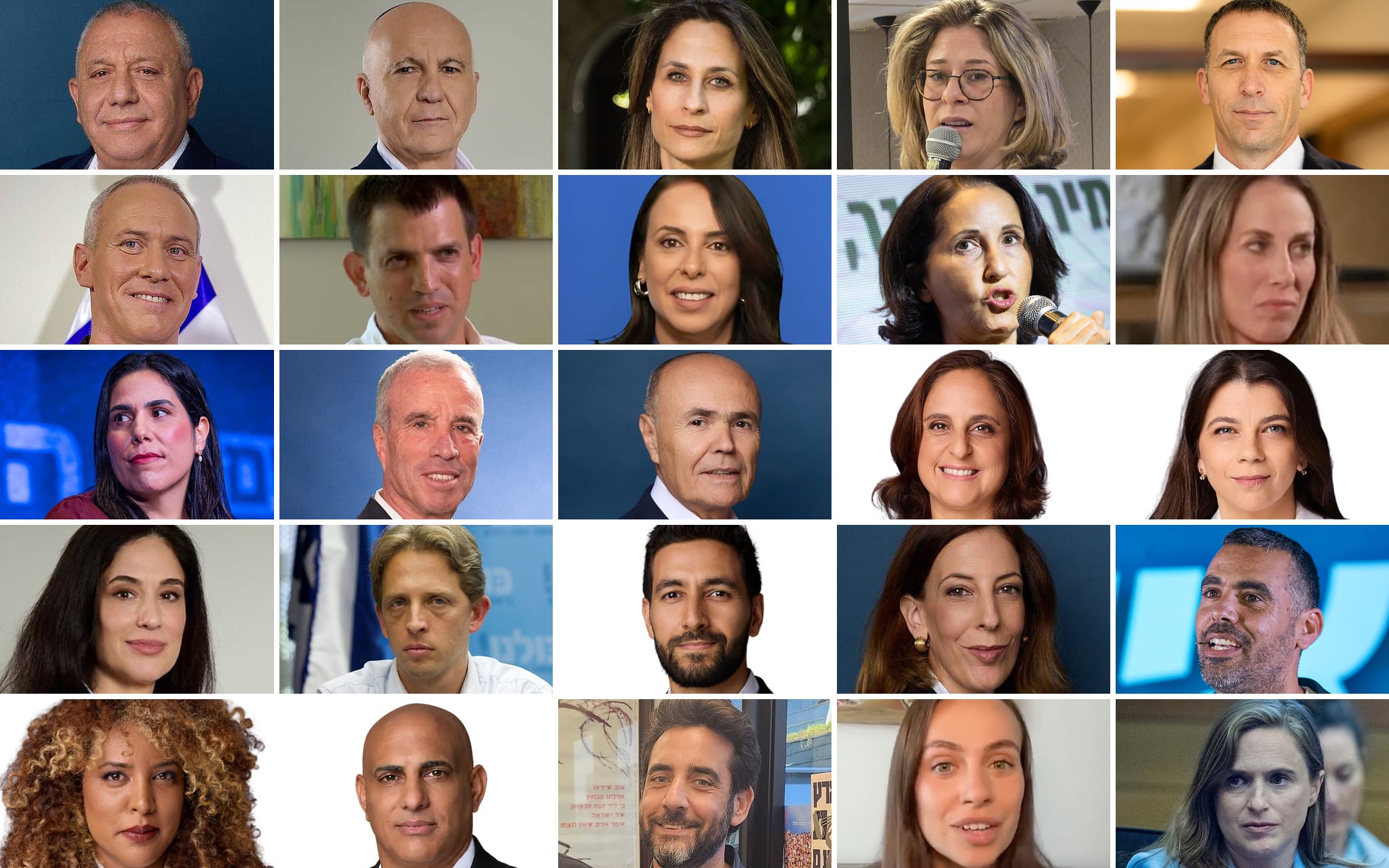
Other notable Yashar candidates include former Yesh Atid MK and minister Elazar Stern in 12th place, former Druze general and former head of the Coordinator of Government Activities in the Territories Kamil Abu Rukun in 13th, former Shin Bet and Mossad official Dvora Sharifian Bachar in 14th, social activist Alex Rif in 15th, former senior Welfare Ministry official and social policy adviser Inbar Yehezkeli in 16th, and former Kulanu MK Roy Folkman in 17th.
The list was submitted on the party’s behalf by former head of the Finance Ministry’s Budget Division Shaul Meridor, who is in the seventh spot, and Inbar Harush Gity, who led the Defense Ministry’s directorate for promoting the recruitment and integration of Haredim in the IDF, placed 11th on the slate.
Yashar also announced 11 honorary candidates who will occupy the final spots on its full 120-member slate, though their names were not included in the list formally submitted to the election committee.
They include former Hamas hostage Ohad Ben Ami, as well as other bereaved families and relatives of hostages, alongside former public officials including economist Manuel Trajtenberg, former minister Dan Meridor — father of Shaul Meridor — and Adina Bar-Shalom, daughter of late Shas spiritual leader Rabbi Ovadia Yosef. Report: Likud will submit Knesset slate near deadline
Likud, meanwhile, was expected to submit its Knesset slate only on Tuesday afternoon, hours before the 10 p.m. deadline, according to Hebrew media reports.
Likud’s internal court ordered Netanyahu to present the list of names by 9 p.m. Monday, but Netanyahu defied the ruling and decried the order as “unreasonable,” saying he would only present his list of candidates for the reserved slots on the party’s Knesset slate on Tuesday morning.
According to Channel 12, Likud’s submission has been delayed by disagreements over spots on the list reserved for candidates of Netanyahu’s choosing, with some party officials demanding those politicians be pushed lower down.
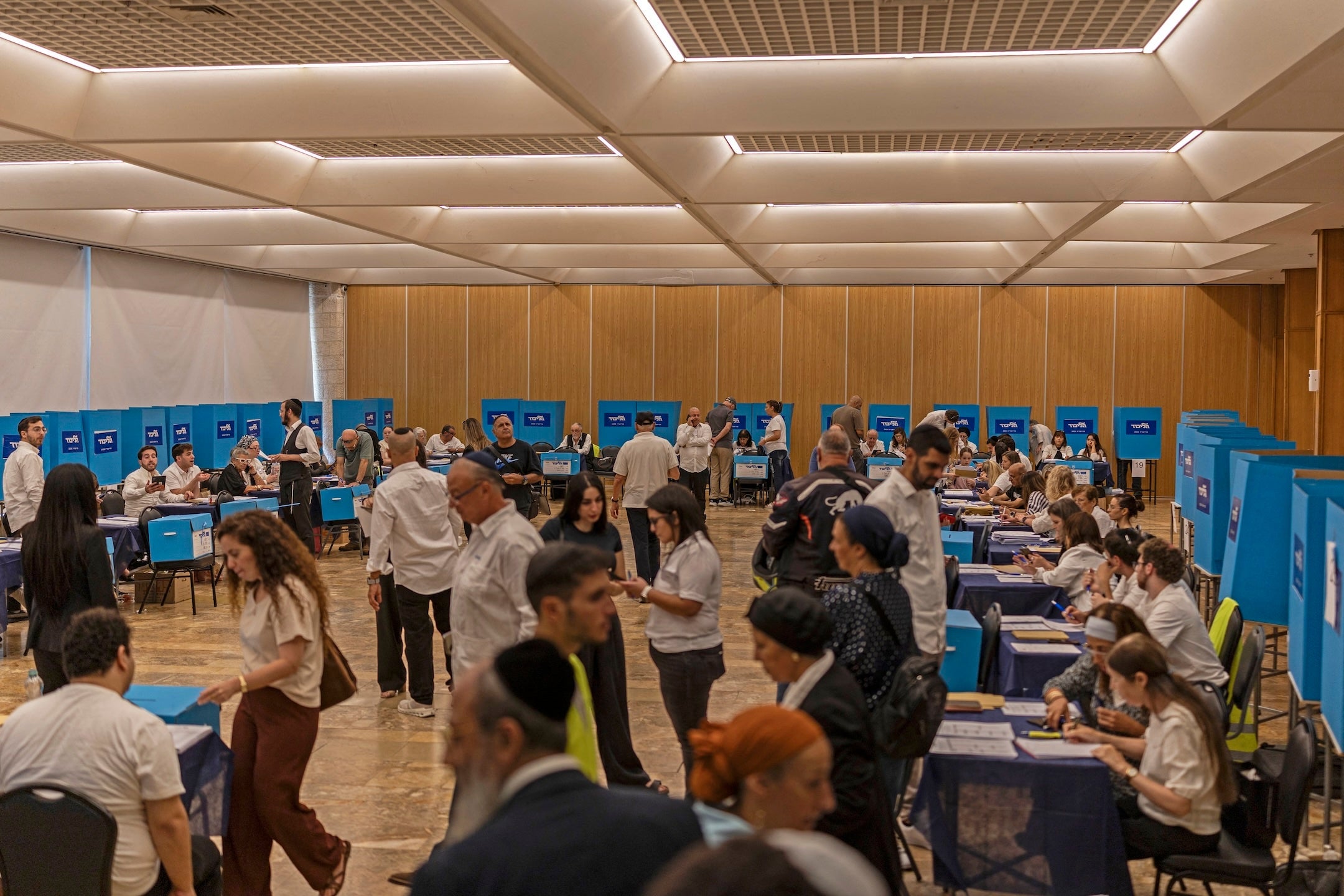
Israel’s national elections, in Jerusalem, August 17, 2026.
A final decision on the matter will be made at a meeting at 11 a.m., the report said, meaning that the party will be unable to submit its final candidate list before then.
Netanyahu controls eight slots on the party list, as well as an additional spot reserved for Defense Minister Israel Katz. As of Monday evening, Netanyahu has only confirmed three of the eight reserved spots, which he has given to entrepreneur Oren Dobronsky, Foreign Minister Gideon Sa’ar, and Likud Central Committee chair Haim Katz.
However, Dobronsky said Monday that he was giving up his reserved spot, preferring to only potentially serve as a professional minister in charge of AI-related issues, not as an MK.
Dobronsky — a dual Israeli-American citizen known as one of the investors, or “sharks,” on “The Sharks,” Israel’s version of the reality TV show “Shark Tank” — had been widely expected to forgo the reserved spot since that would require him to give up his US citizenship, a move that would have compelled him to immediately pay millions of dollars in taxes.
However, those conditions are also relevant for becoming a minister, casting heavy doubt on the possibility of him actually serving in a ministerial role.
Other parties yet to submit their slates include Religious Zionism, Shas, United Torah Judaism, Hadash-Ta’al-Balad — expected to run as the Joint List — and Gantz’s Blue and White.
Ben Gvir, Winter submit party slates; Smotrich slams decision
Far-right National Security Minister Itamar Ben Gvir’s Otzma Yehudit party likewise submitted its 20-member slate for the election, as did Winter’s People of Israel party.
Ben Gvir heads his party’s list, followed by firebrand former Likud MK Tally Gotliv, who recently joined him after a poor showing in the Likud primary. Negev, Galilee and National Resilience Minister Yitzhak Wasserlauf comes next, followed by Heritage Minister Amichay Eliyahu, MK Limor Son Har-Melech and MK Yitzhak Kroizer.
Tel Aviv
Ben Gvir’s longtime chief of staff Hanamel Dorfman is placed seventh, followed by party activist Tzachi Eliyahu, Haredi activist Yossi Goldberger and party director-general Itiel Ne’eman.
The party has been polling consistently at around seven or eight seats.
On Winter’s slate, right-wing Arab Israeli activist Yoseph Haddad is No. 2, followed by former Channel 13 journalist Netali Shem Tov and Eran Ben-Ari, the leader of the conservative opposition bloc within the Israel Bar Association.
Jerusalem Deputy Mayor Fleur Hassan-Nahoum takes the fifth spot, followed by Laly Derai, the mother of slain IDF soldier Staff Sgt. Saadia Derai; financial analyst Ronen Bodner; deputy head of the Samaria Council Davidi Ben Zion; Aviv Ezra, head of the Dor Hanitzahon grassroots movement; and Sigal Kraunik-Atia, the widow of Kibbutz Be’eri’s security coordinator Arik Kraunik, who was killed battling invading terrorists during the Hamas-led onslaught on October 7, 2023.
Recent polling has shown People of Israel narrowly clearing the electoral threshold and winning around four seats.
Winter promised to pursue “a policy of a true right-wing and decisive military victory on all fronts,” alongside integrating the ultra-Orthodox community into the IDF.
“With God’s help, we will be the surprise of the election,” he said.
The submission made good on Winter’s pledge not to combine with another party, arguing that while he will recommend Netanyahu as prime minister, there is a need for a new right-wing list with fresh faces untainted by the October 7-related failures.
In response, Religious Zionism said Smotrich had deliberately kept spots open on his slate in anticipation of “a necessary and responsible merger” with Winter, but will now consider filling them with other candidates.

the new Israeli settlement of Ma’ale Arugot in Gush Etzion, in the West Bank
Smotrich accused Winter of “gambling with the future of right-wing rule and the State of Israel,” splitting votes between their parties and risking one of them potentially falling short of the 3.25 percent electoral threshold.
“A true right-winger doesn’t take a chance this time,” he added.
Former MK Einat Wilf abandons solo run, joins Hendel
One merger did happen on Monday: Reservists party chair Yoaz Hendel announced the addition of former Labor Party lawmaker Einat Wilf to his electoral slate.
The announcement came a day after the collapse of Hendel’s center-right alliance with Tropper, after the latter split off to merge with Yashar.
Instead, Hendel formed a last-minute alliance with economist Yaron Zelekha.
Wilf, who has made a name as a pro-Israel advocate abroad, founded the Oz party last year with the intention to run in this year’s election, but did not gain traction. She said of her decision to run under Hendel that she was “happy to join those who, in the country’s most difficult hour, mobilized to defend it.”
BY: Ariela Karmel – TOI