- Major Automotive Wiring Systems Manufacturer Affected as Attack Disrupts Operations; Company Prioritises Employee Safety
LUTSK, UKRAINE — A Russian drone attack struck the Kromberg & Schubert manufacturing plant in Lutsk, in Ukraine’s Volyn region, affecting a major foreign-invested industrial facility supplying wiring systems to leading international automotive manufacturers.
Roman Romaniuk, Head of the Volyn Oblast Military Administration, confirmed that a foreign-invested business in Lutsk had once again been targeted. The incident formed part of a broader wave of Russian drone strikes against private businesses and critical infrastructure across the region.
The attack has raised fresh concerns about the security of foreign investment, industrial operations and international supply chains in Ukraine amid Russia’s continuing war against the country.
Company Prioritises Employee Safety and Emergency Response
Following the incident, Kromberg & Schubert informed employees that updates regarding their return to work would be communicated through internal channels as soon as circumstances permitted. Staff were also advised to remain in contact with their line managers.
The company expressed its appreciation to Ukraine’s State Emergency Service and other emergency response teams for their prompt action and efforts to protect human life.
Employee safety and the assessment of the situation remain central to determining when normal operations can resume.
Strategic Automotive Supplier Serving Global Brands
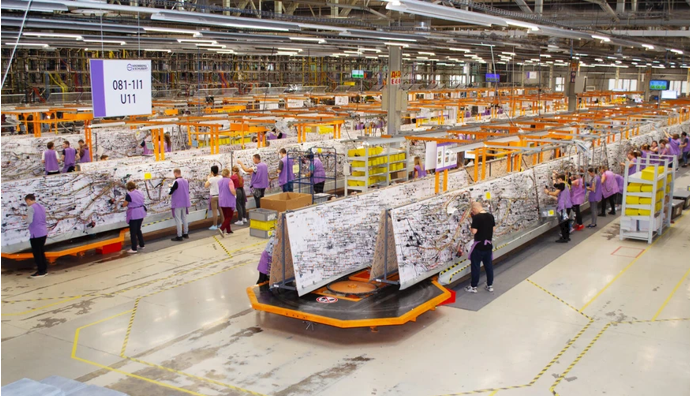
Kromberg & Schubert Ukraine, a wholly foreign-owned enterprise, manufactures automotive wiring systems for some of the world’s leading vehicle manufacturers, including Audi, BMW, Mercedes-Benz, Škoda and Porsche.
The Lutsk facility represents an important part of the company’s industrial presence in Ukraine and its contribution to international automotive supply chains.
Established on May 25, 2005, the enterprise has expanded significantly over the past two decades, growing from an initial workforce of approximately 300 employees to around 5,500.
According to the company’s website, its workforce has continued to increase even since Russia launched its full-scale invasion of Ukraine, demonstrating the enterprise’s sustained industrial presence despite the extraordinary challenges posed by the war.
The production department alone employs approximately 4,300 workers, highlighting the facility’s significance for local employment and manufacturing activity.
Attack Highlights Risks to Ukraine’s Industrial Infrastructure
The October 16 incident occurred amid reports of Russian unmanned aerial vehicle attacks against private businesses and critical infrastructure in the Volyn region.
Repeated attacks on industrial facilities create serious challenges for businesses seeking to maintain production, protect employees and fulfil commitments to international customers.
For foreign-invested enterprises, the security of manufacturing sites is essential not only for protecting workers and equipment but also for preserving investment, employment and the continuity of international supply chains.
Protecting Foreign Investment and Industrial Continuity Remains Critical
The attack on the Kromberg & Schubert plant underscores the wider economic consequences of Russia’s war against Ukraine, particularly for internationally connected manufacturing businesses that continue to operate under difficult security conditions.
Ukraine’s industrial sector remains important to employment, economic resilience and the country’s long-term recovery. Protecting civilian workers, industrial facilities and foreign-invested businesses is therefore vital to sustaining economic activity and maintaining investor confidence.
As the company assesses the situation and communicates further instructions to employees, the incident serves as another reminder of the challenges facing Ukraine’s businesses and workforce amid continuing hostilities.
BY: Andrii Muravskyi