- Three Pakistani Nationals and an Indonesian Sailor Among Those Killed; Vessel Set Ablaze Near Yemen’s Mocha
AL-MUKALLA: Four sailors were killed and several others wounded on Tuesday after missiles struck a commercial vessel sailing through the Red Sea near Yemen, according to the Yemeni government, which blamed the attack on Iran-backed Houthi forces.
Yemen’s official SABA news agency reported that the Ministry of Transportation said the Houthis fired four missiles at the Tihamah, a commercial vessel carrying goods through the strategically important Bab Al-Mandab Strait.
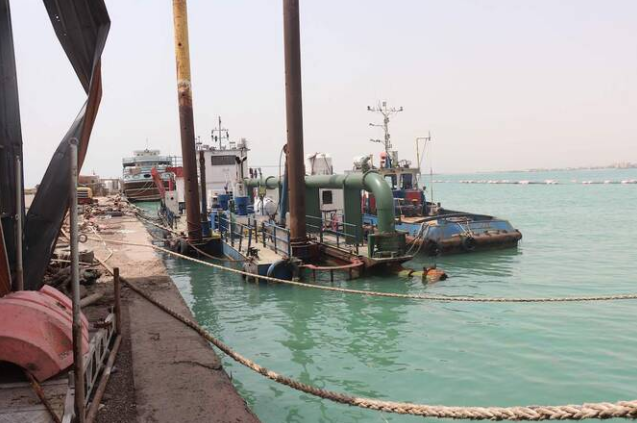
Three Pakistani nationals and one Indonesian sailor were reportedly killed in the attack. Several other crew members were wounded, while the vessel caught fire and sustained extensive damage.
Second Missile Allegedly Fired During Rescue Operation
According to the Yemeni Ministry of Transportation, the situation escalated further when Yemeni emergency responders arrived at the scene to assist the crew.
The ministry said the Houthis subsequently fired another missile toward the vessel, describing the strike as an apparent attempt to interfere with rescue efforts.
It condemned the targeting of commercial shipping and warned that repeated attacks on vessels heading toward ports under government control could threaten the flow of food, consumer goods and other essential supplies.
“Targeting sea lanes and commercial vessels” threatens not only Yemen but also international maritime security, global trade and the movement of essential supplies, the ministry said.
The UK Maritime Trade Operations (UKMTO), which monitors security incidents involving commercial shipping, separately reported casualties aboard a cargo vessel after it was struck by an unidentified projectile off Yemen’s Mocha.
As of Tuesday afternoon, the Houthis had not publicly claimed responsibility for the attack.
Mocha Comes Under Attack for Third Consecutive Day
The vessel strike came amid a broader escalation in Houthi attacks targeting Yemen’s government-controlled areas and commercial shipping.
Explosions were reported in the western port city of Mocha on Tuesday morning as Houthi forces launched attacks on the area for a third consecutive day, according to residents and local media.
Residents told Arab News that several missiles landed in different parts of the city, while heavy gunfire was heard as local air defenses attempted to intercept incoming drones.
The media arm of the National Resistance Forces, Yemeni Army units deployed along the country’s western coast, said residents had been urged to remain indoors as air defenses confronted Houthi drones and missiles.
On Sunday, at least seven people were killed and 30 wounded when an initial wave of Houthi strikes hit Mocha’s seaport, power station, military positions and other locations.
The Houthis launched another attack on Monday, deploying drones that triggered explosions and prompted intense fire from local air-defense systems.
Fighting Intensifies Near Taiz
The escalation also extended to the southern city of Taiz, where fighting erupted Tuesday between Yemeni government forces and Houthi fighters.
Abdul Basit Al-Baher, a Yemeni Army officer in Taiz, told Arab News that government forces repelled an attempted Houthi advance into government-held territory.
He said several Houthi fighters were killed or wounded and two others were captured during the fighting.
Yemeni Government Vows Decisive Response
Yemen’s Cabinet, chaired by Prime Minister Shaya Zindani, strongly condemned the latest escalation against populated areas and commercial shipping.
According to SABA, the government pledged to protect state institutions and respond “decisively” to any further attacks.
The government warned that continued attacks on commercial vessels could have consequences far beyond Yemen, particularly given the Bab Al-Mandab Strait’s importance to international maritime trade.
Escalation Raises Concerns Over Regional Tensions
Analysts said the latest escalation comes amid Iran’s broader confrontation with the United States, raising renewed concerns about the Houthis’ role in Tehran’s wider regional strategy.
Fatehi bin Lazerq, editor of the Aden Al-Ghad newspaper, argued that the latest attacks reflected what he described as significant Iranian influence over Houthi decision-making.
He also questioned the prospects for a durable peace agreement with the group, saying the latest escalation could further complicate diplomatic efforts.
At the same time, Lazerq acknowledged that the situation remained fluid, with both renewed conflict and de-escalation possible.
The latest violence underscores the continuing fragility of Yemen’s security situation and the risks facing commercial shipping in and around the Red Sea and Bab Al-Mandab Strait, one of the world’s most strategically important maritime corridors.
BY: The Times Union