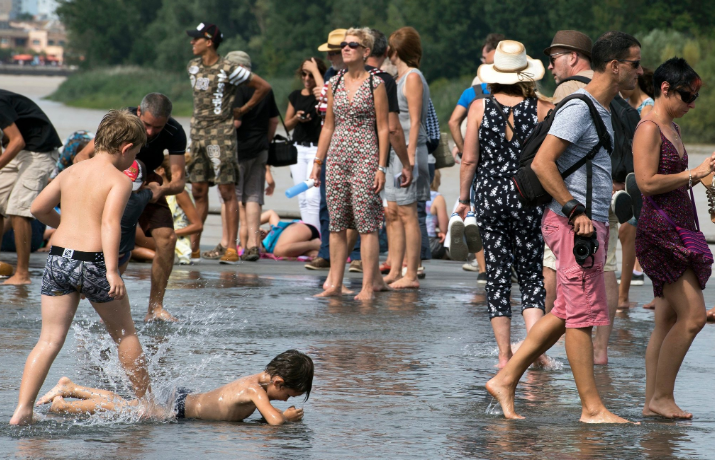
- Emergency Measures Introduced Across France, Germany and Italy
A severe heatwave sweeping across large parts of Europe has triggered emergency responses, public warnings, and growing concerns over health, tourism, and economic impacts as temperatures continue to climb toward record-breaking levels.
France, Germany, and Italy have been among the countries most affected, with authorities urging citizens and visitors to take precautions as extreme heat conditions are expected to continue into the coming week.
France Calls Crisis Meeting as Heat Intensifies
In France, Prime Minister Sébastien Lecornu was scheduled to chair a crisis meeting after the national weather agency Météo-France warned that the heatwave could persist for several more days.
Officials described the current conditions as comparable to major heat events recorded in 2003 and 2019, two of Europe’s most severe heatwave periods.
Forecasters predicted temperatures of 39 to 40 degrees Celsius across parts of southwestern France, the Paris region, and Burgundy, with some areas potentially reaching 41 degrees Celsius. Temperatures are expected to peak early next week, with some locations approaching historic highs.
Germany Issues Widespread Heat Alerts
Germany has also been placed under widespread heat warnings, with temperatures nearing 38 degrees Celsius in many regions.
The country’s weather service cautioned that the combination of extreme heat and high humidity could increase the risk of severe thunderstorms, creating additional challenges for residents and emergency services.
Italy’s Tourism Sector Faces Heat Challenge
Across the Alps, extreme temperatures of 36 to 37 degrees Celsius have affected daily routines and tourism activities in several Italian cities.
In Rome, visitors continued to explore historic landmarks despite the intense summer heat, with many seeking shade and cooler areas. Some tourists found relief in underground areas near ancient sites, including the cooler spaces beneath the remains of the Temple of Claudius.
In Bologna, one of Italy’s hottest cities, residents and visitors turned to public fountains and shaded historic porticoes for relief from the heat.
Meanwhile, in Warsaw, people gathered along the Vistula River to escape the rising temperatures and enjoy cooler conditions near the water.
Climate Change Increasing Frequency of Heatwaves
Scientists warn that climate change is contributing to more frequent and intense heatwaves across Europe, increasing risks to public health, infrastructure, and economic activity.
Authorities in Paris introduced measures to support residents during the extreme weather, including keeping parks open around the clock to provide cooler spaces.
Economic Impact of Extreme Heat Raises Concerns
The heatwave is also drawing attention to its broader economic consequences.
Bank of France Governor Emmanuel Moulin said extreme heat could have mixed short-term effects on economic growth, as reduced productivity may be offset by increased energy demand. However, he warned that prolonged heat events could negatively affect economic activity over time.
As Europe faces another summer of record temperatures, governments are preparing for growing challenges linked to extreme weather and climate change.
BY: The Times Union