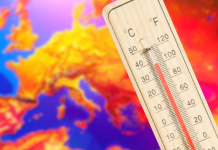
- Temperatures Expected to Soar Above 100°F as Forecasters Warn of Prolonged Heat Stress
WASHINGTON: A dangerous heat wave is set to intensify across much of the central United States this weekend and continue into next week, with temperatures expected to exceed 100°F (37.8°C) from Texas to North Dakota and roughly 70 million people facing heat advisories.
Forecasters say a persistent heat dome — a weather pattern that traps hot air beneath a strong area of high pressure — will drive prolonged periods of extreme temperatures. Overnight lows are also expected to remain unusually high, limiting the body’s ability to recover from daytime heat and increasing the risk of heat-related illness.
Heat to Stretch Across Southwest, Plains and Midwest
The oppressive conditions are expected to extend from the desert Southwest and Gulf Coast into the Great Plains and Midwest, with temperatures forecast to run 10°F to 15°F (5.6°C to 8.3°C) above normal in many areas.
Some locations around Denver could challenge or break temperature records. Bob Oravec, a meteorologist with the National Weather Service, said the heat dome appeared likely to remain largely stationary through the coming week.
Western Nebraska was among the areas under an extreme heat warning, with temperatures forecast to reach 108°F (42°C) over the weekend.
The extreme heat is expected to persist across the central United States, with temperatures potentially surpassing 100°F even in normally milder parts of Montana and Wyoming.
High Humidity to Increase Health Risks
High humidity will make conditions feel even hotter, while elevated overnight temperatures could prevent adequate relief.
Authorities are urging residents to take precautions, particularly children, older adults and people with underlying health conditions, who face a heightened risk of heat exhaustion and heat stroke.
People are advised to remain in air-conditioned buildings or cooling centers whenever possible, drink plenty of water, avoid prolonged exposure to direct sunlight and limit strenuous outdoor activity during the hottest parts of the day.
Some Regions to Escape Worst of Heat
Not all parts of the country will experience the extreme conditions. The Mid-Atlantic and Northeast are expected to avoid the most severe heat, while much of the Pacific Northwest should also remain outside the core of the heat dome.
Forecasters said some relief could reach the central United States toward next weekend, although it may be temporary.
The most intense heat is expected to shift during the week, with Texas and parts of the Gulf Coast facing particularly severe conditions by Wednesday.
Communities Prepare for Dangerous Conditions
Communities across affected areas are taking steps to help residents cope with the extreme temperatures.
At the Indianapolis Motor Speedway, spectators attending the Brickyard 400 are expected to have access to water-refill stations and cooling areas, while packed coolers are permitted.
In Denver, recreation centers are preparing designated spaces where residents can escape the heat and access air conditioning.
The unusual temperatures have also affected tourism. At the Museum of the Fur Trade near Chadron, Nebraska, visitor numbers were lower than usual, while traditional fur hats and pelts in the gift shop saw little demand amid the scorching weather.
Heat Waves Becoming More Frequent and Severe
The latest heat wave follows a series of extreme weather events across the United States this summer. An intense heat spell in the eastern US earlier in July disrupted Independence Day celebrations, while another heat wave later affected the Southwest and Great Plains.
The trend is also part of a broader global pattern. A severe heat wave in Europe in June was linked to thousands of additional deaths, with France recording at least 5,700 more deaths than usual during the period.
Climate scientists say rising greenhouse gas concentrations are increasing the likelihood of more frequent and intense heat events.
Andy Pershing, chief program officer at Climate Central, said current conditions are consistent with climate projections made decades ago, including more severe heat waves, larger temperature departures from normal, greater humidity and warmer overnight temperatures.
Forecasters and public health officials are urging residents to remain vigilant as the heat dome persists and conditions evolve throughout the week.
BY: The Times Union