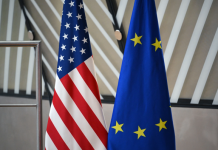
On Saturday, Europe Day marks the anniversary of the 1950 Schuman Declaration, the foundation of the modern EU, a political project built on interdependence rather than rivalry, on law rather than force and on partnerships rather than fragmentation. It is not a commemoration, it is a reminder that, in today’s rapidly shifting world, partnerships matter more than ever.
Today’s world is at a crossroads. The Iranian crisis is not merely a regional one. It is a warning sign of deeper global changes that will spare no one and reach far beyond energy markets. We have entered an unprecedented era of upheaval. Transformative technologies such as artificial intelligence, quantum computing and biotechnology are reshaping economies and societies. Global challenges including climate disruption, pandemics and food and energy insecurity are testing our collective resilience. Major crises, from Russia’s aggression against Ukraine to the current critical situation in the Gulf region, put growing strain on the rules-based international system, where the fundamental question is increasingly whether might will prevail over right.
Parts of these changes are positive — innovation is accelerating medical breakthroughs, expanding access to knowledge and opening new economic frontiers. Societies are more connected than ever. But other parts are dangerous — fragmentation, instability and the erosion of international norms are leading to war and chaos.
Vision 2030 reflects a shared understanding that, in a rapidly changing world, resilience and renewal are essential
Christophe Farnaud
To deny or underestimate these dynamics would be a mistake. The real question is whether we shape these changes or are shaped by them. The European answer is clear: we need to act, embrace transformation where it empowers progress and stand up where principles are at risk.
This is what Europe is doing through its new strategic priorities. Through improved competitiveness, it is strengthening its technological leadership and economic resilience in a global race defined by scale and speed. Through a renewed approach to security, Europe is promoting military readiness, energy sovereignty and migration management as interconnected pillars of stability.
In many ways, Saudi Arabia’s Vision 2030 mirrors the EU’s own response to the current changes. Both are driven by the same imperative to adapt through economic diversification, social progress and sustainability. One of the most ambitious national agendas worldwide, Vision 2030 reflects a shared understanding that, in a rapidly changing world, resilience and renewal are essential — Saudi Arabia is delivering on this vision with impressive determination, impact and speed.
But, in the age of globalization, no country or region can respond to these challenges alone. The answer must be collective. This is the core lesson of the European project since the Schuman Declaration: a better world can be built through partnerships, not isolation.
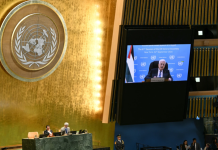
A rules-based multilateral system anchored in the UN framework remains indispensable. We do not need less cooperation, we need more and better. Not less partnership, but deeper and more structured engagement across regions.
Our goal is also to keep building a broader agenda for the long term based on political cooperation in favor of regional stability
Christophe Farnaud
Against that backdrop, the strategic partnership between the EU and the Gulf countries, and particularly Saudi Arabia, has gained exceptional relevance. It rests on solid foundations such as the EU-Saudi Cooperation Arrangement signed in 2021, the EU’s Joint Communication on a Strategic Partnership with the Gulf adopted in May 2022, and the first EU-GCC Summit held in 2024.
The EU and Saudi Arabia share a core interest for stability, which is the precondition for energy security, economic growth, maritime safety and the protection of global trade routes. Today, the EU is the second-largest trading partner of Saudi Arabia, with goods trade reaching €66.3 billion ($78 billion) in 2025, and the largest source of foreign direct investment, amounting to €34.3 billion in 2024. These figures reflect not only economic ties but structural interdependence.
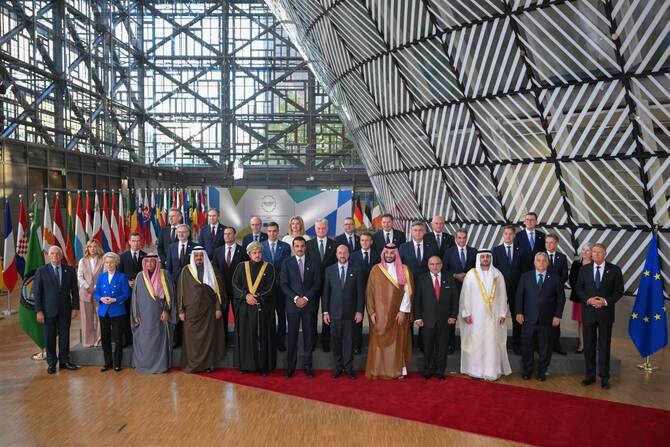
Today, the region faces its greatest challenges in decades and this partnership matters even more. The EU condemned very strongly the unacceptable Iranian strikes against the Kingdom and its GCC partners. This solidarity has been reflected in intensified diplomatic engagements at multiple levels. The EU-GCC foreign ministers’ meetings on March 5 and leaders’ consultations on March 9 underscored a shared commitment to de-escalation and a political solution. This was reinforced by the visits of EU Special Representative for the Gulf Luigi Di Maio, EU High Representative Kaja Kallas, President of the European Council Antonio Costa and, most recently, a European Parliament delegation.
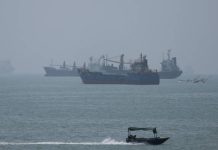
Our goal is also to keep building a broader agenda for the long term based on political cooperation in favor of regional stability — from joint efforts to ensure freedom of navigation in the Strait of Hormuz to effective cooperation in the Global Coalition for the Implementation of the Two-State Solution. Our cooperation is also about security (the EU is already involved in regional maritime protection through operations Aspides and Atalanta), economic transformation (driving joint projects in energy, digitalization, logistics and infrastructure) and people-to-people links (through culture, education, universities and research exchanges). This will be the goal of the upcoming second EU-GCC Summit and the raison d’etre of future bilateral strategic partnership agreements.
Yes, today’s challenges carry risks, but they also carry opportunities. They force choices and open space for renewal. Europe, together with its partners in the Gulf region, will keep working to build a future of peace and prosperity for all.
BY: Writer Christophe Farnaud is the EU Ambassador to the Kingdom of Saudi Arabia, Kingdom of Bahrain and Sultanate of Oman.
Disclaimer: Views expressed by writers in this section are their own and do not necessarily reflect The Times Union‘ point of view