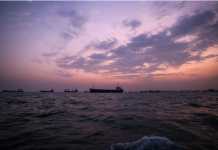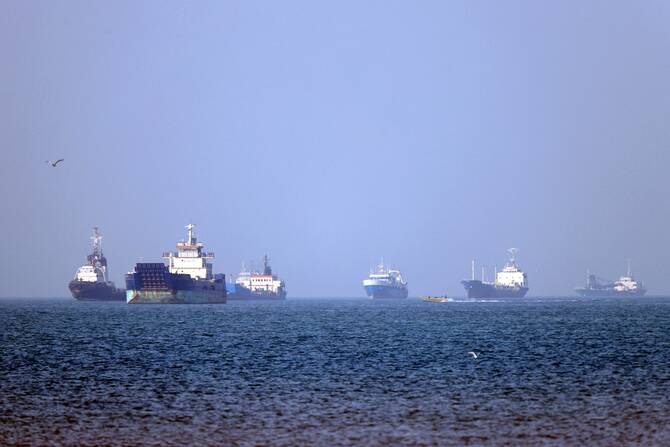
At its narrowest, the Strait of Hormuz spans barely 39 km — a slender ribbon of water that has long carried one-fifth of the world’s seaborne oil, the lifeblood of global commerce and energy security. Today, that vital artery lies mined, contested and partially closed. Merchant vessels face attacks, illegal tolls and the persistent shadow of naval confrontation.
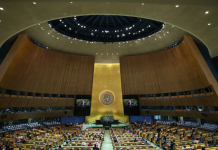
In response, a carefully calibrated Chapter VII draft resolution — advanced by Bahrain on behalf of the Gulf Cooperation Council states together with the US — now awaits the UN Security Council’s consideration. It demands the disclosure and removal of Iranian mines, cooperation in clearance operations and the immediate opening of a humanitarian corridor for food and fertilizers. It reaffirms the right of transit passage, prohibits assistance to any closure of the strait, welcomes the Pakistan-mediated ceasefire and requests a secretary-general’s report within 30 days on compliance, with the possibility of further measures should Iran persist with its defiance.
This is not a sweeping indictment but a focused operational text designed to restore safe navigation without unnecessary escalation. Yet it confronts the same obstacle that doomed its predecessor last month: the near-certainty of vetoes by Russia and China.
History teaches that deadlock is not inevitable when diplomacy is conducted with realism and foresight
Sarah Benashoor
Both powers have already objected, labeling the approach “biased” and faulting it for neglecting “root causes.” Their position is understandable in the cold logic of great power competition — yet it leaves the council unable to fulfill its most basic duty. Russia values Iran as a proxy that diverts American focus and resources; China secures discounted oil while safeguarding precedents that might later constrain its own maritime interests. A resolution that offers them no stake simply invites the veto as an inexpensive tool of obstruction.
The UNSC stands at a familiar crossroads. History teaches that deadlock is not inevitable when diplomacy is conducted with realism and foresight. In 1815, at the Congress of Vienna, the great powers faced a continent shattered by two decades of war. Rather than punish or isolate defeated France, Prince Metternich and his counterparts deliberately drew the French back into the fold.
They constructed a European concert — a web of congresses, alliances and shared understandings — that wove rival ambitions into a balanced system. Every capital, including the defeated power, was given a tangible stake in the new order. The result was nearly a century of relative stability in which no single state could upend the whole without harming its own interests.
Henry Kissinger, who studied Vienna’s lessons as both scholar and practitioner, applied the same principle in the 1970s. Through his triangular diplomacy, he opened relations with China while simultaneously pursuing arms control and detente with the Soviet Union. Moscow and Beijing were each given reasons to prefer a managed equilibrium over unchecked rivalry: neither could afford to let the other dominate the global chessboard. The outcome was not the surrender of American interests but their quiet advancement through shrewd inclusion.
The Strait of Hormuz now calls for its own modest concert — not concessions that reward disruption but refined language and mechanisms that align Russian and Chinese interests with the imperative of open seas.
The refinements required are modest yet consequential. First, the preamble should present the full chronology with balance: the strikes that precipitated the crisis, the subsequent closure of the strait, and Iran’s mining and tolling actions. A single paragraph deploring “all threats to navigation from any party,” while stressing the need for comprehensive de-escalation, alters no operative demand. It provides Russia and China the diplomatic cover they seek, echoing successful compromises in earlier council texts on maritime security.
Second, the existing reference to the Pakistan-mediated ceasefire should not be a mere footnote. It ought to be strengthened into a clear operative call for its extension and evolution into a broader political settlement — one that revives the spirit of inclusive Gulf security arrangements long championed by Moscow and Beijing. By granting them visible co-ownership of the diplomatic horizon, the resolution transforms them from critics into potential defenders of its success.
Third, institutionalize shared responsibility. The text should mandate the secretary- general to establish, within 30 days, an international contact group for mine clearance and humanitarian corridor oversight, explicitly including the permanent members on equal footing. Language encouraging “coordinated contributions by interested states, including the permanent members,” opens practical avenues for Russian expertise in de-mining or Chinese logistical support. Operational involvement creates skin in the game that abstract veto power cannot match.
For China in particular, a measured economic acknowledgement — reaffirming that unimpeded energy flows through the strait serve the legitimate security needs of all importing nations, with a forward glance toward post-ceasefire reconstruction and trade — aligns Beijing’s substantial stake in global energy stability with the resolution’s goals. This is not accommodation; it is enlightened realism, recognizing that sustained disruption in the Strait of Hormuz harms every major economy.
The Strait of Hormuz is more than a geographic chokepoint, it is a mirror reflecting the emerging multipolar order
Sarah Benashoor
Chapter VII’s binding character must be preserved — the Gulf states cannot accept empty assurances while commerce remains throttled. A review clause, tying further measures to the secretary-general’s findings and diplomatic progress, offers Moscow and Beijing a responsible off-ramp. Parallel quiet diplomacy, linking the vote where appropriate to broader understandings on energy markets, calibrated sanctions relief or de-escalatory steps in other theaters such as Ukraine, can further ease passage.
Russia has long traded regional leverage for tangible relief elsewhere — giving it a visible interest in Strait of Hormuz stability can make abstention or support the rational choice.
As UNSC president for April, Bahrain has been well placed to facilitate these adjustments. Our nation has long served as a reliable host for coalition naval presence and a bridge for pragmatic diplomacy — from the minesweeping operations of the 1980s to today’s multinational patrols. The alternative — another veto followed by uncoordinated defensive measures outside the council — may preserve legal clarity but would erode the UN’s relevance, an outcome that even veto-wielding members claim to regret.
The Strait of Hormuz is more than a geographic chokepoint, it is a mirror reflecting the emerging multipolar order. In its narrow waters, the world confronts a choice: allow great power rivalry to paralyze collective action or craft a concert of shared stakes that lifts mines, opens corridors and restores the free flow of commerce.
By weaving Russia and China into the architecture of solution rather than exclusion — just as Vienna and Kissinger’s diplomacy once did — this resolution can transcend the immediate crisis and offer a precedent for cooperation amid competition. In that achievement lies not only safer Gulf waters but a quiet affirmation that, even in an age of rivalry, diplomacy grounded in mutual interest remains the sharpest instrument of statesmanship.
BY: Sarah Benashoor is a Bahraini geopolitical analyst and political commentator specializing in Gulf security. She is the Director of Outreach at Tomorrow’s Affairs, a London-based digital think tank. She previously served as a strategic adviser to Bahrain’s ambassador to London. X: @SBenashoor
Disclaimer: Views expressed by writers in this section are their own and do not necessarily reflect The Times Union‘ point of view