- Jordan’s Prestigious Global Ranking Recognises Morocco’s Monarch for Religious Leadership, Islamic Heritage and International Diplomacy
- Report Highlights King’s Role in Promoting Moderate Islam, Modernisation, African Engagement and Support for the Palestinian Cause
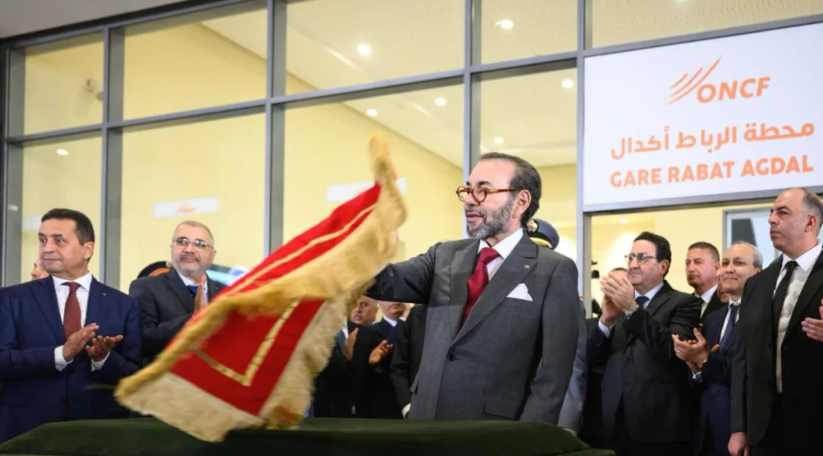
ISLAMABAD: King Mohammed VI of Morocco has been recognised among the 50 most influential figures in the Muslim world in the 2027 edition of The World’s 500 Most Influential Muslims, published by Jordan’s Royal Islamic Strategic Studies Centre.
The international recognition reflects the Moroccan monarch’s prominent religious leadership, his contribution to preserving the Kingdom’s centuries-old Islamic heritage and Morocco’s expanding diplomatic, cultural and international influence.
The annual publication acknowledges influential Muslim personalities whose leadership, ideas and contributions have shaped religious, political, social and international affairs. King Mohammed VI’s inclusion among the leading 50 figures underscores Morocco’s distinctive position in the Muslim world and its growing role in international engagement.
Commander of the Faithful: A Legacy of Religious Leadership
The report places particular emphasis on King Mohammed VI’s constitutional and religious position as Commander of the Faithful, a central institution of Morocco’s Islamic identity and national heritage.
It highlights the King’s lineage to Prophet Mohammed (Peace Be Upon Him) through the Alaouite dynasty, which has governed Morocco for more than four centuries.
Tracing the dynasty’s historical roots to Moulay Ali Cherif, who became ruler of Tafilalet in 1631, the publication recognises the enduring religious, cultural and historical significance of the Moroccan monarchy.
Under King Mohammed VI’s leadership, Morocco has continued to preserve its distinctive Islamic traditions while promoting religious moderation, social cohesion and peaceful coexistence.
Morocco’s Historic Islamic Heritage and Global Scholarly Contribution
The ranking also highlights Morocco’s exceptional contribution to Islamic scholarship and intellectual development, particularly through the historic Al Quaraouiyine University in Fez.
Founded in 859, Al Quaraouiyine is widely recognised as one of the world’s oldest continuously operating centres of higher learning and a historic institution of Islamic education and scholarship.
Its longstanding association with the Maliki school of Sunni Islamic jurisprudence has helped establish Morocco as an important centre of religious learning and intellectual exchange across North Africa and the wider Muslim world.
The report recognises the importance of this heritage in shaping Morocco’s religious identity and its continuing contribution to Islamic scholarship.
Modernisation and Reforms Under King Mohammed VI
Beyond religious leadership, the publication acknowledges King Mohammed VI’s efforts to combine Morocco’s historical traditions with constitutional development, institutional reforms and social modernisation.
Particular attention is given to the reform of the Family Code, which strengthened women’s rights in areas including divorce proceedings, property ownership and child custody.
The report also highlights the extension of Moroccan nationality to children born to Moroccan mothers and foreign fathers, reflecting the Kingdom’s efforts to advance legal equality and strengthen the rights of Moroccan families.
These reforms demonstrate the monarchy’s approach to preserving the country’s cultural and religious foundations while responding to evolving social and institutional requirements.
Promoting Moderate Islam and Strengthening African Spiritual Connections
Morocco’s international religious engagement is another important dimension of the King’s global influence.
The report highlights initiatives led by the Ministry of Endowments and Islamic Affairs, including the training of female religious guides who provide religious education and guidance to Moroccan communities abroad.
The Kingdom’s historic spiritual connections with African countries also receive significant attention, particularly through the Tijaniyya Sufi order.
Founded by Moroccan religious scholar Ahmed Tijani, the order has developed a substantial following across West and North Africa. His shrine in Fez remains an important destination for followers and religious visitors from across the African continent.
Through these longstanding connections, Morocco continues to strengthen its cultural and spiritual engagement with African nations, reinforcing its position as a bridge between North Africa, sub-Saharan Africa and the wider Muslim world.
King Mohammed VI’s Leadership of Al-Quds Committee and Support for Palestine
King Mohammed VI’s international standing is further strengthened by his chairmanship of the Al-Quds Committee of the Organisation of Islamic Cooperation (OIC).
The report recognises this responsibility as an important dimension of Morocco’s engagement with the Palestinian cause and its commitment to preserving Jerusalem’s religious, historical and cultural identity.
Through the Al-Quds Committee and the Bayt Mal Al-Quds Agency, Morocco has maintained its engagement in supporting the Palestinian people and protecting the historic character of the holy city.
This role reflects the Kingdom’s longstanding commitment to Islamic solidarity and its participation in international efforts concerning Palestine and Jerusalem.
Morocco’s Sporting Achievements Enhance Its Global Profile
The publication also recognises the contribution of Moroccan sports, particularly football, to the country’s growing international reputation.
Morocco’s qualification for the 2026 FIFA World Cup marks its seventh appearance in the prestigious international tournament and its third consecutive qualification.
The report also highlights preparations for Morocco’s historic co-hosting of the 2030 FIFA World Cup alongside Spain and Portugal.
The Kingdom’s remarkable performance at the 2022 FIFA World Cup in Qatar, where the national team became the first African and Arab side to reach the semi-finals, significantly elevated Morocco’s international sporting profile.
Morocco’s bronze medal at the 2024 Paris Olympic Games further demonstrated the country’s growing sporting capabilities and international ambitions.
Muslim World Leadership and the 2027 Global Ranking
The 2027 edition also features several prominent international leaders among the highest-ranked personalities, including Saudi King Salman bin Abdulaziz, Crown Prince Mohammed bin Salman, Pakistan’s Prime Minister Shehbaz Sharif, Pakistan’s Chief of Army Staff Field Marshal Asim Munir and Turkish President Recep Tayyip Erdogan.
Their prominent positions are linked in the publication to their respective political, diplomatic and strategic roles, including the Mecca Mutual Defense Agreement signed in August 2026, which the report describes as an important development in contemporary Islamic diplomacy and regional security cooperation.
Morocco’s Growing International Standing
King Mohammed VI’s inclusion among the world’s 50 most influential Muslim figures reflects the international recognition of Morocco’s distinctive model of religious leadership, institutional modernisation, cultural preservation and diplomatic engagement.
Under his leadership, Morocco has continued to strengthen its position as an influential voice in the Muslim world while expanding its partnerships across Africa, Europe, the Middle East and beyond.
The recognition also highlights the Kingdom’s ability to connect its rich Islamic heritage with contemporary priorities, including education, social development, international cooperation, sports and religious moderation.
For Morocco, this distinction represents not only recognition of its monarch but also international appreciation of the country’s historical legacy, spiritual influence and growing role in global affairs.
BY: The Times Union