- Emirati Diplomat Secures Seven Positive Votes in Security Council Straw Poll, Finishing Third Among Eight International Candidates
- Nusseibeh’s Candidacy Highlights UAE’s Growing Diplomatic Influence and Ambition to Shape the Future of the United Nations
- China, France, Britain said to oppose UAE candidate for UN chief in secret vote
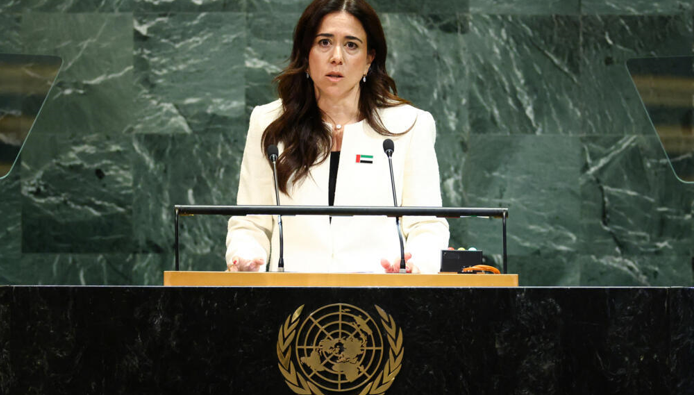
NEW YORK: The United Arab Emirates has strengthened its international diplomatic profile with the candidacy of its distinguished diplomat, Lana Nusseibeh, for the position of United Nations Secretary-General, as the global organisation prepares to select a successor to António Guterres.
Nusseibeh secured seven votes of encouragement in the latest informal Security Council straw poll held on Friday, according to figures released by international advocacy group 1 for 8 Billion. She also received two votes expressing no opinion and six votes discouraging her candidacy, placing her third among eight contenders.
Her participation in the high-level international selection process reflects the UAE’s expanding diplomatic engagement and its ambition to contribute to global leadership, multilateral cooperation and international peace.
Emirati Diplomatic Leadership Gains International Recognition
Lana Nusseibeh is one of the UAE’s most prominent diplomats, with extensive experience in international affairs, multilateral diplomacy and the United Nations system.
Her candidacy has attracted considerable international attention, particularly because she could become the first woman to serve as UN Secretary-General in the organisation’s 80-year history.
With an academic background that includes a master’s degree in Israeli and Jewish Diaspora Studies, Nusseibeh has also been associated with efforts to promote dialogue and diplomatic engagement across different communities and regions.
Her supporters see her diplomatic experience and international outlook as important qualities for leading the United Nations at a time of complex geopolitical challenges, regional conflicts and growing demands for institutional reform.
Security Council Straw Poll Reveals Competitive International Race
Friday’s informal straw poll was the first since Nusseibeh entered the race last month to provide a breakdown of encouragement, discouragement and no-opinion votes among the Security Council’s five permanent members.
According to 1 for 8 Billion, the UAE candidate received seven positive votes, two no-opinion votes and six negative votes. Three of the five permanent Security Council members reportedly voted against her candidacy.
Media reports suggest that the United States and Russia are supportive of Nusseibeh, while China, France and the United Kingdom are believed to have expressed reservations.
However, the informal straw poll is not a final election, and the positions of Security Council members may evolve as consultations continue.
The selection of a new Secretary-General requires a formal Security Council recommendation, supported by at least nine of its 15 members and without a veto from any of the five permanent members. The General Assembly subsequently appoints the recommended candidate.
Costa Rica’s Rebeca Grynspan Leads the Race
Costa Rica’s former vice president and former UN official Rebeca Grynspan secured the leading position in Friday’s straw poll, receiving 10 encouragement votes, one no-opinion vote and four discouragement votes.
Argentina’s Rafael Grossi, Director General of the International Atomic Energy Agency (IAEA), finished second with eight positive votes, one no-opinion vote and six negative votes.
Nusseibeh ranked third, ahead of Guyana’s UN Ambassador Carolyn Rodrigues-Birkett, who received six encouragement votes, three no-opinion votes and six discouragement votes.
The results underline the competitive nature of the selection process and the importance of securing broad international consensus.
UAE Rejects Allegations Concerning Sudan Conflict
Nusseibeh’s candidacy has also attracted scrutiny over allegations concerning the UAE’s role in Sudan’s ongoing conflict and claims of support for the paramilitary Rapid Support Forces (RSF).
Sudan previously brought a case before the International Court of Justice, accusing the UAE of violating the Genocide Convention through alleged support for the RSF. The UAE has firmly rejected the accusations, describing the legal proceedings as a politically motivated publicity exercise.
The UAE has consistently denied supporting the paramilitary group.
Despite these political challenges, Nusseibeh’s participation in the UN leadership race has kept the UAE at the centre of an important international diplomatic discussion.
UN Faces Critical Leadership Transition
The latest voting developments have also raised concerns about the possibility of a delay in appointing a successor to António Guterres, whose term is scheduled to conclude on December 31.
Diplomats have warned that failure to reach agreement before the end of the year could create uncertainty over the organisation’s leadership and administrative continuity.
The next Secretary-General will inherit a challenging international environment characterised by armed conflicts, humanitarian emergencies, financial pressures, reduced contributions from major donors and questions about the effectiveness of multilateral institutions.
The selection process itself has come under criticism for its lack of transparency and the difficulties created by competing interests among the five permanent Security Council members.
Possible arrangements in the event of a delayed appointment include temporarily extending Guterres’s tenure or designating another senior official to maintain continuity, although the precise legal and institutional implications would require further consideration.
UAE’s Global Diplomatic Profile Continues to Expand
Lana Nusseibeh’s candidacy represents an important moment for Emirati diplomacy and the UAE’s growing participation in international decision-making.
The country’s engagement with multilateral institutions, international partnerships and diplomatic initiatives has reinforced its profile as an active participant in discussions concerning global peace, security and development.
Although the UN selection process remains uncertain, Nusseibeh’s position among the leading candidates demonstrates that the UAE has secured a significant place in the international conversation about the future leadership of the United Nations.
Her campaign also brings renewed attention to the importance of inclusive global leadership, effective multilateral cooperation and the need for diplomatic solutions to the world’s most pressing challenges.
BY: The Times Union – TOI