- Reported Infravest Collapse Intensifies Scrutiny of Camp Governance as Spain Advances Sahrawi Citizenship Bill
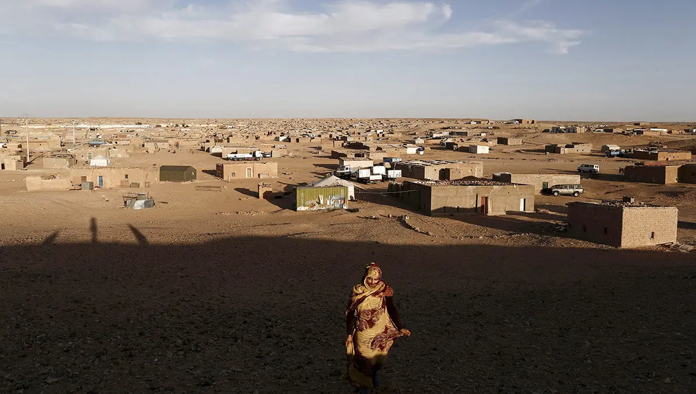
TINDOUF/MADRID: Thousands of Sahrawi refugees living in the Tindouf camps continue to face difficult humanitarian and economic conditions, while a series of reported financial controversies has renewed questions about transparency, accountability and the management of resources within the camps.
The latest controversy centers on the reported collapse of Infravest for Contracting and Investment, a company that operated in the camps and is alleged to have attracted substantial investments from local residents. Reports published in September 2026 say investors in Rabouni and the Chahid El Hafed camp have been demanding the return of their funds following the company’s collapse.
According to several media reports, the amount claimed by investors could be around $6.6 million, although the exact number of investors, the amount involved and the circumstances surrounding the company’s operations have not been independently established.
The case has nevertheless intensified wider calls for greater financial transparency and independent oversight of economic activity and humanitarian assistance reaching the Tindouf camps.
Reported Infravest Case Raises Questions Over Financial Oversight
The Infravest controversy reportedly emerged after residents, merchants and local cooperatives sought the recovery of money they had invested with the company.
Media reports have alleged that the company operated in the camps for several years and offered financial returns to investors. Some reports have characterized the business model as resembling a Ponzi or pyramid scheme, while also reporting that its manager, Sallamou Abba Ali, has disappeared.
These allegations remain subject to verification by competent authorities. An independent investigation would be required to establish the company’s ownership structure, the amount of money collected, the identity of investors and whether any individuals or institutions facilitated or benefited from the alleged scheme.
The controversy has also raised a broader question: how was a substantial financial operation able to develop for several years inside a highly controlled and militarized environment?
Longstanding Concerns Over Humanitarian Aid
Questions surrounding financial accountability in the Tindouf camps are not entirely new.
European institutions have previously examined allegations concerning the diversion of humanitarian assistance intended for Sahrawi refugees. An investigation conducted by the European Anti-Fraud Office (OLAF) into allegations dating from 2003 led to concerns about weaknesses in the humanitarian aid logistics and distribution chain. The European Commission subsequently strengthened monitoring and control mechanisms involving procurement, transportation, storage and distribution.
European Parliament records also document longstanding calls for stronger beneficiary identification and oversight of aid delivered to the camps. However, European Commission records indicate that corrective measures were introduced following the earlier investigation and that subsequent monitoring mechanisms were strengthened.
Accordingly, claims that current humanitarian assistance is systematically being diverted should be treated as allegations unless supported by fresh, independently verified evidence.
Concerns Raised Over Aid and Fundraising Activities Abroad
Separate allegations have also surfaced concerning fundraising and humanitarian activities involving Polisario representatives in Europe.
In Italy, criticism reported by some media outlets has focused on Fatima Mahfoud, the Polisario Front’s representative there. Critics have questioned the transparency of certain humanitarian initiatives and fundraising activities.
Such allegations require documentary evidence and independent investigation before conclusions can be drawn regarding the use of funds. Any public or charitable money collected in the name of vulnerable Sahrawi communities should, however, be subject to appropriate financial reporting and accountability standards.
Spain Advances Citizenship Legislation for Sahrawis
The financial controversy comes at a significant moment for Sahrawis living both inside and outside the Tindouf camps.
On September 10, 2026, Spain’s Congress of Deputies approved a bill establishing a special route to Spanish nationality for Sahrawis born in Western Sahara while the territory was under Spanish administration, as well as providing a route for their descendants. The vote was 168 in favour, 31 against and 145 abstentions. The legislation has now been sent to the Senate for further consideration.
Estimates of the potential number of beneficiaries vary. Spanish and international reports have cited figures ranging from tens of thousands to more than 100,000 people when descendants are included.
The proposed legislation has therefore placed renewed international attention on the historical and contemporary circumstances of the Sahrawi population, including refugees living in the Tindouf camps.
Calls for Greater Transparency and Independent Oversight
The latest developments have prompted calls for stronger accountability mechanisms surrounding humanitarian assistance, charitable funding and private financial activity in the camps.
International donors and humanitarian organizations could strengthen confidence by ensuring transparent beneficiary-registration procedures, independent auditing and robust monitoring of distribution networks. Such measures would help ensure that assistance reaches its intended recipients while protecting vulnerable refugees from financial exploitation.
The reported Infravest case should likewise be investigated independently, with affected investors given access to appropriate legal remedies and information about the status of their funds.
Protecting the Rights and Dignity of Sahrawi Refugees
The humanitarian needs of Sahrawi refugees should remain at the center of international policy. Financial controversies—whether involving humanitarian aid, charitable fundraising or private investment—should not obscure the rights and dignity of the people living in the camps.
At a time when Spain is advancing legislation that could provide a new legal pathway to citizenship for many Sahrawis, renewed attention to transparency, humanitarian accountability and the protection of vulnerable communities is likely to remain an important issue for European governments, international donors and United Nations agencies.
Independent investigations, transparent financial reporting and effective humanitarian oversight can help distinguish substantiated wrongdoing from unverified allegations while ensuring that assistance intended for refugees is used for its stated humanitarian purposes.
BY: The Times Union