- Crown Prince Moulay El Hassan Attends Meeting as Morocco Targets 4.7% Economic Growth and Accelerates Major Development Programmes
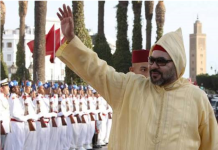
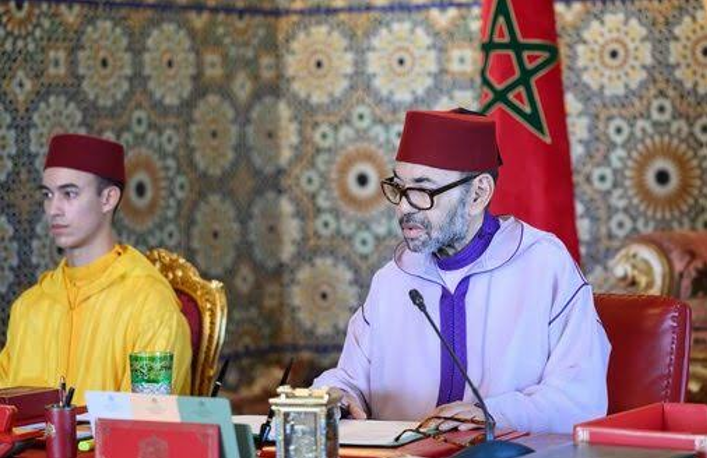
RABAT, Morocco: His Majesty King Mohammed VI, accompanied by His Royal Highness Crown Prince Moulay El Hassan, on Saturday presided over a Council of Ministers at the Royal Palace in Rabat, dedicated to examining and approving the general guidelines of Morocco’s Draft Finance Law for 2027.
The meeting underscored Morocco’s continued commitment to strengthening economic resilience, improving citizens’ living standards, expanding employment opportunities for young people and advancing the Kingdom’s long-term development ambitions under the enlightened leadership of King Mohammed VI.
Morocco Maintains Economic Resilience Amid Global Uncertainty
At the outset of the Council, and in accordance with Article 49 of the Constitution, the Minister of Economy, Finance and Public Performance presented to the King the principal orientations of the Draft Finance Law for 2027.
The minister highlighted the increasingly challenging international environment, characterised by escalating geopolitical conflicts, rising protectionist tendencies and intensifying competition for energy resources, technological capabilities and financing.
Despite these global uncertainties, Morocco continues to consolidate its economic resilience and strengthen its development momentum under the King’s leadership.
The national economy is projected to record 4.7 per cent growth by the end of 2026, while inflation is expected to remain contained at 0.7 per cent. The budget deficit is also projected to decline to 3 per cent of gross domestic product (GDP), reflecting continued efforts to preserve macroeconomic stability and strengthen public finances.
Five Strategic Priorities Define Morocco’s 2027 Finance Bill
The Draft Finance Law for 2027 is structured around five principal priorities aimed at promoting inclusive growth, reinforcing social protection and strengthening Morocco’s strategic and economic sovereignty.
1. Restoring Purchasing Power and Strengthening the Social State
The first priority focuses on protecting citizens’ purchasing power and consolidating the foundations of a sustainable social state.
Beginning in 2027, the government intends to pursue structural reforms of markets and prices, accompanied by measures designed to ease financial pressures on households.
The programme also envisages the continued expansion of universal medical coverage, measures to ensure the long-term sustainability of social protection schemes, and the enhancement of direct social assistance to support vulnerable households.
These initiatives aim to strengthen social solidarity while ensuring that the benefits of economic development reach a broader segment of the population.
2. Empowering Young People Through Education, Training and Employment
Youth development and employment represent another central pillar of the 2027 Finance Bill.
The government plans to launch an integrated National Programme for Young People for 2027–2031, designed to improve access to education, professional training, entrepreneurship and decent employment.
The programme will focus on vocational guidance, training opportunities, business incubation, access to financing, guarantee mechanisms and markets.
The objective is to create a more coordinated national framework that supports young people throughout their transition from education and training into employment, while also addressing their broader needs, including housing and social stability.
3. Advancing Regionalisation and Integrated Territorial Development
The third priority aims to accelerate advanced regionalisation and implement a new generation of integrated territorial development programmes.
In line with the King’s High Royal Directives, the government will work to clarify and strengthen the respective responsibilities of national and regional authorities, improve institutional efficiency and reinforce coordination between the central government and regional administrations.
Greater emphasis will be placed on contractual arrangements between the State and the regions, alongside the full implementation of the National Charter of Administrative Deconcentration.
The approach seeks to ensure that development policies respond more effectively to local needs, reduce regional disparities and promote balanced economic and social progress throughout the Kingdom.
The implementation of the new generation of integrated territorial development programmes will be accelerated, with budgetary allocations of approximately 25 billion dirhams.
4. Strengthening Water, Energy, Food and Digital Sovereignty
The fourth priority focuses on safeguarding Morocco’s strategic resources and reducing vulnerabilities in critical sectors.
The government intends to reinforce water security, accelerate renewable energy development and continue advancing Morocco’s green hydrogen supply and development programme.
It will also pursue the gradual implementation of the national roadmap for gas infrastructure, while introducing further measures to strengthen food security and enhance the country’s digital sovereignty.
These initiatives are designed to improve the Kingdom’s capacity to respond to climate pressures, fluctuations in international energy markets and emerging technological challenges.
By strengthening domestic capabilities in these strategic sectors, Morocco aims to reinforce its long-term resilience, competitiveness and economic independence.
5. Building a Strong Economy While Preserving Macroeconomic Stability
The fifth priority seeks to develop a robust and competitive economy capable of financing Morocco’s social ambitions and strategic development objectives.
The government plans to mobilise the necessary financial resources to accelerate major development projects and implement sectoral strategies across key areas of the national economy.
The programme will also support institutional reforms, preserve macroeconomic and budgetary balances, and encourage the development of new sovereign industrial ecosystems.
These measures are intended to strengthen productive capacity, promote economic diversification and create the conditions for sustainable growth and long-term prosperity.
Private Investment and SMEs to Receive Greater Support
The 2027 Finance Bill places particular emphasis on stimulating private investment as a driver of economic growth, employment and industrial development.
The government intends to consolidate investment-support mechanisms established under the Investment Charter and continue reforming the Regional Investment Centres to improve the investment climate and facilitate business activity.
Particular attention will be directed towards very small, small and medium-sized enterprises, recognising their contribution to employment generation, entrepreneurship and the expansion of productive economic activity.
The measures are also expected to encourage private-sector participation in national development projects and strengthen Morocco’s attractiveness as an investment destination.
Integrated Youth Policy to Replace Fragmented Programmes
Addressing the needs of young people has been identified as one of the most urgent priorities of the current development phase.
The government aims to move beyond fragmented sectoral initiatives towards a comprehensive national policy that coordinates support across education, professional training, employment, housing and social integration.
Through this integrated approach, the authorities seek to provide young people with clearer pathways to economic participation and greater opportunities for social mobility.
The strategy reflects the broader objective of aligning economic growth with tangible improvements in citizens’ everyday lives.
Morocco Advances Its Long-Term Development Vision
The Draft Finance Law for 2027 reflects Morocco’s ambition to balance economic growth, social justice, strategic sovereignty and fiscal discipline amid an increasingly uncertain global environment.
Under the leadership of King Mohammed VI, the Kingdom continues to pursue a development model centred on economic competitiveness, investment promotion, social protection, regional inclusion and the modernisation of strategic sectors.
With projected economic growth of 4.7 per cent, inflation contained at 0.7 per cent and a targeted budget deficit of 3 per cent of GDP, the proposed financial framework seeks to preserve economic stability while mobilising resources for major national priorities.
The planned investment in integrated territorial development, together with new initiatives for youth employment, renewable energy, water security and industrial expansion, underscores Morocco’s determination to build a more resilient, inclusive and competitive economy.
BY: The Times Union