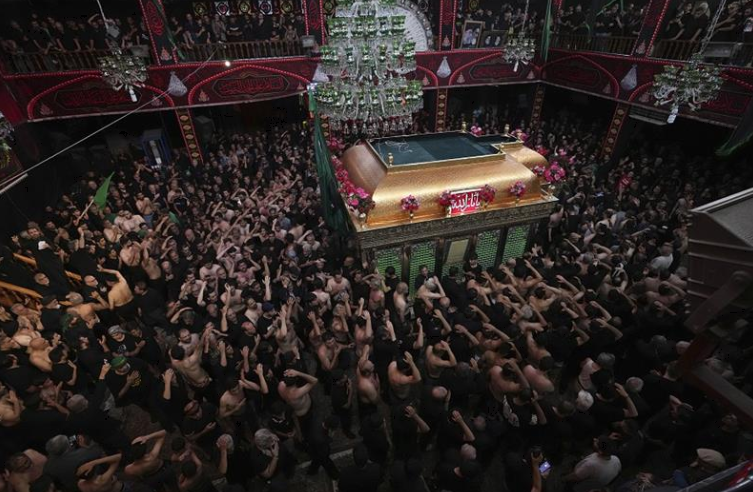
BEIRUT: Shiite Muslims across the world on Thursday commemorated Ashoura, one of the holiest days in the Islamic calendar, honoring the sacrifice and martyrdom of Imam Hussein while reflecting on a year marked by conflict and uncertainty in the Middle East.
The annual observance carries particular significance this year following months of war in Iran and Lebanon, two countries that are home to large Shiite communities and remain at the center of regional developments.
Ashoura Commemorates the Martyrdom of Imam Hussein
Ashoura marks the martyrdom of Imam Hussein, the grandson of the Prophet Muhammad (peace be upon him), who was killed along with his family and companions during the Battle of Karbala in 680 A.D. after refusing to pledge allegiance to the Umayyad caliphate.
The event remains a defining moment in Islamic history, particularly for Shiite Muslims, symbolizing steadfastness, sacrifice, and resistance against injustice and oppression.
Observed on the 10th day of Muharram, Ashoura is traditionally marked through mourning processions, elegies, sermons, and acts of remembrance that honor the values embodied by Imam Hussein.
Regional Conflicts Add Deeper Meaning to This Year’s Commemorations
This year’s observances come against the backdrop of prolonged conflicts in Iran and Lebanon, where many communities continue to grapple with the consequences of war and displacement.
In Iran, the holy day is being observed just days ahead of the funeral ceremonies for Supreme Leader Ayatollah Ali Khamenei, who was killed in an Israeli airstrike earlier this year. Khamenei was widely regarded not only as Iran’s highest political authority but also as an influential religious figure for millions of Shiite Muslims worldwide.
Meanwhile, in Lebanon, the conflict involving Hezbollah and Israeli forces has left extensive destruction across southern regions and Beirut’s southern suburbs, forcing many families to begin rebuilding their lives as they return to their communities.
Mourning Ceremonies Held Across Iran
In Tehran, thousands of worshippers dressed in black gathered in mosques, religious centers, and public spaces to commemorate Ashoura.
Traditional mourning rituals, including chest-beating processions and recitations of elegies, were held throughout the capital, while volunteers distributed food, tea, and dates to participants.
Iranian President Masoud Pezeshkian joined senior officials at ceremonies held at the shrine of Imam Ruhollah Khomeini, founder of the Islamic Republic, according to state media reports.
In a message shared on social media, Pezeshkian emphasized the enduring lessons of Karbala, describing Imam Hussein as a symbol of resistance against oppression and injustice.
“We should neither oppress, nor accept oppression, nor remain silent before it,” he wrote.
Lebanon Marks Ashoura Amid Recovery and Remembrance
In Lebanon, Ashoura ceremonies were held in cities and villages affected by months of conflict.
Families who lost loved ones during the fighting attended religious gatherings and memorial services, while banners commemorating Imam Hussein adorned streets across Shiite-majority communities.
In the southern coastal city of Tyre, mourners participated in sermons emphasizing the themes of sacrifice and perseverance that define Ashoura.
Many residents in Beirut’s southern suburbs also visited the grave of former Hezbollah leader Hassan Nasrallah, who was killed in an Israeli airstrike in September 2024, paying tribute during one of the most important periods in the Shiite religious calendar.
Pakistan Strengthens Security for Ashoura Processions
Authorities in Pakistan deployed thousands of police officers and paramilitary personnel nationwide to safeguard Ashoura gatherings and mourning processions amid concerns over possible militant threats.
Pakistan’s Shiite community, a minority within the predominantly Sunni country, has historically faced sectarian attacks targeting mosques, religious centers, and public commemorations.
As part of enhanced security measures, officials temporarily suspended mobile phone services in several areas to reduce potential risks during major processions.
For many participants, the legacy of Imam Hussein continues to inspire moral courage and resistance against injustice.
“Imam Hussein is a symbol of the highest struggle and sacrifice,” said Saadia Shah, a resident of Lahore attending a congregation with her children. “His name gives us the courage to stand up to tyranny, to say what is right and oppose what is wrong.”
Enduring Legacy of Sacrifice and Justice
More than thirteen centuries after the Battle of Karbala, Ashoura remains a profound expression of faith, remembrance, and resilience for millions of Shiite Muslims around the world.
The principles associated with Imam Hussein’s stand—justice, dignity, and opposition to oppression—continue to resonate across generations, particularly during periods of conflict and uncertainty, reinforcing the enduring spiritual and historical significance of the holy day.
BY: The Times Union