The Iranian regime is a Trotskyist regime. Since 1979, it has pursued a permanent revolution and sought to export it across the region. Interestingly, this export did not look east but only west toward the Arab countries. Even before 2023, although already weakened, it had exported its influence and destruction to Lebanon, Syria, Iraq and Yemen, and was relentlessly attempting to destabilize and interfere in other countries’ affairs.
Today, contrary to some Western media reports, the regime sits on the remnants of this expansion. We can see that, in Lebanon following the Israeli strikes, Hezbollah is nowhere near its previous strength. Syria has been completely lost and Iran itself is facing a reckoning.
It is time to recognize that, since the Iran nuclear deal and every other negotiation with the regime in Tehran, there has always been a missing piece. We should ask the right questions. How can you reach an agreement when the slogan of your counterpart is to continue exporting the revolution? How can you agree with Islamist Trotskyists who will only accept the status quo in order to continue pushing forward more forcefully with their goal of destabilizing the region and exporting their model in the future? I think the answer is you cannot.
Today, we are seeing the US and Iran dance between strikes and a potential deal. I think the top condition of these negotiations should be the public and formal renunciation from the highest level of the country of exporting the revolution and the immediate execution of this announcement. This means disbanding all militias in Lebanon, Iraq and everywhere else. This should be the first step in any agreement with the current regime in Iran.
A theme that has been covered by experts for decades and that became popular a few years ago in the mainstream media is “Vilayat-e-Faqih.” This doctrine goes with the Trotskyist one. As the founding principle of the Islamic Republic of Iran, it has given the supreme leader the ultimate political and religious authority over the state in the absence of the hidden imam. It has a direct impact beyond the borders of the country, as it is how the regime shapes its regional influence, by being the only recognized authority over militias and hence political projects and religious and military power across the Middle East.
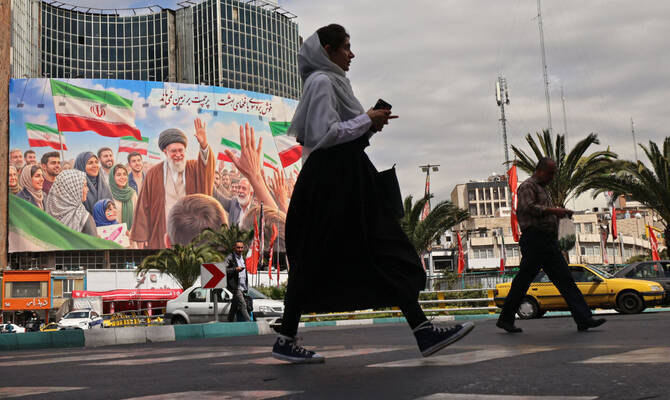
This voice and authority are missing today. The successful targeting of Supreme Leader Ali Khamenei and the reported targeting of his son and successor Mojtaba Khamenei, who has disappeared from public view, have fueled intense speculation about Iran’s future internal power dynamics. The latter has rarely appeared publicly, with most communications released only as written statements or indirect messages.
Analysts are saying that the absolute control and continuity that the position represented is breaking down. So, could a prolonged absence and isolation shift real authority increasingly toward or within the Islamic Revolutionary Guard Corps and ultimately bring an end to the Vilayat-e-Faqih and its regional influence? One could indeed imagine that officers who have reached decision-making levels of authority in the country will not easily return to deferring to the authority of a supreme leader. Yet who can guarantee this?
Hezbollah is nowhere near its previous strength. Syria has been completely lost and Iran itself is facing a reckoning.
Khaled Abou Zahr
Moreover, this is a lengthy process. The reality is that Israeli and US military interventions have forced a real change within the structure of the Iranian regime and this should be reflected in any agreement. Even if a deal is reached, there is little chance that it will hold for long unless the core issues are dealt with — and this means a change in the doctrine that rules the country and its foreign policy.
The nuclear program, militias, terrorism and criminal activities are all rooted in the ideology of the current Iranian regime. These are the tools they use. Hence, without this change, they might pause but will certainly continue to push for their goals when possible. The only solution for a durable agreement is the renunciation of this ideology and the immediate dismantling of all its networks in the region and beyond, whether in Africa or South America.
Despite its claim of moral superiority, the Iranian regime is no different to Ba’athist Iraq. While claiming to fight for the freedom of Palestinians and others, the Tehran regime has consistently targeted Arab countries — never those in Central Asia — through interference in their affairs. It has never had genuine government-to-government relations and has favored supporting domestic groups in order to weaken and destabilize these countries. This is no longer acceptable.
It is evident that the Iranian regime would never agree to these conditions or even agree to dismantle its network. To do so would be a renunciation of its reason for being. The Tehran regime understands all too well that it was a loss of belief in its ideology, before anything else, that led to the collapse of the Soviet Union.
Tehran may well deny it but the Iranian regime has entered the final phase of its existence. It is anachronistic to development in the Middle East. The only question is whether this shift happens today, in a clear and decisive way through a potential agreement with the US, or in a couple of years.
BY: Khaled Abou Zahr is the founder of SpaceQuest Ventures, a space-focused investment platform. He is CEO of EurabiaMedia and editor of Al-Watan Al-Arabi.
Disclaimer: Views expressed by writers in this section are their own and do not necessarily reflect The Times Union‘ point of view