- Foreign Ministers Urge Return to Dialogue as Tensions Escalate Around the Strait of Hormuz
SHANGHAI: China and Pakistan on Friday jointly called for an immediate cessation of hostilities between the United States and Iran, urging both sides to return to dialogue and diplomacy amid escalating military confrontations that continue to threaten regional and global stability.
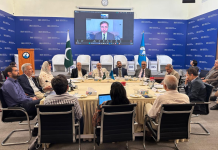
The appeal came during a meeting in Shanghai between Chinese Foreign Minister Wang Yi and Pakistan’s Deputy Prime Minister and Foreign Minister Ishaq Dar, where both leaders expressed deep concern over the worsening security situation in the Middle East.
Joint Appeal for Peace and Diplomacy
According to a statement issued by China’s Ministry of Foreign Affairs, the two ministers emphasized that dialogue remains the only viable path toward resolving the conflict.
“Both sides expressed concern over the deterioration of the current situation, calling on the involved parties to immediately cease hostilities and return to dialogue,” the statement said.
The two countries reaffirmed their support for peaceful negotiations and diplomatic engagement to prevent further escalation across the region.
Support for the Fragile Peace Process
China and Pakistan have consistently advocated for political solutions to regional conflicts and have supported international efforts to reduce tensions between Washington and Tehran.
During the meeting, Wang Yi described the earlier agreement aimed at ending the conflict as a significant diplomatic achievement that should not be abandoned.
“Peace is before our eyes. We cannot fall at the last hurdle, and even more so cannot lose what we have gained,” Wang said.
His remarks referred to the preliminary US-Iran understanding reached last month, which briefly eased tensions before renewed fighting erupted around the strategic Strait of Hormuz.
Renewed Military Confrontation
The diplomatic appeal came as the United States and Iran exchanged another round of military strikes on Friday.
Iran accused the United States of targeting civilian infrastructure, including an airport, a railway station and two bridges, during its latest operations.
In response, Tehran said it launched multiple drone attacks targeting US-linked military infrastructure and allied facilities in Kuwait.
The latest exchange of attacks has heightened concerns that the conflict could expand further across the Gulf region.
Hormuz Crisis Continues to Threaten Global Energy Markets
The strategic Strait of Hormuz, one of the world’s most critical energy shipping routes, remains at the center of the confrontation.
Although the waterway briefly reopened following the US-Iran agreement reached in June, Iranian authorities announced last week that the strait would once again remain closed “until the United States ends its aggression.”
Meanwhile, Washington has reinstated its maritime blockade of Iranian ports, further increasing pressure on Tehran and raising concerns over global energy supplies and international shipping.
Call for Regional Stability
China and Pakistan reiterated that continued military escalation serves neither regional nor international interests and stressed the importance of diplomacy, restraint and constructive engagement.
Both countries reaffirmed their commitment to supporting peaceful conflict resolution and called on all parties to exercise maximum restraint in order to safeguard regional security, protect civilian lives and preserve stability in the Middle East.
BY: The Times Union