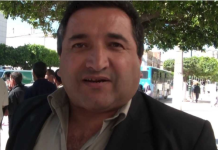
- At Jerusalem Writers Festival, author of bestselling ‘Hostage’ talks about mourning his family, time in captivity, regrets from before Oct. 7 and imagining his wife watching him from heaven
Former captive Eli Sharabi spoke Thursday evening with honesty and humor about his experiences in captivity and what life has been like since his release from Hamas captivity in February 2025, as he was interviewed by journalist Roni Kuban about his bestselling book “Hostage” during the final event of the International Writers Festival in Jerusalem.
Sharabi was abducted October 7, 2023, from his home in Kibbutz Be’eri during the devastating Hamas terrorist attack.
He returned home to Israel to find out that his wife, Lianne, and two daughters, Noya and Yahel, were murdered on October 7, and that his brother, Yossi, was taken hostage from his Kibbutz Be’eri home and killed in captivity.
“It’s like a five-kilo hammer on the head,” said Sharabi, referring to the moment when his mother and sister told him about his wife and daughters.
They whispered the news to him when they all first reunited, with Sharabi recalling that he thanked his sister for burying his family in her hometown and not at Be’eri.
While in captivity, Sharabi said he had thought about all the various possibilities of what happened to his family.
“I’m a very practical person; it sat in my head all the time,” said Sharabi, who was told by his captors more than once that his wife and daughters were alive and fighting for his release. “I told the others that it wasn’t necessarily them, because all Sharabis look exactly alike. But I prepared myself while surviving captivity.”

Israeli flag, as he walks to be reunited with members of his family after 491 days in Hamas
captivity, February 8, 2025.
For the first 40 days of captivity, Sharabi assumed his wife and daughters’ British passports would have saved them. Hower, when he met fellow hostages Hersh Goldberg-Polin and Ori Danino, he heard from them that there had been a massacre at Be’eri, with women and children taken captive as well.
At that point, Sharabi anticipated he would be released home and then go with his family to London, where his wife was born.
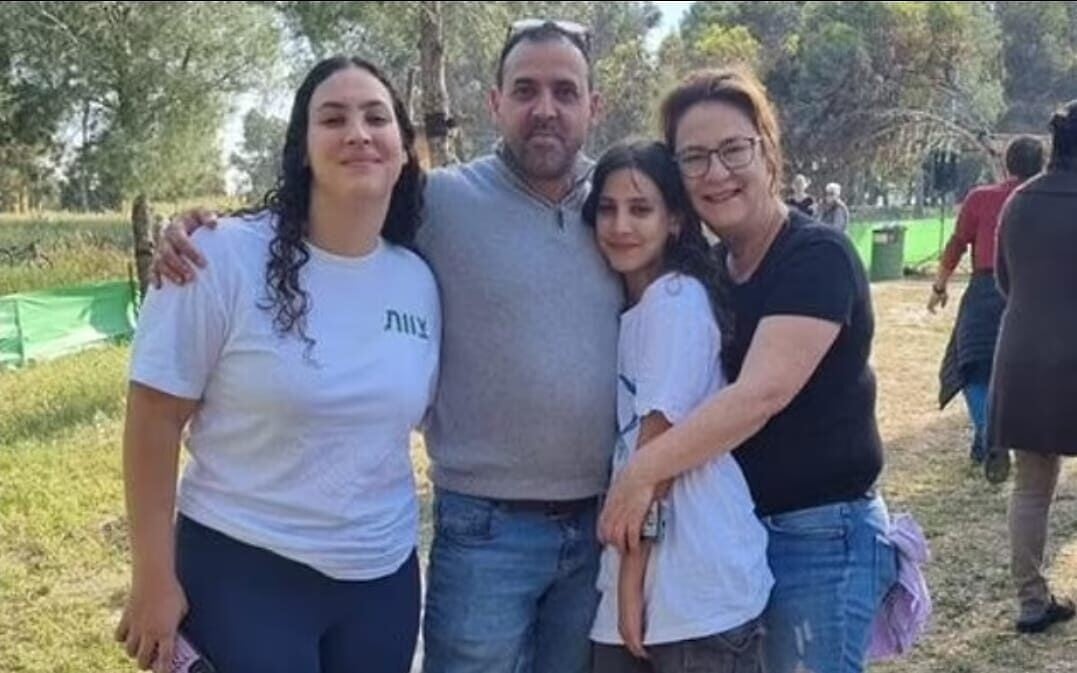
and their two daughters, Noiya and Yahel, were killed.
Sharabi told Kuban that a new life was thrust upon him after he was released from captivity and found out his family had been murdered.
“I couldn’t go back to my previous life, there’s no meaning in it,” said Sharabi, who moved to Be’eri as a young adult and lived there for 35 years, eventually working as its business manager.
Sharabi spoke about his new existence as a recognized personality.
“It’s not comfortable for me,” he said, referring to the attention from strangers who want to speak to him and hug him. “It’s overwhelming to be in that world. But it’s part of my life now. It’s even part of my therapy.”
Sharabi’s ongoing therapy has helped him avoid being in a state of post-traumatic stress.
He also said that being enveloped by family and friends since his release has helped him heal.
“I’m never alone,” said Sharabi.
And yet, the loss of his wife, daughters, and brother is part of him.
“It’s always there, in the car, in the plane, wherever I am,” said Sharabi. “I don’t sink into the mourning. I won’t cry in bed, that’s not me.”
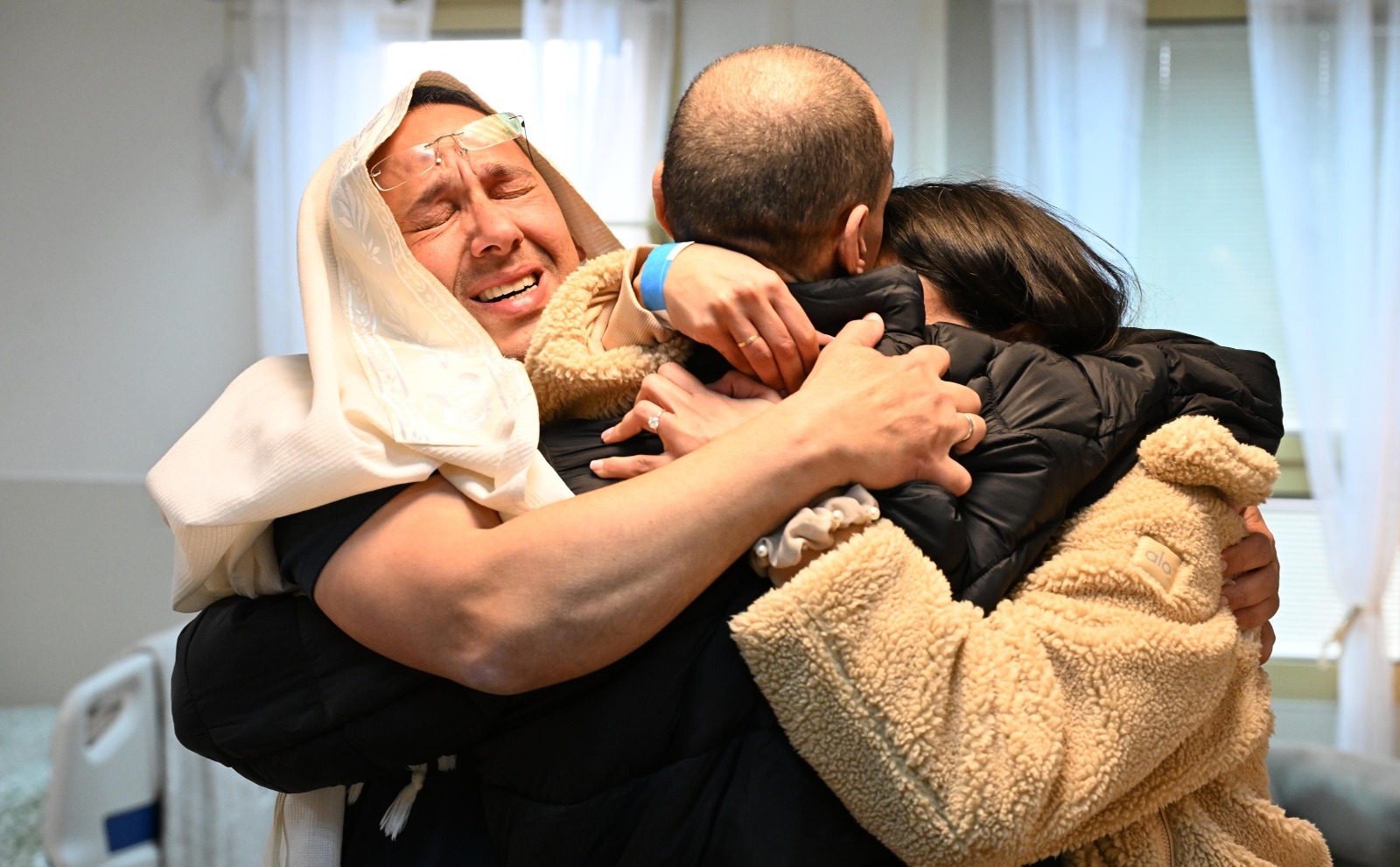
(left) at Sheba Medical Center near Tel Aviv, as he reunites with members of his family after
491 days in Hamas captivity, February 8, 2025. Eli Sharabi’s wife and two daughters were
murdered by Hamas on October 7, 2023, and his brother Yossi was also killed that day.
Surviving captivity
Sharabi shared details about his time in captivity with Alon Ohel, Eliya Cohen and Or Levy, all young men in their early 30s and 20s, while Sharabi was 52 when he was abducted.
“In the tunnels, we spoke about everything, our families, our lives,” he said. “And when that was over, I gave them business plans.”
Sharabi said that Ohel wanted to live in Copenhagen and when he wondered how he would earn a living, Cohen suggested selling jachnun and they devised a business plan.
Meanwhile, Cohen wanted to produce parties and they discussed those possibilities as well.
The four men spoke about music and Israeli artists, going through every song they could think of.
“You laugh, you cry, everything happens there,” he said, referring to their months spent underground in the tunnels. “You become a group and a group has power and that’s amazing.”
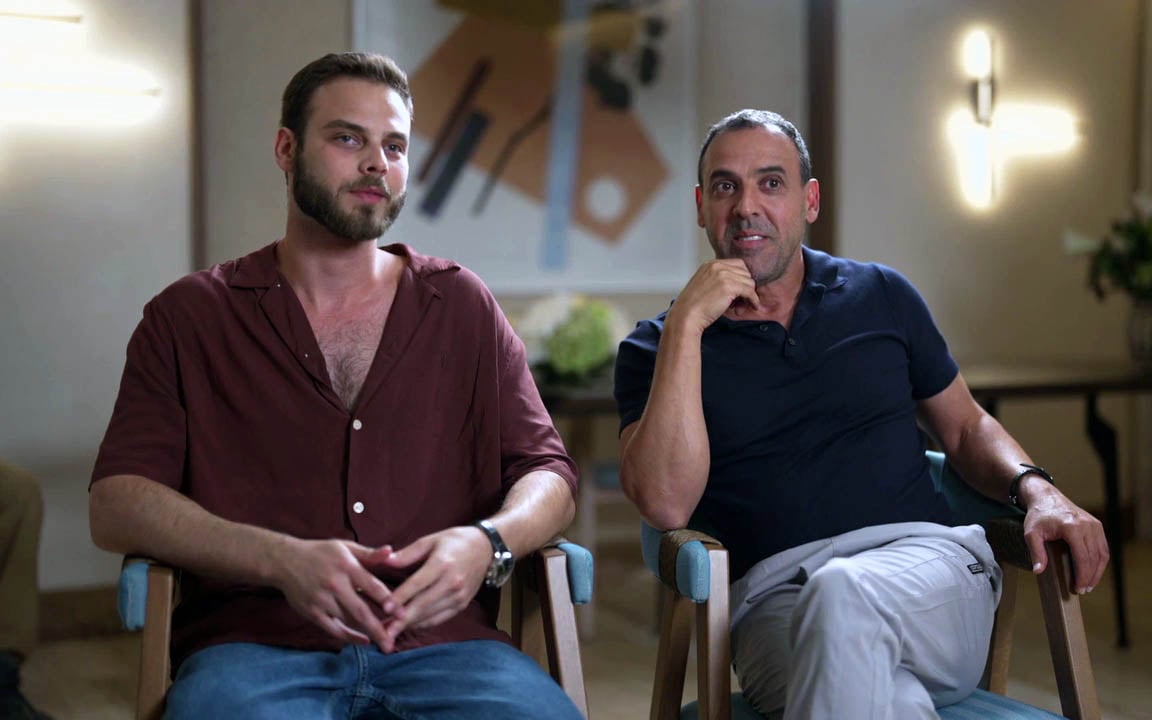
that aired December 4, 2025.
Sharabi said he learned a lot about Gazans, including a deep-seated Palestinian belief that all Israelis are millionaires and their obsession with the size and cost of Israeli homes.
“I still believe there are people who want to live,” he said, adding that his captors were always concerned about the battery for their TV so that they could watch a Turkish soap opera every night at 10 p.m.
“They’re also terrified,” he said. “There are gaps between what they say and what they’re ready to do.”
Imagining his wife in heaven
Sharabi and Kuban spoke about whether he has regrets now about his life before October 7.
Sharabi said he thinks about how much time he spent at work, even while being a very involved father.
“You understand how little it matters and that family and friends are all that matter,” he said.
with their mother, Lianne Sharabi on October 7, 2023 as their father was taken hostage
“I don’t have a day when I’m not happy,” said Sharabi. “There’s also not one day when I don’t think about them, but it’s five minutes of sadness.”
Now, said Sharabi, he imagines his wife, Lianne, in heaven with a beer, laughing at him onstage, but proud of his success as well.
BY: Jessica Steinberg