The US-Israeli war on Iran may not yet be over but its ramifications for the region’s security architecture are already being felt from Riyadh to Ankara and from Abu Dhabi to Cairo. Nearly every country in the Middle East has been adversely affected by the military and economic fallout — consequences that neither Washington nor its regional allies and partners had anticipated in their complexity or depth.
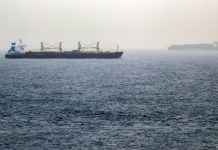
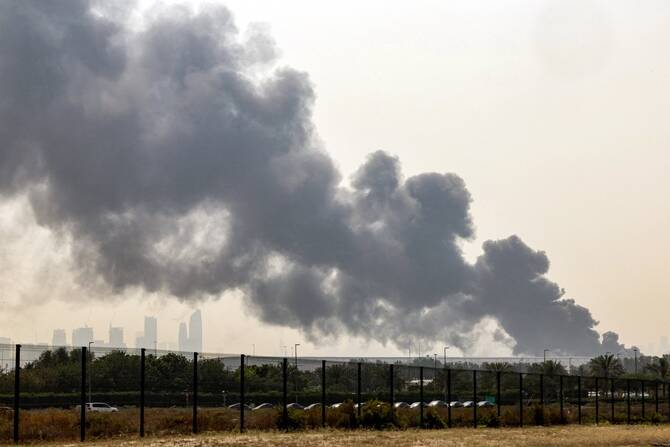
Among the more sobering surprises were Iran’s strikes against Gulf neighbors, targeting military, energy and civilian infrastructure with alarming brazenness. Tehran’s closure of the Strait of Hormuz throttled the economies of the industrial world and triggered an unprecedented global energy crisis. Meanwhile, US and Israeli strikes fell short of their declared objectives: the Iranian regime, severely wounded, did not collapse and the new leadership emerged more hard-line than before, unmoved by American pressure.
The resulting stalemate has left the region in limbo. A resumption of hostilities risks further Iranian reprisals against neighboring states, while a breakdown in negotiations leaves the Hormuz crisis unresolved — and the region’s economic arteries vulnerable.
The war has torn open a geopolitical fault line, undermining decades of regional security alignments
Osama Al-Sharif
The war has torn open a geopolitical fault line, undermining decades of regional security alignments. Gulf Arab states, which had long outsourced their security to Washington, operated under the assumption that the US presence alone would deter Iran from firing missiles or closing the strait. That assumption has been shattered.
While dependence on America is unlikely to disappear overnight, the crisis has been a sobering wake-up call for Gulf leaders. At least three strategic shifts are now underway, individually and collectively.
The first is consolidating the Gulf Cooperation Council’s joint defense architecture to reflect new realities: a modern antidrone system, a capable antimining naval force and a significantly upgraded air defense network.
The second involves deepening regional alliances. Saudi Arabia, for example, has activated a defense cooperation pact with Pakistan, is strengthening military ties with Turkiye and Egypt, and is reinforcing its leadership role in the Islamic world.
The third is pursuing a comprehensive nonaggression agreement with Iran — one that individual states or the GCC as a bloc could negotiate once hostilities end and the nuclear threat is contained.
None of these realignments contradict existing security arrangements with Washington. On the contrary, they acknowledge the reality that the US will continue its strategic pivot toward Asia, under this administration or the next.
Netanyahu’s rhetoric about forging a new Middle East resonates uneasily in Riyadh, Cairo and Ankara
Osama Al-Sharif
The signals of this reconfiguration are already visible. Saudi Arabia convened an emergency consultative summit of Arab and Islamic foreign ministers whose joint statement broke new ground — explicitly condemning Iranian attacks and calling for unified regional positions. Egypt and Jordan have backed Gulf states in language that would have been diplomatically unthinkable five years ago. From Ankara to Islamabad, capitals are quietly exploring new security frameworks: nonaggression pacts, postwar defense arrangements and coordination mechanisms that look beyond the current crisis toward a more stable regional order.
There is another dimension that regional capitals cannot ignore. This was openly a joint US-Israeli war, launched — as most analysts agree — largely at the behest of Israeli Prime Minister Benjamin Netanyahu, who continues to shape the negotiations and their trajectory. Netanyahu has been explicit: the war is not over and he wants Donald Trump to resume strikes despite the political costs to the American president and his party.
Trump, for his part, did little to consult his Arab allies, who were given no warning before the February attacks on Iran. Netanyahu’s rhetoric about forging a new Middle East with Israel as its dominant power goes far beyond neutralizing Iran’s military capabilities — and it resonates uneasily in Riyadh, Cairo and Ankara. This is not an outcome regional leaders are willing to accept.
What may ultimately emerge from this war is a post-American, multialigned Middle East: more transactional, more self-reliant and considerably less predictable. At some point, regional states will have to negotiate with Iran and reach agreements grounded in mutual respect for sovereignty, freedom of navigation in the Gulf and shared security arrangements. The US, increasingly focused on China, will remain a partner — but no longer a guarantor.
Writing in Foreign Affairs this week, David B. Roberts argued that Gulf states must stop treating security as a commodity and begin building the regional capabilities and political arrangements that serve their own long-term interests. He proposed a comprehensive treaty between the Gulf states, the US and Iran, centered on a phased American military withdrawal from the Gulf — tied to verifiable Iranian concessions.
In exchange for sanctions relief and normalization incentives, Tehran would accept strict limits on its nuclear and missile programs, curbs on drone transfers and proxy activity, and robust inspection regimes. Such a withdrawal would reduce the structural driver of Iranian hostility while preserving a US commitment, enshrined in a treaty, to return swiftly if threats resurface.
A future American administration may well choose to relocate its military resources away from the Middle East. Even Trump has suggested that the US is neither dependent on Middle Eastern oil nor obligated to keep the Strait of Hormuz open. That statement alone underscores the urgency of building a new regional security framework — one grounded in sustainable realignments rather than the assumptions of a passing era. Saudi Arabia’s evolving strategic posture in the wake of the Iran crisis is a promising start.
BY: Osama Al-Sharif is a journalist and political commentator based in Amman.
Disclaimer: Views expressed by writers in this section are their own and do not necessarily reflect The Times Union‘ point of view