With so many intractable problems in global politics, it is all the more frustrating that the international community often neglects pressing ones that can, in fact, be solved. Vaccination, which has stalled worldwide after decades of remarkable progress, is one such issue. As leaders convene in Geneva for the World Health Assembly this week, they face a stark choice: recommit to childhood immunization, the world’s most cost-effective public health intervention, or condemn millions of young people to a life of increased vulnerability.
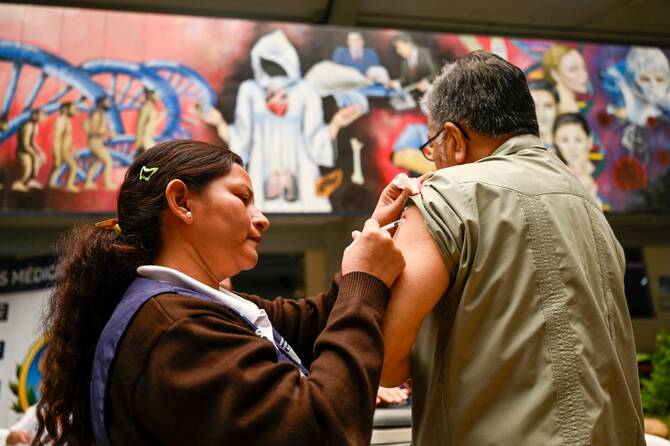
Immunization has averted more than 150 million deaths over the past half-century, making it one of the most reliable ways to reduce child mortality. According to the Johns Hopkins Bloomberg School of Public Health, every dollar invested in immunization in low- and middle-income countries saves $20 in healthcare costs and lost wages and productivity, and more than $50 when accounting for the full benefits of longer, healthier lives.
If one were to design a public health intervention from scratch, it would be hard to improve upon vaccination. Yet the world is losing sight of the overwhelming evidence that vaccines save lives. In high-income countries with functioning health systems, vaccine skepticism has led to declining inoculation rates. More significantly, global health financing has collapsed, falling up to 40 percent compared to 2023. Decades of progress on global health security is now at risk — and so is the foundation for future gains.
The consequences of today’s deep foreign aid cuts are felt most acutely in fragile and conflict-affected settings
David Miliband
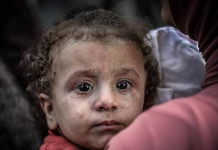
The consequences of today’s deep foreign aid cuts are felt most acutely in fragile and conflict-affected settings, where about half of the 14 million never-vaccinated children live and where immunization delivery has stalled, particularly after pandemic-era disruptions. Children in these areas are three times more likely to die before their fifth birthday than their peers in stable settings (and over 10 times more likely to die than their peers in New York or California). The resulting gaps in vaccination coverage also create risks for everyone: more than 70 percent of cases of epidemic-prone diseases now originate in fragile and conflict-affected settings.
If the problem is clear, so too is the solution: invest in immunizing the missed children, using delivery models developed for such challenging environments. This need not be expensive. The International Rescue Committee (which I lead) has shown with its Reaching Every Child in Humanitarian Settings initiative that, even in active conflict zones, it can cost less than $2 to administer a single vaccine dose to a child.
Since 2022, this initiative (funded by Gavi, the Vaccine Alliance) has delivered more than 30 million vaccine doses in Chad, Ethiopia, Nigeria, Somalia, Sudan and South Sudan, vaccinating more than 1 million zero-dose children. This model works because it depends on community health workers and a coalition of local partners who know the terrain and have built the trust necessary to reach and treat underserved and remote communities. As a result, they can operate in places where governments and external actors cannot.
Supporting local health workers in reaching otherwise ‘unreachable’ children offers the best value for money
David Miliband
This high-impact, low-cost initiative is further evidence that supporting local health workers in reaching otherwise “unreachable” children offers the best value for money in global health today. At a time when Gavi’s own funding is under pressure, international leaders must decide whether they are willing to scale up this model and others similarly designed for fragile and conflict-affected settings.
If they are, they must focus on two priorities. First, funding should follow evidence. That means explicitly targeting communities beyond the reach of government systems, because this is where zero-dose children are concentrated. These communities should be regarded as a distinct and top funding priority, with sustained, multiyear financing and clear accountability for outcomes. Success can and should be measured by how many children are reached and at what cost.
Second, international leaders should provide funding for the model, not just for vaccine doses. Making immunization possible in the hardest-to-reach places requires investing in local delivery channels. These groups, often comprising civil society partners, are the backbone of last-mile immunization efforts in conflict and disaster settings.
There is a moral and economic imperative to act. Vaccine delivery to the communities with the most zero-dose children is not some niche effort but one of the highest-return investments in global health. Policymakers should be clear about the choice before them: protect millions of lives at modest cost or bear the human consequences for years to come.
BY: Writer David Miliband, a former British foreign secretary, is President and CEO of the International Rescue Committee.
Disclaimer: Views expressed by writers in this section are their own and do not necessarily reflect The Times Union‘ point of view