What is unfolding today across the Middle East is not merely another cycle of violence — it is the consolidation of a dangerous doctrine: impunity without consequence. From the shattered neighborhoods of Lebanon to the besieged towns and villages of the West Bank, the pattern is painfully clear. International law is being violated with alarming regularity, humanitarian principles are being disregarded and the global system tasked with preventing such breakdowns appears increasingly unable — or unwilling — to act.
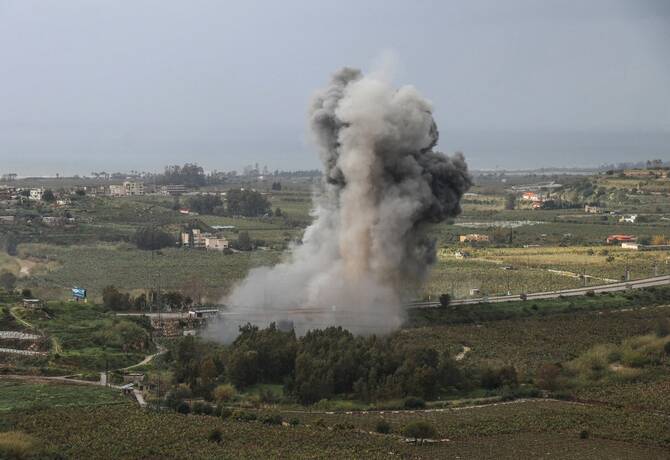
In Lebanon, the devastation is neither incidental nor contained. Airstrikes have expanded beyond military targets, striking civilian infrastructure and residential areas with devastating consequences. Entire families have been buried under rubble, medical facilities have been rendered inoperable and hundreds of thousands have been displaced. These are not unfortunate byproducts of conflict; they are the foreseeable outcomes of a strategy that appears to blur, if not erase, the distinction between combatants and civilians. Under the framework of international humanitarian law, such actions raise profound legal and moral questions — questions that, thus far, remain unanswered.
Simultaneously, in the West Bank, a quieter but no less insidious reality is unfolding. Israeli settlers, emboldened by a lack of accountability, have escalated their attacks against Palestinian communities. Homes are burned, olive groves — symbols of livelihood and heritage — are uprooted and entire villages are subjected to campaigns of intimidation designed to force displacement. These acts are not random; they form part of a systematic effort to alter the demographic and geographic reality on the ground.
The crux of the issue is the failure of the international system, most notably the UN Security Council
Hani Hazaimeh
What makes this moment particularly egregious is that these violations have persisted unabated during Ramadan and into Eid Al-Fitr — periods that, in any moral or cultural framework, should command respect, restraint and reflection. Instead, they have been marked by escalation. The sanctity of time, much like the sanctity of life, appears to hold little weight in the current calculus.
This dual reality — military escalation across borders and unchecked settler violence within occupied territories — reveals a broader strategic posture. It is not simply about security concerns or reactive measures; it is about reshaping facts on the ground, consolidating control and doing so under the assumption that meaningful international repercussions will not materialize.
And here lies the crux of the issue: the failure of the international system, most notably the UN Security Council. Established as the primary body responsible for maintaining global peace and security, the UNSC has, in this context, become emblematic of institutional paralysis. Resolutions are proposed but blocked, statements are issued but diluted and enforcement mechanisms remain conspicuously absent.
To describe the council as entirely ineffective may oversimplify a complex reality, but it is increasingly difficult to argue against the perception of selective functionality. Where geopolitical interests align, the UNSC can act decisively. Where they diverge — particularly when powerful states extend protection to their allies — it becomes immobilized. This inconsistency has profound implications. It sends a clear message to actors on the ground: accountability is negotiable and violations of international law may carry little to no cost.
International law is not meant to be applied selectively; its legitimacy depends on its universality
Hani Hazaimeh
For the Arab region, the consequences are severe and far-reaching. It is being drawn into overlapping crises that serve external agendas, often at the expense of regional stability and human security. The destruction in Lebanon and the pressures in the West Bank are not isolated phenomena; they are interconnected manifestations of a broader environment in which escalation is normalized and restraint is neither enforced nor incentivized.
Moreover, the human cost cannot be reduced to statistics alone. Behind every number is a story of loss — a family displaced, a livelihood destroyed, a future uncertain. In Lebanon, entire communities are grappling with the trauma of repeated displacement. In the West Bank, daily life has become a negotiation with fear, as the threat of settler violence looms large. These realities erode not only physical security but also the social fabric that holds communities together.
It is also important to recognize that this moment is not occurring in a vacuum. It intersects with broader geopolitical tensions, shifting alliances and a global order that is increasingly fragmented. However, none of these factors justify the abandonment of fundamental principles. International law is not meant to be applied selectively; its legitimacy depends on its universality.
The continued erosion of these principles carries long-term risks that extend beyond the immediate region. It undermines the credibility of international institutions, weakens the deterrent effect of legal frameworks and sets precedents that other actors may exploit. If violations go unchecked in one context, they become easier to replicate in another.
The question, then, is not simply whether the current trajectory is sustainable — it clearly is not — but whether there exists the political will to alter it. Statements of concern, while necessary, are insufficient. What is required is a recalibration of international engagement, one that prioritizes accountability, enforces existing legal frameworks and places the protection of civilians at the forefront.
This is not a call for idealism; it is a call for consistency. If the international system is to retain any semblance of legitimacy, it must demonstrate that its principles are not contingent on political convenience. Otherwise, it risks becoming precisely what many now perceive it to be: a system that observes and comments but ultimately fails to act.
The Middle East does not need another cycle of condemnation followed by inaction. It needs a decisive shift — one that reasserts the primacy of law over power and restores a measure of justice to a region that has endured far too much of its absence. Until that shift occurs, the pattern will persist and the cost — in human lives, in stability and in moral credibility — will continue to rise.
BY: Writer Hani Hazaimeh is a senior editor based in Amman.
Disclaimer: Views expressed by writers in this section are their own and do not necessarily reflect The Times Union’ point of view