- Pentagon spending timeline raises concerns as Kyiv faces urgent shortages of air-defense weapons
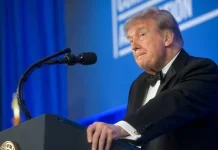
WASHINGTON: The administration of US President Donald Trump has informed members of Congress that the Pentagon does not expect to complete spending $400 million in military assistance already authorized for Ukraine until fiscal year 2029, despite Kyiv’s urgent need for weapons to counter Russian missile and drone attacks.
According to a source familiar with the matter, the Department of Defense outlined the spending timeline in a letter sent to lawmakers in May. The disclosure has renewed criticism from Democrats and some Republicans, who have questioned why previously approved assistance has not been delivered more quickly.
Two months after the letter was issued, the funds had reportedly neither been disbursed nor formally obligated through contracts, the source said.
Zelensky to Press Trump on Air Defense, Drone Cooperation
Ukrainian President Volodymyr Zelensky is expected to meet President Trump at the White House on Tuesday, where he is likely to press for urgently needed air-defense capabilities and progress on a proposed agreement allowing Ukraine to manufacture drones for the United States.
Following the White House meeting, Zelensky is expected to visit the US Capitol for discussions with all 100 senators. The House of Representatives is currently away from Washington for its summer recess.
Two congressional sources said lawmakers were frustrated by the Pentagon’s timeline, describing it as unusually slow given the continuing war in Ukraine.
Under the Pentagon’s plan, the $400 million is expected to be obligated during fiscal year 2026, which ends on September 30, while final delivery of all assistance is projected for the fiscal year ending September 30, 2029.
The timeline extends beyond most of Trump’s second presidential term, which is scheduled to end on January 20, 2029.
Trump Signals Greater Support for Kyiv
Trump has recently adopted a more favorable tone toward Ukraine. His administration has approved a proposal allowing Ukraine to manufacture Patriot interceptor missiles under a US license, while Trump has also indicated that he would support legislation imposing additional sanctions on Russia.
The legislation was championed by the late Republican Senator Lindsey Graham, a prominent Trump ally and strong supporter of continued US assistance to Ukraine.
Zelensky is also expected to attend Graham’s funeral on Tuesday.
Graham’s sudden death earlier this month has raised questions about whether Trump’s recent shift toward stronger support for Kyiv will continue without the senator’s advocacy, particularly on measures involving sanctions against Russia and military assistance to Ukraine.
The Pentagon had not immediately responded to requests for comment.
Lawmakers Demand Answers Over Stalled Assistance
Congressional frustration over the slow pace of military assistance has been building for months.
In April, Republican Senator Mitch McConnell publicly criticized delays in delivering military aid to Ukraine. The issue has also repeatedly surfaced during congressional hearings.
At a hearing last week, Democratic Senator Dick Durbin, a senior member of the Senate Appropriations Committee, questioned Joint Chiefs of Staff Chairman General Dan Caine and Defense Secretary Pete Hegseth about the Pentagon’s spending plans.
Durbin questioned whether assistance would have a meaningful impact on Ukraine’s battlefield position if it takes years to reach Ukrainian forces.
“If you’re talking about air defenses and the momentum alongside Zelensky, what impact will it have if we can’t fund this for three years?” Durbin asked.
$400 Million Package Includes Weapons, Vehicles and Services
The spending plan covers $400 million in assistance aimed at strengthening the capacity of Ukrainian forces to defend themselves against Russia’s invasion.
The package reportedly includes:
- $200 million for weapons, ammunition and explosives;
- $99.9 million for vehicles, spare parts and equipment; and
- $100 million for services, including transportation of defense articles to Ukraine.
The Pentagon has previously paused or slowed some weapons shipments to Ukraine over concerns about dwindling US stockpiles.
Legal Questions Surround Congressional Funding
US law requires the executive branch to spend funds appropriated by Congress and limits the president’s ability to withhold appropriated funding for unrelated policy objectives.
The issue carries particular significance for Trump. His first impeachment in 2019 followed a Government Accountability Office finding that his administration had unlawfully withheld congressionally approved defense assistance to Ukraine.
Ukraine has been the largest recipient of US foreign assistance since Russia launched its full-scale invasion in February 2022. However, Washington’s long-term commitment to Kyiv has come under increasing scrutiny since Trump returned to office in January 2025, with Republicans controlling both chambers of Congress.
No major Ukraine aid package has been approved by Congress since Trump began his second term, while Democrats have accused the administration and congressional Republicans of delaying assistance that had been authorized before Trump took office.
US Has Committed Billions to Ukraine War Effort
According to the Council on Foreign Relations, the United States had allocated approximately $175 billion related to Russia’s invasion of Ukraine by the end of September 2024.
Of that amount, about $106 billion was directed toward assistance to Ukraine, while approximately $69 billion remained within the US economy, including support for American defense industries and related sectors.
The dispute over the Pentagon’s spending timeline is likely to add further pressure on the Trump administration as Zelensky prepares for high-level talks in Washington focused on air defense, military production and the future of US support for Ukraine.
BY: The Times Union