- Report Says Pentagon Is Preparing Contingency Plans and Additional Carrier Deployments as Trump Administration Weighs Military Action Against Continued Economic Pressure
NEW YORK: The US military is examining options for potentially resuming large-scale military operations against Iran, despite President Donald Trump’s recent public statements suggesting a pause in further strikes, The New York Times reported, citing unnamed US administration officials.
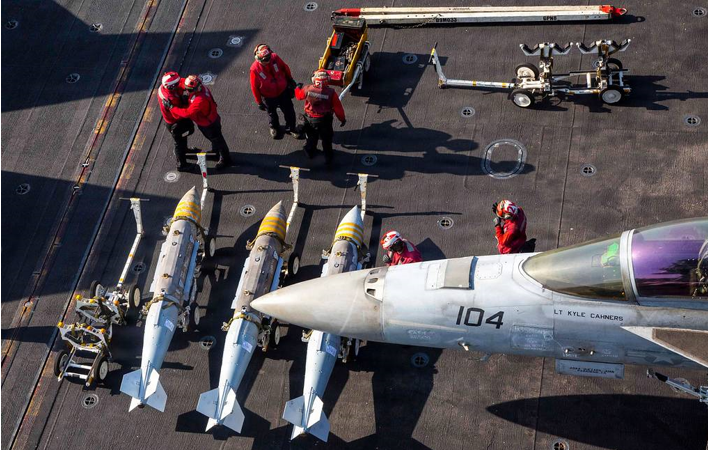
According to the report, three aircraft carriers are expected to be deployed to the Middle East in the coming period. The Pentagon is also preparing contingency plans that could involve strikes against Iranian missile and drone storage facilities, as well as other military and energy infrastructure targets.
The newspaper reported that the Pentagon and President Trump’s national security team had presented him with five proposals over recent months involving large-scale military action against Iran or Yemen’s Houthi movement, also known as Ansar Allah. Trump reportedly rejected all five proposals.
However, divisions reportedly remain within the administration over the effectiveness of renewed military action. Several officials close to the president reportedly believe that further strikes would do little to alter Tehran’s strategic calculations.
Some officials instead favour maintaining and intensifying economic pressure through sanctions, arguing that additional time may be required to persuade Iran to make significant concessions.
Earlier on Thursday, Trump said the United States did not intend to launch strikes against Iran before the November 3 midterm elections to the US Congress.
Washington Weighs Military Options Against Economic Pressure
The reported contingency planning highlights the continuing debate within the Trump administration over how best to address Iran, with military pressure and economic sanctions remaining competing instruments of US policy.
While the reported preparations indicate that military options remain under consideration, they do not necessarily mean that a decision to resume large-scale hostilities has been made.
The administration’s reported preference for economic pressure reflects the view among some officials that sanctions could eventually achieve Washington’s objectives without the risks associated with another major military confrontation.
Background: US-Iran Conflict and Ceasefire Efforts
The United States and Israel launched military operations against Iran on February 28, according to the chronology provided in the report.
In June, Washington and Tehran signed a memorandum of understanding envisaging an immediate ceasefire across multiple fronts, including Lebanon. However, the United States reportedly resumed large-scale attacks on Iran overnight on July 8, accusing Tehran of violating existing arrangements concerning the Strait of Hormuz.
The strategically important waterway is a major international energy transit route, carrying approximately one-quarter of global oil supplies and around one-fifth of liquefied natural gas shipments.
The Trump administration has more recently signalled a shift away from sustained large-scale military action towards increased economic pressure and sanctions against the Islamic Republic.
The latest reported Pentagon planning suggests, however, that Washington continues to retain military options as it considers its next steps in dealing with Tehran.
BY: The Times Union