- Economic Recovery for Tehran Depends on Complex Diplomatic Path
NEW YORK CITY: The recent US-Iran memorandum of understanding (MoU), which brought an end to more than three months of conflict and opened a 60-day negotiation period, has been welcomed internationally as a major diplomatic breakthrough.
However, key questions remain over whether Iran will actually receive the economic relief it is seeking — and whether such benefits can legally be delivered under the existing international sanctions framework.
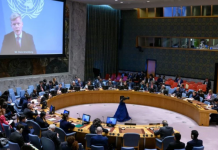
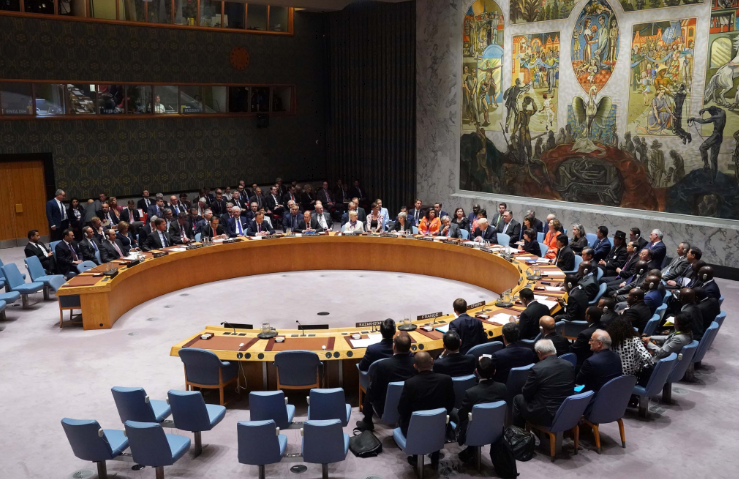
Analysts say the answer depends largely on the United Nations Security Council, where deep divisions between major powers could complicate efforts to restore sanctions relief.
The agreement reportedly includes an “immediate and permanent” halt to military operations across all fronts, including Lebanon. A formal signing ceremony is expected on June 19 in Switzerland.
Sanctions Relief and Frozen Assets at the Center of Talks
Under the framework, Iran has reportedly committed to halting uranium enrichment activities, while the United States has agreed in principle to consider sanctions relief and the release of frozen Iranian assets.
Many provisions, however, remain conditional on reaching a final agreement.
Iranian state media has published what it described as a 14-point draft of the agreement, claiming it includes the release of around $24 billion in frozen Iranian assets during the 60-day negotiation period. Neither Washington nor Tehran has officially confirmed the details.
Both sides have indicated that negotiations toward a comprehensive agreement must conclude within 60 days, with a possible extension if mutually agreed.
Tehran Seeks End to UN Sanctions
Iranian officials have indicated that a major priority during negotiations will be the removal of all United Nations and International Atomic Energy Agency-related restrictions.
This demand directly challenges one of the most controversial issues at the Security Council: the “snapback” mechanism.
The mechanism was introduced under UN Security Council Resolution 2231, which endorsed the 2015 Iran nuclear agreement, formally known as the Joint Comprehensive Plan of Action (JCPOA).
The Snapback Dispute
The JCPOA provided Iran with sanctions relief in exchange for limits on its nuclear program. Resolution 2231 allowed participating countries to trigger the return of previous UN sanctions if Iran was found in serious violation of the agreement.
France, Germany and the United Kingdom — known as the E3 — activated the snapback process in August 2025, arguing that Iran had failed to meet its commitments.
After the Security Council failed to preserve sanctions relief, UN restrictions were automatically restored in September 2025.
The measures cover Iran’s nuclear and missile programs, financial restrictions, asset freezes and travel bans.
The new US-Iran agreement does not automatically remove those sanctions.
Security Council Unity Remains the Biggest Obstacle
Daniel Forti, a senior analyst at the International Crisis Group, said the Security Council holds the key to reversing the sanctions.
“Only the Security Council can agree to undo the sanctions that were reimposed by the snapback mechanism,” Forti said.
He added that while the US-Iran agreement could create political momentum for sanctions relief, the final decision would require approval from the broader international community.
China and Russia have disputed the legality of the E3’s snapback decision, arguing that the mechanism was no longer valid after the JCPOA’s original timeline expired.
The disagreement has created a divided enforcement environment, with some countries continuing trade with Iran while others maintain compliance with Western sanctions.
Uneven Sanctions Enforcement Hurts Iran’s Economy
The continuing dispute has created uncertainty for international businesses and financial institutions.
Although Russia, China and some other countries may ignore certain restrictions, many Western governments continue enforcing the sanctions regime, limiting Iran’s access to global markets.
European nations have also taken a tougher stance toward Tehran due to broader disputes, including concerns over Iran’s regional activities and alleged military support for Russia.
The result is a fractured economic landscape where Iran receives neither full sanctions pressure nor complete relief.
US Can Ease Its Own Sanctions, But UN Measures Are Different
Experts point out that Washington has greater flexibility over its own national sanctions.
The United States can adjust bilateral restrictions through executive decisions, but UN sanctions require a multilateral process involving the Security Council.
Forti explained that lifting UN sanctions would require a far more difficult diplomatic route than changing US policy alone.
Final Agreement May Require UN Backing
Iran has said it wants any future agreement to be approved through a new Security Council resolution, citing concerns over the collapse of the previous nuclear deal.
Analysts say such a resolution could provide international legitimacy, legal support and a framework for implementation.
A Security Council-backed agreement could potentially remove the snapback sanctions, but only if all five permanent members approve the move or choose not to block it with a veto.
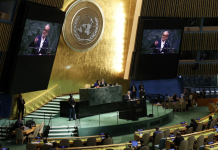
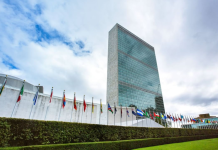
For now, the biggest challenge facing the US-Iran agreement may not be in Washington or Tehran — but inside the UN headquarters in New York.
BY: The Times Union