- Foreign Trade Surges Despite Global Market Challenges as UAE Expands International Partnerships, Diversifies Trade Corridors and Advances Financial Innovation
- Fahad Al Gergawi: UAE Foreign Trade Approaches US$1 Trillion, with Nearly 40 Economic Partnerships Driving New Global Opportunities
DUBAI: The United Arab Emirates continues to strengthen its position as one of the world’s leading centres for international trade, investment and financial services, recording double-digit growth in foreign trade during the first nine months of 2026 despite challenges in the global economic environment.
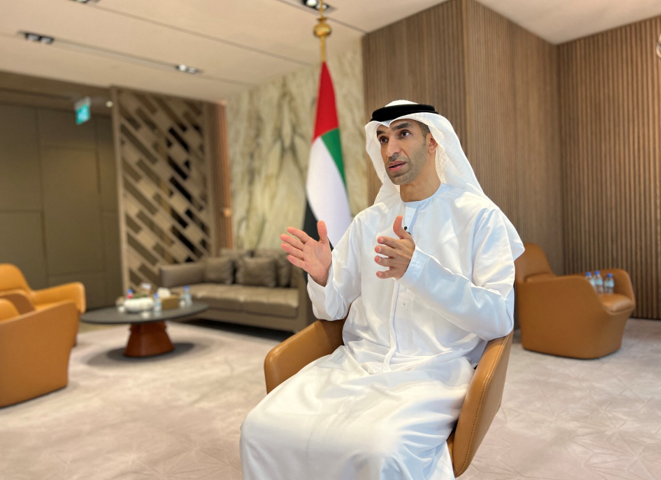
Fahad Al Gergawi, Under-Secretary of the UAE Ministry of Foreign Trade, highlighted the country’s strong trade performance, expanding international economic partnerships and sustained investment in world-class logistics and financial infrastructure.
Speaking during a session titled “Corridors of Capital: How the UAE Can Become the Financing Hub for Its Trade Partners” on the second day of the Dubai FinTech Summit, held as part of Dubai Future Finance Week, Al Gergawi reaffirmed the UAE’s ambition to further consolidate its role as a global gateway connecting international markets, businesses and investment opportunities.
He noted that the UAE is the largest trading nation in the Arab world and ranks among the world’s top ten countries in trade facilitation. Its foreign trade reached approximately US$1 trillion last year, with further expansion anticipated in 2026.
Double-Digit Trade Growth Reflects Economic Resilience
Al Gergawi explained that the UAE’s continued trade expansion reflects the resilience of its national economy and its ability to adapt to changing international market conditions.
He emphasised that the country’s economic strategy is designed not merely to benefit from periods of global growth but to maintain competitiveness, preparedness and stability under different economic circumstances.
This forward-looking approach is supported by economic diversification, international partnerships, infrastructure development and policies designed to facilitate trade and attract investment.
The UAE’s expanding global commercial footprint reflects its commitment to maintaining an open, competitive and business-friendly economy while strengthening its connections with established and emerging markets.
Strategic Logistics Infrastructure Strengthens Global Connectivity
Highlighting the importance of resilient supply chains, Al Gergawi said the UAE is continuing to diversify its trade corridors and expand logistics capabilities.
Particular attention is being given to increasing port capacity along the country’s eastern coastline, especially in Fujairah and Khorfakkan, while leveraging the Etihad Rail network to facilitate the movement of goods across the country.
These developments are intended to improve logistics efficiency, strengthen supply-chain resilience and ensure the continuity of trade flows under different global conditions.
He also highlighted the international presence of UAE companies in the management and operation of ports and airports, noting that their operations extend to more than 140 ports and over 30 airports worldwide.
This global footprint reflects decades of accumulated expertise in transportation, logistics and international trade, positioning UAE-based companies as important participants in the development of global connectivity networks.
Nearly 40 Economic Partnerships Expand UAE’s International Trade Reach
Al Gergawi identified Comprehensive Economic Partnership Agreements (CEPAs) as a central pillar of the UAE’s strategy to expand foreign trade, diversify economic relationships and open new markets for businesses and investors.
The UAE began this initiative with its Comprehensive Economic Partnership Agreement with India, concluded within 88 days, before expanding its economic partnerships with major economies, including Türkiye, Australia and Indonesia.
The network of economic agreements and understandings being pursued by the UAE now extends to approximately 40 countries, demonstrating the country’s commitment to building an extensive network of international commercial relationships.
He explained that CEPAs extend beyond reducing customs duties and facilitating the movement of goods. They also encourage investment, industrial development, manufacturing, exports and re-exports while improving business competitiveness.
Through these agreements, UAE companies and international investors gain access to new markets, broader commercial networks and opportunities for long-term economic cooperation.
UAE Consolidates Position Among World’s Leading Re-export Hubs
The UAE ranks among the world’s five largest re-export hubs, benefiting from its strategic geographical location between major global markets and the integration of its advanced transport infrastructure with a sophisticated financial and commercial ecosystem.
Its ports, airports, free zones, logistics facilities and international business centres collectively support the efficient movement of goods and capital.
Al Gergawi emphasised that this integrated economic environment enables the UAE to serve as a vital commercial link connecting Asia, Europe, Africa and other international markets.
The country’s re-export capabilities also create significant opportunities for international businesses seeking efficient access to regional and global customers.
Dubai’s Financial Ecosystem to Support the Next Generation of Global Trade
Addressing the growing relationship between international trade and financial services, Al Gergawi stressed the importance of developing innovative trade-finance products and solutions to support expanding commercial activities.
He highlighted the banking sector’s essential role in providing financial support to businesses, importers and exporters, noting that the next phase of development requires stronger integration between financial institutions and commercial enterprises.
As international trade becomes increasingly sophisticated, access to flexible financing, efficient payment systems and innovative financial services will remain important for businesses seeking to expand into new markets.
The UAE’s ambition to develop its position as a financing hub for international trade partners reflects its broader strategy of connecting capital with commercial opportunities.
Future of Investment and Trade Partnership Promotes International Cooperation
Al Gergawi also highlighted the importance of the Future of Investment and Trade Partnership (FITP), which brings together economies with shared interests in strengthening rules-based international trade and addressing global economic challenges.
The initiative reflects the UAE’s commitment to constructive international economic engagement, promoting cooperation and supporting a more connected global trading environment.
Through such partnerships, the country seeks to encourage dialogue, strengthen economic relationships and create opportunities for businesses across different markets.
Artificial Intelligence and Technology Transform Trade Services
Technology and artificial intelligence are emerging as important drivers of efficiency in international trade and financial services.
Al Gergawi explained that the Ministry of Foreign Trade is working to expand the application of AI technologies across its operations, in line with the UAE government’s broader efforts to accelerate administrative procedures, enhance service delivery and improve operational efficiency.
He also highlighted cooperation with global logistics company DHL in providing training for exporters.
The initiative aims to strengthen business capabilities, improve exporters’ understanding of international markets and enable companies to take greater advantage of global trade opportunities.
These efforts reflect the UAE’s wider commitment to digital transformation, innovation and the development of a competitive knowledge-based economy.
Decades of Strategic Investment Build UAE’s Global Economic Leadership
Reflecting on the foundations of the UAE’s economic success, Al Gergawi emphasised that the country’s international standing is the result of a forward-looking national vision and sustained investment over several decades.
The development of major ports, international airports, business centres and logistics facilities established the foundations of an integrated economic ecosystem connecting trade, investment and financial services.
These long-term investments have strengthened the UAE’s ability to attract international capital, facilitate global commerce and develop productive economic relationships with countries around the world.
The country’s continued infrastructure development demonstrates the importance of strategic planning and long-term investment in building a globally competitive economy.
UAE Looks Ahead to a New Era of Global Trade and Investment
Concluding his remarks, Al Gergawi reaffirmed that the UAE will continue expanding its international economic partnerships, developing new trade corridors and enhancing the efficiency of its financial and logistics infrastructure.
The country’s strategy remains focused on increasing foreign trade, attracting investment, supporting exporters and creating new opportunities for businesses across international markets.
With its strategic location, advanced infrastructure, extensive network of economic partnerships and growing financial ecosystem, the UAE is strengthening its role as a major bridge between global markets and economies.
BY: The Times Union