- Under Sheikh Mohammed bin Rashid’s patronage, international leaders gather in Dubai to accelerate clean energy, green investment and sustainable economic growth
- UAE showcases its renewable energy achievements, with Dubai exceeding its original 2030 clean-energy target and targeting 100% clean energy production capacity by 2050
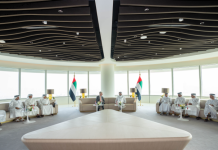
DUBAI, October 22, 2026 — Dubai has reaffirmed its position as a leading international hub for sustainability, clean energy and green economic transformation as His Highness Sheikh Ahmed bin Saeed Al Maktoum, Chairman of the Dubai Supreme Council of Energy, inaugurated the 12th edition of the World Green Economy Summit (WGES).
Held under the patronage of His Highness Sheikh Mohammed bin Rashid Al Maktoum, Vice President and Prime Minister of the UAE and Ruler of Dubai, the two-day summit is taking place at Dubai World Trade Centre on October 21–22 under the theme “From Success to Scale: Showcasing the Green Economy.”
The summit brings together government leaders, policymakers, international organisations, business executives, investors and sustainability experts to accelerate the adoption of successful green solutions, mobilise investment and strengthen international cooperation in addressing climate change.
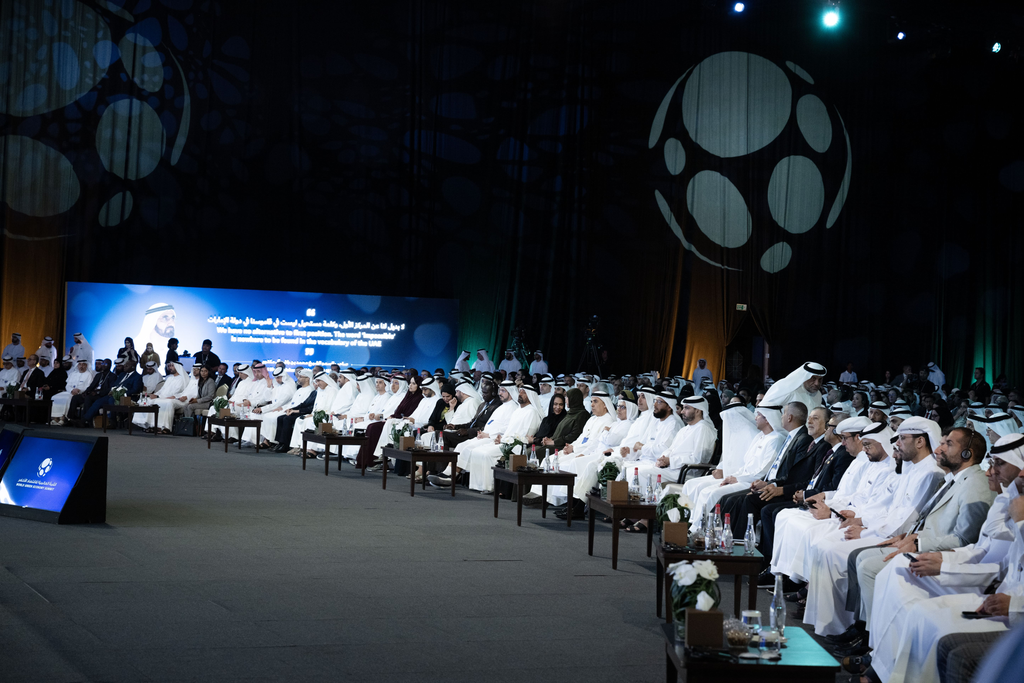
The event underscores the UAE’s strategic vision of positioning sustainability not merely as an environmental responsibility but as a powerful driver of economic growth, technological innovation, investment and long-term prosperity.
Sheikh Ahmed bin Saeed Highlights Dubai’s Vision for a Competitive Green Economy
At the inauguration, Sheikh Ahmed bin Saeed Al Maktoum emphasised the importance of international partnerships in advancing a competitive green economy that balances economic development with environmental protection.
“Guided by the vision of our leadership, the UAE continues to advance its pioneering approach, making sustainability a cornerstone of development, innovation a driver of growth and international partnerships a foundation for a more prosperous future,” he said.
He added that Dubai continues to strengthen its position as a global centre for accelerating the transition towards a green economy.
Sheikh Ahmed highlighted the importance of the World Green Economy Summit in bringing together international expertise, innovative ideas and investment opportunities to transform climate challenges into opportunities for economic progress and technological advancement.
He noted that international collaboration remains essential to expanding sustainable solutions, protecting natural resources and building a resilient economic future for generations to come.
Saeed Mohammed Al Tayer Calls for Global Expansion of Green Solutions
Delivering the opening address, Saeed Mohammed Al Tayer, Vice Chairman of the Dubai Supreme Council of Energy, Managing Director and CEO of Dubai Electricity and Water Authority (DEWA), and Chairman of the World Green Economy Organisation (WGEO), said the UAE had continued to consolidate its international standing in sustainability and climate action under the leadership of President His Highness Sheikh Mohamed bin Zayed Al Nahyan and His Highness Sheikh Mohammed bin Rashid Al Maktoum.
Al Tayer said this year’s summit theme reflected the need to move beyond successful pilot projects and established achievements towards the widespread implementation of proven green technologies and sustainable business models.
“The question is no longer whether the green economy is the right choice, but how we can accelerate its adoption, broaden its reach and amplify its impact so that it becomes a leading driver of sustainable development and economic prosperity around the world,” he said.
He explained that the summit’s programme covers energy technology and infrastructure, business strategy and transition, water and food security, green finance and other critical areas shaping the global sustainability agenda.
Al Tayer stressed that the green economy has become an increasingly important component of global investment, industrial competitiveness and energy systems.
He cited figures indicating that global energy investment was expected to reach approximately US$3.4 trillion in 2026, with around US$2.2 trillion directed towards clean energy, electricity grids, energy storage and other low-emission technologies.
He also referred to estimates from the London Stock Exchange Group indicating that the global green economy’s market value had exceeded US$10 trillion by mid-2026, demonstrating the growing economic significance of sustainable industries despite market volatility and geopolitical uncertainty.
Dubai Exceeds Its Original 2030 Clean-Energy Target
Highlighting Dubai’s progress in renewable energy, Al Tayer said clean energy accounted for 32.4% of the UAE’s electricity generation mix in 2025.
Dubai has also made significant progress towards its clean-energy ambitions, reaching a reported 25.8% share of clean energy in its electricity generation mix in 2026, surpassing its original target for 2030.
The emirate aims to increase this share to 36% by 2030, while working towards achieving 100% clean energy production capacity by 2050, in line with its long-term sustainability objectives.
These ambitions reflect Dubai’s approach to combining economic expansion with investment in renewable energy, advanced infrastructure and innovative technologies.
Al Tayer said Dubai’s experience demonstrated how sustained investment, strategic planning and technological advancement could support the transition towards a more sustainable economy while strengthening energy security and economic competitiveness.
Mohammed bin Rashid Al Maktoum Solar Park Showcases UAE’s Clean-Energy Ambitions
The Mohammed bin Rashid Al Maktoum Solar Park continues to serve as a flagship example of Dubai’s commitment to renewable energy and sustainable development.
With planned total investments of AED 50 billion by 2030, the solar park is designed to integrate large-scale clean electricity generation with research, development and innovation in renewable energy, energy storage and green hydrogen.
The project also supports the development of green data centres and the application of artificial intelligence in energy systems.
Al Tayer described the solar park as an integrated model of the green economy, demonstrating how renewable energy infrastructure can contribute to technological advancement, investment and long-term economic development.
Dubai’s experience in developing large-scale energy and water infrastructure also offers opportunities for international cooperation and the transfer of technical expertise to other markets.
Through DEWA International, Dubai is seeking to extend its successful energy and water infrastructure model internationally, working with governments, developers, investors and financial institutions on conventional energy, clean energy and water projects.
The initiative aims to facilitate project development, financing, operations and knowledge transfer, creating further opportunities for Dubai’s expertise to contribute to sustainable infrastructure worldwide.
UAE Strengthens International Climate Cooperation and Green Investment
Al Tayer highlighted the UAE’s role in international climate diplomacy, particularly through the UAE Consensus adopted at COP28, the United Nations Climate Change Conference hosted by the country in 2023.
He said international confidence in the UAE had helped attract investment, advanced technologies and strategic partnerships across energy, artificial intelligence and water management.
He also highlighted the work of the World Green Economy Organisation in strengthening international partnerships and supporting countries in their transition towards sustainable, inclusive and resilient economies.
The Global Green Economy Alliance, established by WGEO, now brings together 96 countries, according to the figures cited at the summit, reflecting the growing international engagement with green economic development.
Al Tayer called on participants to turn dialogue into practical action, translating ideas into projects and successful local initiatives into scalable solutions with global impact.
UAE Climate Minister Highlights Green Economy’s Potential to Drive Growth
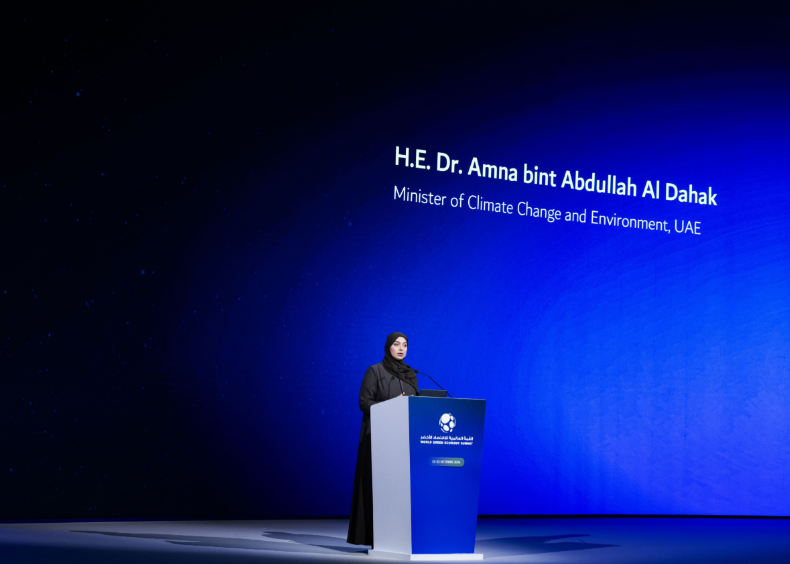
Dr. Amna bint Abdullah Al Dahak, UAE Minister of Climate Change and Environment, said the green transition was becoming a major driver of economic growth, innovation and job creation.
She explained that the UAE’s climate and economic strategies were designed to translate sustainability ambitions into measurable outcomes.
Through the UAE Net Zero by 2050 Strategic Initiative, the country aims to generate significant economic benefits, including a potential contribution of approximately 3% to national GDP, as outlined in the figures presented at the summit.
The UAE Green Agenda 2030 also supports the development of a competitive, knowledge-based economy, with the potential to increase GDP by 4% to 5% through clean technology, sustainable industries and green innovation.
Dr. Al Dahak also highlighted the UAE Energy Strategy 2050, which aims to triple the contribution of renewable energy by 2030 and attract between AED 150 billion and AED 200 billion in investment to meet growing energy demand while supporting continued economic development.
She cited the Mohammed bin Rashid Al Maktoum Solar Park and a project by Masdar and Emirates Water and Electricity Company to provide round-the-clock renewable energy as examples of the country’s commitment to turning sustainability objectives into practical infrastructure.
She stressed that scaling up proven solutions would be essential to ensuring that the green transition delivers economic, environmental and social benefits.
Sheikha Dr Shamma Calls for Responsible Use of Water and Food Resources
Sheikha Dr Shamma Mohammed Khalid Al Nahyan, Chairperson of the Board of Sheikh Mohammed bin Khalid Al Nahyan Cultural and Educational Institutions, highlighted the importance of responsible resource management, particularly in water and food security.
She said the summit offered an opportunity to reconsider society’s relationship with natural resources and recognise the environmental, economic and human effort required to make water and food available.
She warned against what she described as the “illusion of abundance”, in which the ready availability of essential resources can lead people and institutions to underestimate their value.
Sheikha Dr Shamma argued that sustainable resource management required more than individual responsibility. Economic policies and production, distribution and consumption systems must also encourage conservation rather than waste.
She emphasised that sustainability should be viewed through the principle of intergenerational justice, noting that today’s decisions would determine the resources and opportunities available to future generations.
She said the success of sustainability initiatives should be measured not only by the recommendations they produce but also by their impact on public awareness, behaviour, policymaking and the equitable distribution of resources.
Dubai Promotes Resource Intelligence Through Artificial Intelligence
The summit also highlighted the growing relationship between artificial intelligence, renewable energy and efficient resource management.
Darren T. Kimura, President and CEO of AI Squared, said future economic competitiveness would increasingly depend on how intelligently countries and businesses managed energy, water and capital.
He presented the concept of “resource intelligence”, highlighting the potential for combining solar power and artificial intelligence to improve the efficiency of essential infrastructure.
Potential applications include intelligent electricity grids that store excess solar power for evening demand, water networks designed to minimise losses, and precision agriculture adapted to challenging environmental conditions.
Kimura also referred to projections from the International Energy Agency indicating that electricity consumption by data centres would more than double by 2030. He argued that the rapid expansion of artificial intelligence must be accompanied by responsible energy use and appropriate governance.
He presented an AI Controls Framework developed with his team and proposed a Dubai AI Standard under which artificial intelligence projects would assess both the resources they save and the costs they generate.
His remarks reinforced the summit’s wider focus on ensuring that technological innovation contributes to measurable sustainability outcomes.
UAE Foreign Ministry Links Green Economy to Global Water Security
Abdulla Balalaa, Assistant Minister of Foreign Affairs for Energy and Sustainability, highlighted the importance of international cooperation in advancing the green economy and addressing water security challenges.
Looking ahead to the United Nations Water Conference scheduled for December, he said the momentum generated in Dubai could help support further progress in Abu Dhabi and beyond.
Balalaa emphasised the need to transform dialogue into partnerships, partnerships into investments, and investments into lasting benefits for people and the environment.
He said the success of the green economy should be assessed not only by the volume of investment or technology deployed but also by the prosperity, resilience and opportunities created for communities and the planet.
World Green Economy Summit Focuses on Investment, Innovation and Practical Solutions
The 12th edition of WGES is designed to help governments and businesses move from successful sustainability initiatives towards wider commercial and international implementation.
The first day’s programme examines circular economy business models, innovations that reduce the cost of the green transition, clean energy solutions for net-zero emissions, and energy storage technologies in the Middle East.
Other discussions focus on extending Dubai’s energy and water infrastructure expertise to international markets, powering data centres and artificial intelligence sustainably, and positioning environmental responsibility as a driver of business growth.
The second day’s agenda addresses investment opportunities in green industries, access to clean energy, the economic returns of climate projects and the development of green finance across Gulf Cooperation Council countries.
Sessions will also examine advanced reverse osmosis technologies, clean water solutions, blended finance, climate resilience and the role of technology in transforming food production amid rising temperatures.
The summit will additionally feature the announcement of the next cycle of the Emirates Energy Award.
By bringing together public institutions, private-sector companies, investors, research organisations and technology specialists, the event seeks to encourage practical partnerships, accelerate the deployment of sustainable solutions and expand access to green investment.
Dubai Positions Sustainability as a Foundation for Future Prosperity
The World Green Economy Summit reinforces Dubai’s strategy of linking environmental responsibility with economic competitiveness, technological innovation and international cooperation.
From large-scale solar infrastructure and advanced water management to artificial intelligence and green finance, the emirate is working to demonstrate how sustainability can become an integral part of modern economic development.
The UAE’s renewable energy ambitions, international climate partnerships and investment in emerging technologies reflect a broader vision of sustainable prosperity that combines economic opportunity with responsible resource management.
As international leaders and industry experts gather in Dubai, the summit provides a platform for turning ambitious climate commitments into practical projects, scalable technologies and investment opportunities.
Through its continued focus on clean energy, innovation and global partnerships, Dubai is seeking to strengthen its role as an international centre for green economic development and contribute to a more resilient, competitive and sustainable future for generations to come.
BY: The Times Union – WAM