- President says Washington not talking with Iran, hints new sanctions could hit Chinese banks that do business with it, as Iranian FM hosts Qatari diplomat for talks on Hormuz
US President Donald Trump has lost interest in renewing June’s interim agreement with Iran and prefers to exert economic pressure to secure more favorable terms for ending the war, according to sources who spoke Thursday with The Times of Israel.
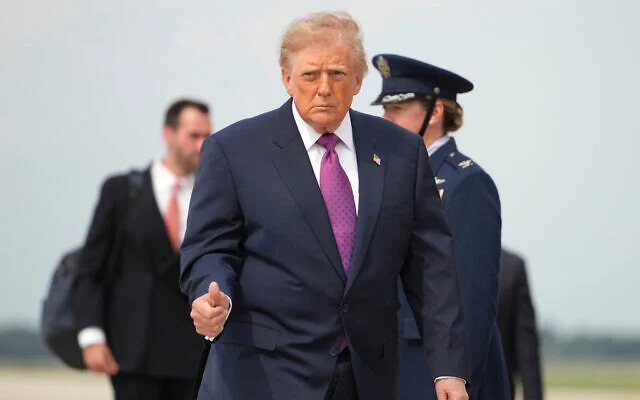
Trump himself told reporters his new sanctions against Iran could extend to Chinese banks that do business with it, and said there were no talks at all between the US and Iran right now, even as Tehran’s top diplomat hosted his Qatari counterpart, a key mediator, to discuss the Strait of Hormuz.
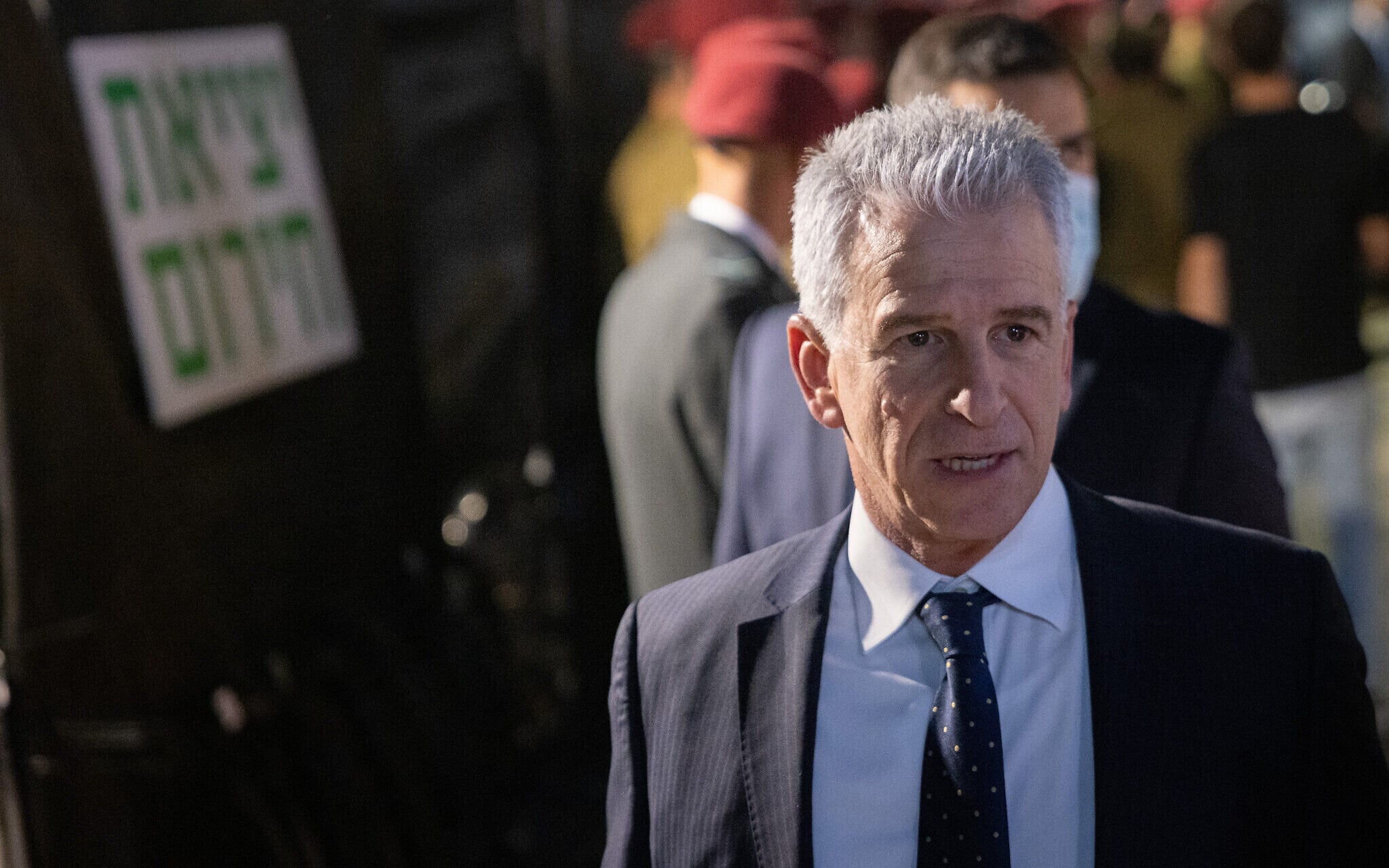
Former Mossad chief David Barnea, an architect of the US-Israeli war against Iran, meanwhile hailed Trump’s new sanctions but said there would be no choice but to “intensify the economic, diplomatic and operational actions” against the Iranian regime until it falls.
The sanctions, which US Treasury Secretary Scott Bessent presented on Monday, target Iran’s digital assets and technology, gold, aviation and shipping sectors. Potential secondary sanctions would affect entities in the United Arab Emirates, Hong Kong, China, Singapore and Europe that transport Iranian oil.
A US official who spoke with The Times of Israel said Trump thinks sanctions will lead the Iranian regime to capitulate to more favorable terms on curbing its nuclear program and reopening the Strait of Hormuz.
Confirming elements of an earlier Wall Street Journal report, a senior diplomat from one of the mediating countries also said Trump was no longer interested in reviving the June memorandum of understanding, which fell apart within days over disagreements about the strategic waterway.
While mediators Qatar and Pakistan have sought to restore the MOU or negotiate a similar agreement, Trump has informed them he was no longer prepared to accept those terms because the Iranians have “burned” him too many times at the last minute, the diplomat said.
The US would need to be willing to wait out Iran for an extended period for Trump’s plan to work, the diplomat added, expressing doubt in the administration’s ability to wait that long, given the war’s unpopularity among American citizens.
Speaking to reporters in the Oval Office, Trump said of Iranian leaders: “We don’t want to speak to them. We’re not looking to meet or anything.”
Asked if he would punish Russia for continuing to do business with Iran, Trump, “It depends. So far, I think Russia’s behaved quite well, having to do with the Strait of Hormuz, and you have to understand: for everything they do, we do also.”
Then, when asked if he would sanction Chinese banks for doing business with Iran, Trump said: “Who said I’m not? You don’t know if I’m doing it… I don’t have to announce everything, do I?”
Ex-Mossad chief: Sanctions ‘just another step’ in toppling Islamic Republic
Barnea, the former Mossad chief, described Trump’s new sanctions were “just another step” in toppling Iran’s regime through escalating attacks, while speaking Thursday during a Jerusalem Municipality ceremony honoring him.
Before the war that the US and Israel jointly launched in late February, “we felt that Iran is the State of Israel’s problem, that we alone would act and sacrifice to deal with the threat,” said former spymaster, who was succeeded by Roman Gofman in June after five years atop the Mossad.
“Today, the entire world knows that the Iranian issue is not ours alone,” Barnea said. “The world is starting to understand that if the problem is not resolved, it will reach everyone and everywhere, whether by ballistic missiles, terrorism or nuclear weapons of mass destruction, should (Iran) ever have one.”
Holocaust Memorial Museum in Jerusalem, as Israel marks Holocaust Remembrance
Day. April 23, 2025.
“President Trump, whom we owe much gratitude, understands well that the radical Iranian regime must not be left standing. The decision to levy the harshest sanctions against Iran is a correct and welcome decision, but the sanctions are just another step,” Barnea continued. “In my estimation, there will be no choice but to intensify economic, diplomatic and operational actions against this regime until it falls — and it will fall.”
“The Iranian citizens yearn for its fall — they need it to see a bit of light,” he added. “The enlightened Western world wants it, and is led by the US and Israel with greater resolve than ever.”
Iran, Qatar hold talks on Hormuz as US blockade chokes off fuel
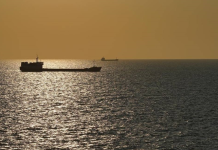
Since the war began, Iran has maintained tight control over Hormuz, requiring vessels to obtain permission to transit the waterway and striking ships that fail to comply.
A counter-blockade that the US launched on Iranian ports in April has choked off Iran’s fuel supply amid a shortfall in domestic supply.
On Thursday, the United Kingdom Maritime Trade Operations said an “unknown projectile” had struck a tanker in Hormuz this week, causing a fire that was later extinguished.
Also Thursday, Iran’s Foreign Minister Abbas Araghchi met his Qatari counterpart Sheikh Mohammed bin Abdulrahman Al Thani in Tehran for talks on the strait, which carried about a fifth of the world’s commercial oil shipments before the war.
Al Thani’s visit followed a week of intense diplomacy in Iran involving separate meetings with Oman’s top diplomat and senior Pakistani officials seeking ways to end the Middle East war and reopen Hormuz.
In a statement after the talks, Al Thani said they focused on efforts to de-escalate tensions and boost security in the region.
“Qatar believes that dialogue and diplomacy remain the best way to overcome crises,” he wrote on X. “Talks stressed the importance of respecting freedom of navigation in the Strait of Hormuz in accordance with international law.”
Qatar’s foreign ministry said Al Thani and Araghchi discussed the proposed framework for Hormuz between Iran and Oman.
Iran has for weeks been in talks with Oman, which also overlooks the Hormuz strait, over a framework agreement that would establish a “temporary corridor” for shipping and provide for clearing mines Tehran says were laid during the war.
Iran’s Islamic Revolutionary Guard Corps on Wednesday said the two countries had agreed on each country’s share of the waters and any revenues collected from managing the waterway.
Tehran has nonetheless insisted that the strait will not be reopened unless Washington meets its demands, including lifting its naval blockade, unfreezing Iranian assets abroad and removing oil sanctions. Tehran has also sought to impose service fees on ships using the strait — a move strongly opposed by Washington and regional countries.
Iran’s Vice President Mohammad Jafar Ghaempanah said Wednesday that the US blockade prevented his country from importing enough gasoline to cover a shortfall in domestic production.
“Petrol [gasoline] production is insufficient, and because of the US naval blockade, we cannot import it,” he was quoted by the official IRNA news agency as saying.
In recent days, many Iranians have been seen lining up outside gas stations. Presidential chief of staff Mohsen Haji-Mirzaei said gas quotas would be reviewed, without elaborating.
Iran, a major oil producer with some of the world’s cheapest fuel, has for years heavily subsidized gasoline, making changes to pricing politically sensitive.
As the US seeks to strangle Iran’s economy, Iranian officials have dismissed the measures as “failed policies” that will not force Tehran to change course.
“The country is in an all-out economic war,” said Iran’s top negotiator Mohammad Bagher Ghalibaf in a statement carried by local media.
“We will see that the government… will defeat the enemy on this ground as well,” he added.
Even before the war, Iran’s economy was battered by decades of international sanctions, and has long suffered from chronic inflation and a weakening currency.
BY: The Times Union