- Trump: US will get Iran’s uranium, but we need it ‘for public relations’; US House narrowly rejects bid to rein in Trump’s war powers; Netanyahu: ‘The regime of terror in Iran is weaker than ever’
US President Donald Trump counted “the military decimation of Iran” among his administration’s accomplishments in a social media post on Thursday, adding, “to be continued!”
The phrase, included in a lengthy Truth Social post, suggested he may resume the war against Iran after he returns from his trip to China on Friday. A ceasefire took effect in the US-Israeli war with the Islamic Republic in early April, though American-Iranian talks have yet to lead to an agreement.
“I am not going to be much more patient,” Trump said in an interview aired on Thursday night on Fox News’ “Hannity” program. “They should make a deal.”
But he also suggested that hunting down Iran’s stockpile of enriched uranium was primarily for political optics.
“I just feel better if I got it, actually, but it’s — I think, it’s more for public relations than it is for anything else,” Trump said in the interview.
“The other thing we could do is bomb it again,” he added. “But I, just, I would feel better getting it, and we will get it.”
US Central Command head Admiral Brad Cooper said in testimony to a US Senate committee on Thursday that the war had significantly degraded Iran’s military capability but that it retained the ability to strike.
Tensions also remain high over the Strait of Hormuz, the key pathway for the global oil supply that Iran has blocked since the war began in late February. On Thursday, a ship anchored off the east coast of the United Arab Emirates was seized and was heading toward Iranian waters, the British military said, while India said a cargo ship was sunk amid the battle over the strait.
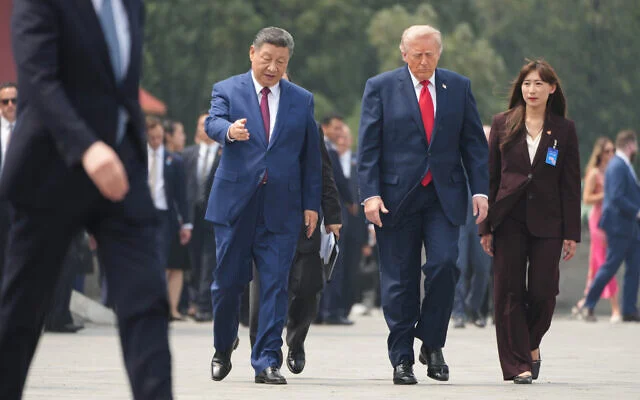
Trump said earlier that Chinese President Xi Jinping had offered China’s help to open the strait, and pledged not to send military equipment to aid Iran in the war.
“He said he’s not going to give military equipment… he said that strongly,” Trump told the “Hannity” show, after the two leaders met in Beijing. “He’d like to see the Hormuz Strait open, and said, ‘If I can be of any help whatsoever, I would like to help.’”
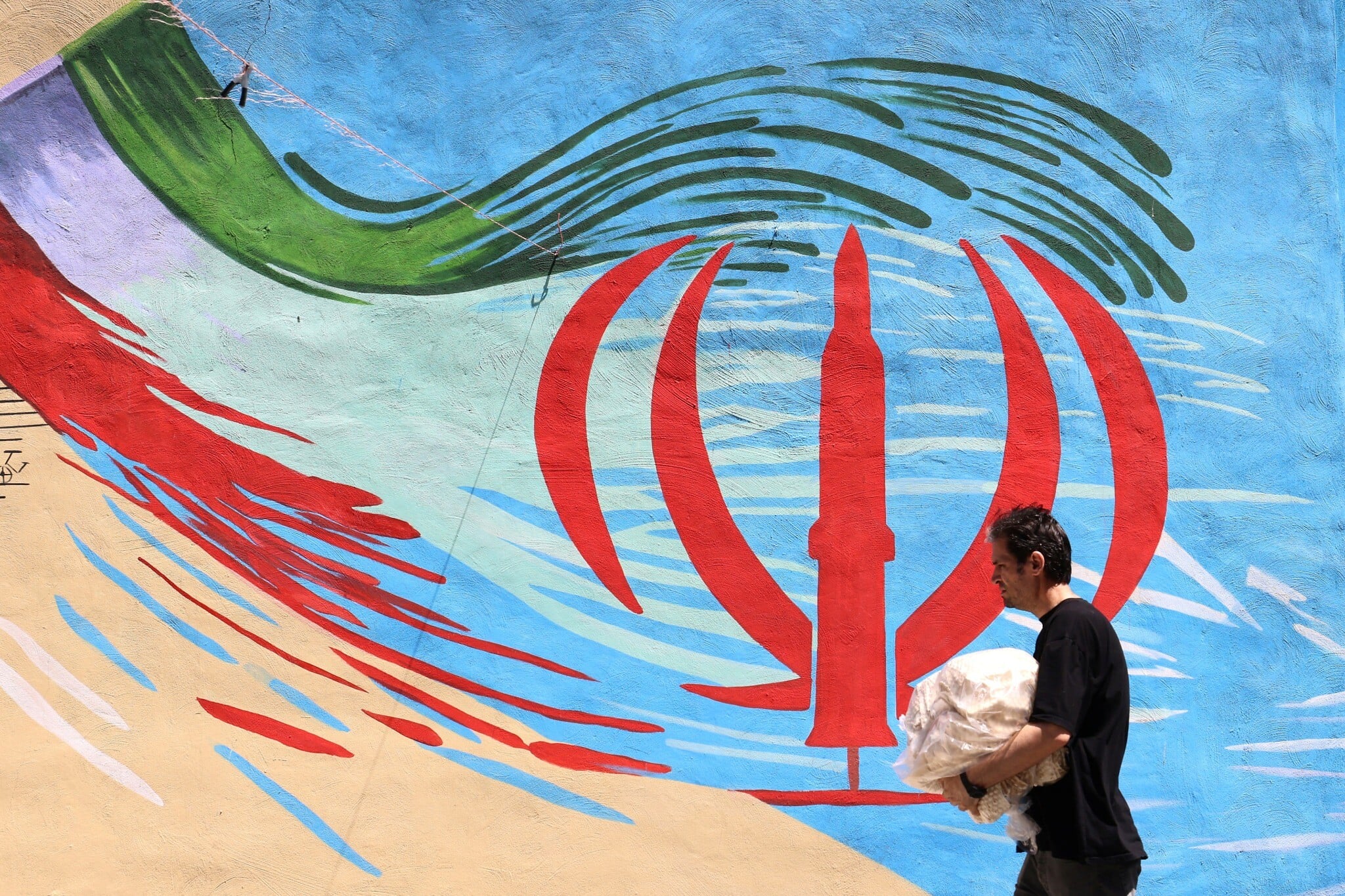
Tehran, Iran, on May 10, 2026.
After talks between Trump and Xi on Thursday, the White House said the leaders had agreed that the strait should be open and that Xi made clear China’s opposition to the militarization of the strait and any effort to charge a toll for its use.
He also expressed interest in purchasing more American oil to reduce China’s future dependence on the strait, and the leaders agreed that Iran should never obtain nuclear weapons, the readout said.
Tehran denies seeking such weapons, but it has enriched uranium to levels that have no peaceful application, obstructed international inspectors from checking its nuclear facilities, and expanded its ballistic missile capabilities.
US Trade Representative Jamieson Greer affirmed on Friday that Chinese officials made clear that Beijing wants to see the strait reopen without restrictions or tolls and that Beijing will act pragmatically to limit military support for Iran.
“It’s really important for China to have the Strait of Hormuz open, no tolling, no military control, and that was clear from the meeting. So we welcome that,” Greer told Bloomberg television in a live interview from Beijing.
“With respect to Chinese involvement with Iran, our view is the Chinese are being very pragmatic, and they don’t want to be on the wrong side of this,” Greer added. “They want to see peace in that area. President Trump wants to see peace in that area. So we have a lot of confidence that they will do what they can to limit any kind of material support for Iran.”
Trump is keen to elicit Chinese support to end a war that has become an electoral liability as it drags on towards key US midterm elections in November. But analysts doubt Xi will be willing to push Iran hard or end support for its military, given its value as a strategic counterweight to the US.
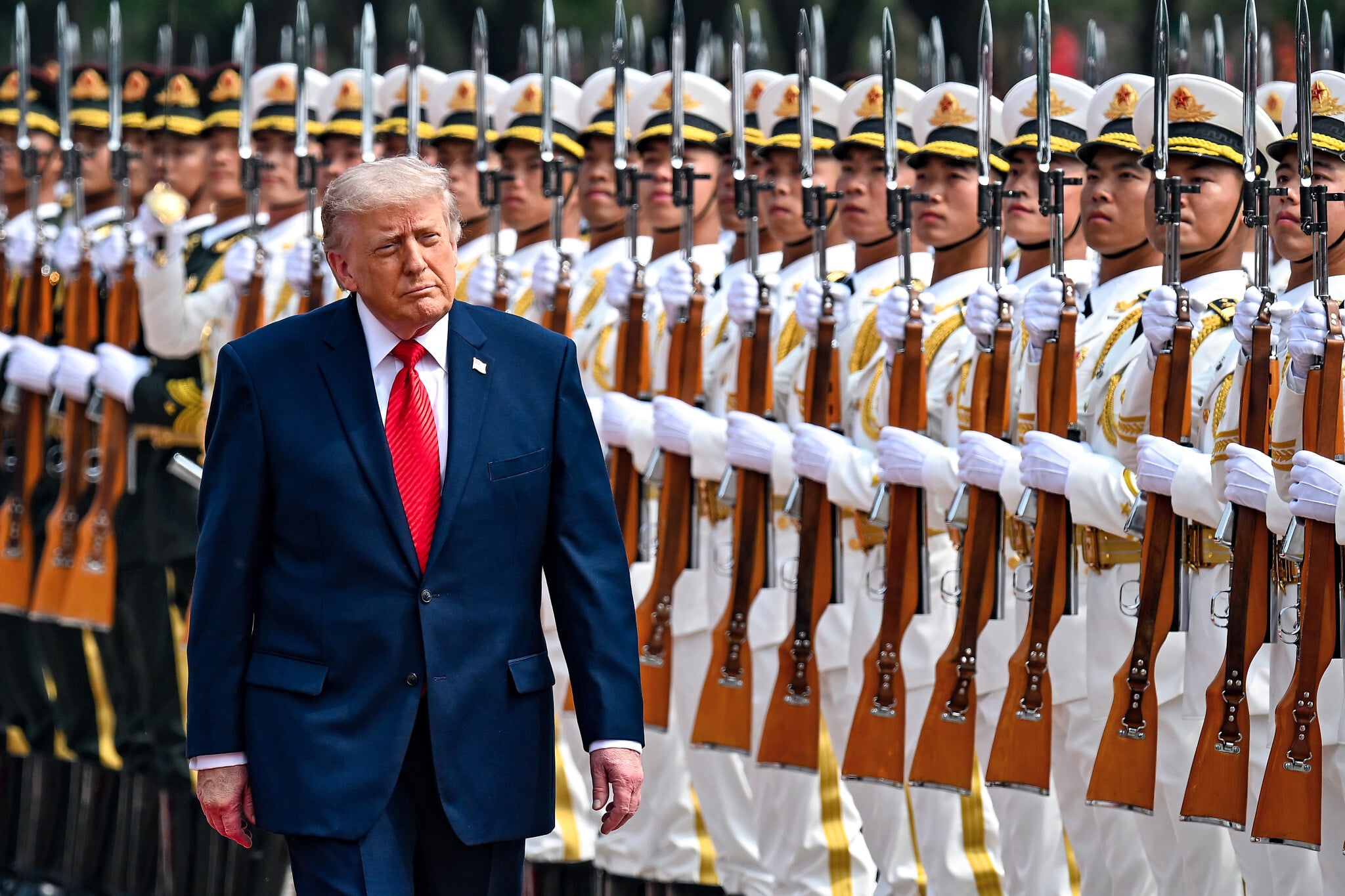
May 14, 2026, in Beijing.
In an interview with CNBC from Beijing, US Treasury Secretary Scott Bessent said he believed China would “do what they can” to help open the strait, something “very much in their interest.”
Before the war, about a fifth of global oil and liquefied natural gas supplies passed through the waterway. But diplomacy has been on hold since last week when Iran and the US each rejected the other’s most recent proposals.
US House rejects bid to rein in Trump’s war powers
The Republican-led US House of Representatives narrowly defeated a Democratic-led resolution aiming to stop the war until hostilities are authorized by Congress, but the effort failed by the closest possible margin.
The House voted 212 to 212 on the war powers resolution, meaning it failed because it needed a majority to pass, despite more Republicans backing the effort than previously
Three of Trump’s fellow Republicans – Tom Barrett of Michigan, Brian Fitzpatrick of Pennsylvania and Thomas Massie of Kentucky – backed the resolution, and one Democrat – Jared Golden of Maine – opposed it.
It was the third House vote this year on an Iran war powers resolution, and the first since the conflict hit a 60-day deadline on May 1 for Trump to come to Congress about the war. Trump declared then that a ceasefire had “terminated” hostilities against Iran. There also have been seven failed votes in the US Senate.
The votes have been getting tighter, with Trump’s fellow Republicans holding just a slim majority in both chambers.
Democrats have called on Trump to come to Congress for authorization to use military force in the Iran conflict, noting that the US Constitution says only the legislature, not the president, can declare war.
Republicans — and the White House — say Trump’s actions are legal and within his rights as commander-in-chief to protect the US by ordering limited military operations when the country faces an imminent threat.
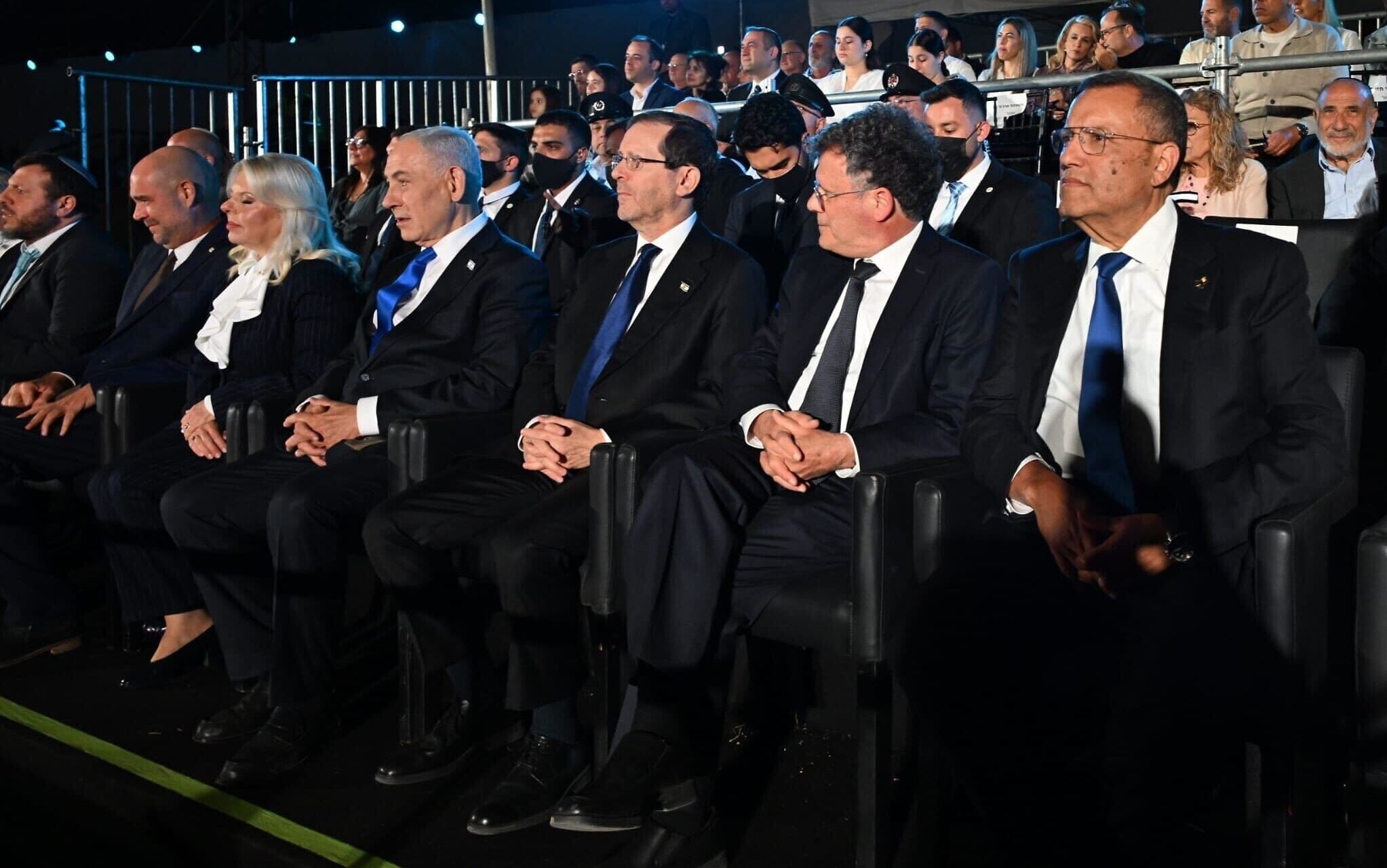
officials attend the official Jerusalem Day state ceremony at Ammunition Hill,
May 14, 2026.
Netanyahu: ‘The regime of terror in Iran is weaker than ever’
Prime Minister Benjamin Netanyahu hailed Israel’s military achievements against Iran and other foes in remarks at Ammunition Hill during the Jerusalem Day state ceremony on Thursday.
“The regime of terror in Iran is weaker than ever, and the State of Israel is stronger than ever,” Netanyahu declared, adding, “We will continue to fight decisively against every threat of radical Islam.”
Netanyahu repeated his assertion that if Israel had not launched military campaigns against Iran’s nuclear and ballistic missile programs in June 2025 and earlier this year, “Iran would already possess a nuclear bomb today.”
Netanyahu claimed successes in the recent conflicts against Iran and its terror proxies Hamas and Hezbollah, saying, “The power we have projected on every front [and] the alliance — closer than ever — with President Trump’s administration in the United States, our determination to strike those who seek our destruction deep within their territory, far beyond our borders, the buffer zones we have created around us in Gaza, Lebanon, and Syria – all these have transformed the face of the Middle East.”
BY: The Times Union – Agencies