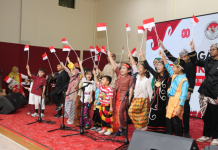
August 24, 2026 Ukraine celebrates 35th anniversary of its Independence. This day back in 1991 the Verkhovna Rada adopted the Act of Declaration of Independence of Ukraine. The Declaration epitomized the historical choice of Ukrainians to live in a sovereign democratic state and affirmed their right for free and dignified future.
Over years of reforms and transformations, Ukraine has turned into the modern, viable, law-based state with a unique identity, pluralistic society, resilient economy and strong institutions, built on European democratic values.
The deep-rooted tradition of the statehood
For Ukrainians freedom and dignity have always been fundamental values, which underpinned their centuries-long struggle for sovereignty and independence.
The state-building tradition of Ukraine is over one thousand years old, taking roots in the of Kyivan Rus’ state (9th–13th centuries AD), spanning through the Galicia-Volyn Principality (12th–14th centuries AD), evolving into the Ukrainian Cossack State (16th–18th centuries AD), the Ukrainian People’s Republic, the Western Ukrainian People’s Republic, the Ukrainian State (1917-1919), and Carpathian Ukraine (1941) in 20 century.
During the decades, following the World War II the Ukrainian liberation movement in homeland as well as in exile, fought soviet oppressors with arms in hand or by non-violent methods for the revival of the independent and united Ukrainian state, playing a decisive role in the collapse of the communist totalitarian empire.
On the path to the statehood Ukrainians made immense sacrifices. Millions faced the suppression of national identity, mass terror, wars, genocide, and repression under the Russian Empire and Soviet occupation. The artificial famine of 1932–1933, known as the Holodomor, claimed at least 7 million lives.
In May 1944, the Soviet authorities forcibly deported the Crimean Tatars, the indigenous Sunni Muslim people of Crimea. Now a day, in Russian-occupied Crimea, Crimean Tatars are again subject to politically motivated persecution and violation of their cultural and religious rights.
Thereby, on August 24, 1991 Ukrainians, in fact, reinstated, their statehood and assumed an enormous responsibility to preserve the independence.
The struggle for freedom
This year, the Independence Day is filled with a special meaning as Ukraine continues its existential struggle in the face of the Russian aggression. The occasion invokes sorrow and proudness at the same time. Sorrow for those, who lost their lives and proudness for those, who continue the just fight for freedom.
On February 24, 2022, the Russian Federation launched its the illegal, unprovoked, and unjustified full-scale military invasion of Ukraine, an expansion of the armed aggression that has been persisted since 2014.
Russia’s aggression against Ukraine constitutes a gross violation of the UN Charter and international law and is a blatant violation of the rules-based international order.
Civilians, both seniors and children, pay the highest price of this brutal war, facing Russian relentless attacks on residential areas and critical infrastructure.
To occupied Ukrainian lands Russia has brought the imperial practices of scorched earth and looting, filtration and concentration camps, dispossession and deportation, unlawful detention and abduction, murder and torture, Russification and de-Ukrainization, fake referendums and cynical propaganda.
Our fight is not just for territory, but for survival as an independent, sovereign nation in the face of tyranny and oppression, the fight for upholding the rule of law, justice, and democracy for all civilized nations.
With the support of the international community, Ukraine continues its just struggle until liberation of occupied territories, restoration of its sovereignty and territorial integrity within internationally recognized borders.
Our strategic goal remains unchanged: to achieve comprehensive, just, and lasting peace, ensure credible security guarantees for Ukraine and accountability for Russia’s aggression.
Our red lines remain clear: respect for territorial integrity and sovereignty, the right to choose alliances, no limitations on defence capabilities. All decisions concerning Ukraine must be made with Ukraine’s full participation.
Pakistan has consistently supported the principles of sovereignty and territorial integrity of states and has never supported war. We are grateful to our Pakistani friends for their support and commitment to a just and lasting peace in Ukraine.
Ukraine and Pakistan: time tested partnership
Ukraine and Pakistan enjoy traditionally warm and constructive relations, based on mutual respect and shared values. Our bilateral cooperation expands in political, military-technical, trade, and humanitarian domains. Both nations have a rich history of human ties and practical engagement.
Our compatriot Muhammad Asad (Leopold Weiss), a native of the city of Lviv, stood at the origin of Pakistan. He drafted the first Constitution of Pakistan and served as Pakistan’s Representative to the United Nations.
Ukrainian engineers and enterprises contributed to the establishment of Pakistan’s key industries in the 1960s and 70s, including Pakistan Steel Mills in Karachi, hydroelectric plants in Tarbela and Kalabagh etc.
In the 1990s, Ukraine strengthened Pakistan’s defence capabilities by supplying T-80UD tanks and contributing to the development of Pakistan’s national tank program.
Ukraine and Pakistan supported each other through thick and thin. Ukraine provided humanitarian aid to Pakistan following natural disasters in 2005 and 2010, while Pakistan reciprocated in 2022 amidst the Russian invasion.
Ukraine has always been a reliable partner for the food security of Pakistan. During the 2020 “flour crisis,” Ukrainian traders covered two-thirds of Pakistan’s grain deficit. In 2021–2024, Ukraine exported 2 million tons of wheat to Pakistan.
In 2025, 26,000 people affected by the floods in the Sindh province received food aid packages under humanitarian program “Grain from Ukraine”. In 2026, food supplies to Pakistan continue under the UN “Food from Ukraine” program.
The visit to Ukraine of the Chief of Army Staff General Qamar Javed Bajwa in May 2021 reaffirmed strong and deeply rooted ties between the two countries in military-technical domain.
The official visit of Ukrainian Foreign Minister Dmytro Kuleba to Islamabad in July 2023 further strengthened relations between the two nations.
Both countries made significant contributions to combating Islamophobia, protecting the rights and freedoms of Muslim communities. In July 2023, Ukraine became the only European country, which supported a UN Human Rights Council resolution on countering religious hatred, tabled by Pakistan on behalf of the OIC.
Ukraine supported Pakistan’s candidacy as a non-permanent member of the UN Security Council for 2025–2026, confident in Pakistan’s ability to contribute to addressing major threats to international peace and security, particularly Russia’s war of aggression against Ukraine.
The positive background of political engagement, practical interaction, and mutual support on multilateral stage provides a solid foundation for further successful development of cooperation between Ukraine and Pakistan.
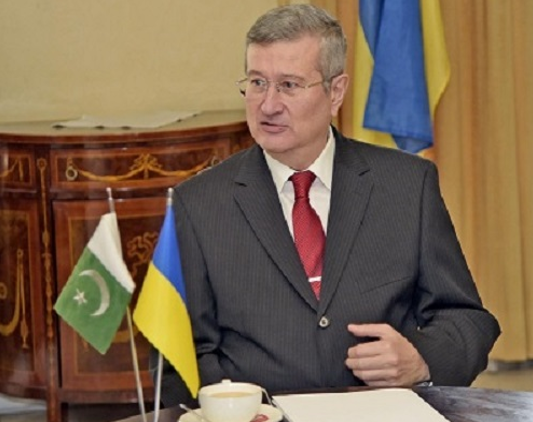
BY: Writer Mr. Markiian Chuchuk, Ambassador Extraordinary and Plenipotentiary of Ukraine in the Islamic Republic of Pakistan
Disclaimer: Views expressed by writers in this section are their own and do not necessarily reflect The Times Union‘ point of view