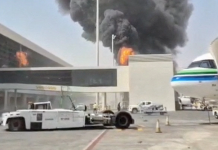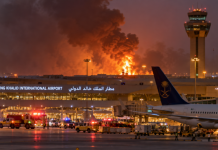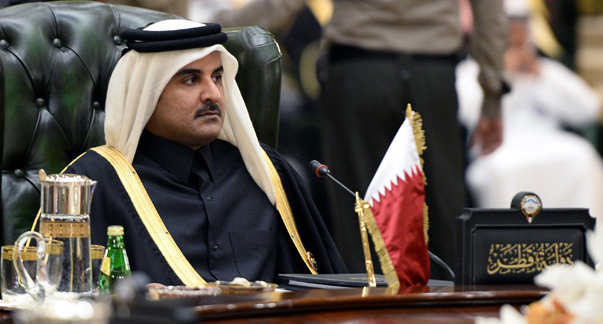
On 9 September 2025, Israel launched an air strike on the Hamas political office in Qatar. Israel committing genocide in Gaza and along with the United States attacked Iran, who has been perceived as the predominant challenger to Tel Aviv and Washington’s meddling in the Middle East. However, Israel’s attack on Qatar sparked outrage worldwide regarding the United States’ and Qatar’s security agreements. The attack forced Qatar to rethink its trust in the United States, as Qatar felt vulnerable and betrayed despite US security guarantees and agreements.
This raised an important question: can Qatar solely depend on the United States, or should it diversify its dependencies? The crisis highlights the limitations of relying on a single power and underscores the need for Qatar to adapt its foreign policy in response to regional and global realignments. The relationship between Qatar and the United States began after Qatar’s independence in 1973 with the opening of the U.S. embassy in Doha.
The relationship was not strong in the beginning, but after the Persian Gulf War (1990–1991), Qatar took a significant step in its diplomatic and military relations with the United States because it felt more secure. This collaboration led to the establishment of the U.S. military base Al Udeid Air Base in 1996 Gulf war. Through this relationship, Qatar gained security from a hostile neighbourhood, particularly Iran, and asserted autonomy from Saudi Arabian influence.
Qatar sought independence from Saudi Arabia because it was expected to follow Saudi foreign policy and remain obedient within the GCC. The Gulf War created a heightened sense of security threat, and the United States appeared to be the only viable option at the time. This led Qatar to allow the United States to build an air base, while the United States gained more secure economic interests and opportunities for investment in the energy sector. The education sector also played a key role, as Qatar invited prestigious American educational institutions to support its plan to modernise the country.
Since 2003, Qatar has invested over $8 billion in Al Udeid Air Base, which has become a major hub for U.S. Central Command (CENTCOM) operations in the Middle East. The United States maintains over $26 billion in active defence sales with Qatar, and multiple cooperation agreements enhance military interoperability. Economically, both countries benefit from a partnership that exceeds $200 billion. In FY2021, the United States had roughly 850 companies operating in Qatar, and mutual investments surpassed $45 billion.
Major joint energy projects like North Field East and Golden Pass LNG are central to their economic cooperation. According to 2024 data, trade between Qatar and the United States reached about $11.5 billion, including $5.6 billion in goods and $5.9 billion in services. This reflects how Qatar’s strategic approach transformed it from a small Gulf country into a close ally of a global power with growing political, economic, and diplomatic significance in the Middle East.
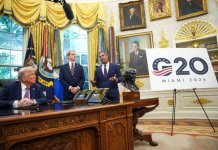
However, despite having strong relations, the recent attack on Qatar by Israel placed Qatar in a complex position. Despite the U.S.-equipped air defence system in Qatar, the failure to intercept the strikes raised concerns among Arab leaders, particularly in Qatar, regarding the reliability of U.S. security assurances. After President Donald Trump met with Prime Minister Netanyahu at the Oval Office, Netanyahu issued an apology to Qatar.
On 29 September, President Trump issued an executive order stating that “the United States shall regard any armed attack on Qatar’s territory, sovereignty, or any critical infrastructure as a threat to the peace and security of the United States.” This statement clearly indicates that the United States does not want to lose its relationship with Qatar, as Al Udeid is a key strategic location. However, these events exposed the limitations of U.S. protection and Qatar’s overreliance on a single power.
Following the current diplomatic trend, Qatar plans to diversify its foreign relations. One potential partner is China, which is seeking to expand its influence in the Middle East and North Africa (MENA). Joint military exercises such as “Eagles of Civilisation 2025” between China and Egypt, as well as China’s role in brokering talks between rival countries such as the 2023 Saudi–Iran reconciliation, highlight China’s expanding influence in the region.
Qatar is the largest LNG exporter to China. Moreover, Qatar’s strategic location offers China diplomatic and logistical advantages, making Qatar a potentially influential and stable partner in the Gulf, a possible cornerstone of China’s Belt and Road Initiative (BRI), given Qatar’s position along the maritime Silk Route. In return, China can offer Qatar a guaranteed market for its natural gas, significant investment, and a growing source of military technology and security cooperation. Both countries already have a security cooperation agreement signed in 2017.
Another option lies in Pakistan. Pakistan can be a beneficial partner for Qatar to diversify its defence dependencies, as both countries already maintain strong relations. Pakistan has long provided military training to Qatar and has conducted joint military exercises, including Zilzal-1 and Muhari-ul-Bahr. During the blockade (2017–2022), Pakistan remained officially neutral and continued to provide logistical and food supplies to Qatar.
Pakistan also provided security support during the FIFA World Cup 2022, deploying 4,058 security personnel. The close personal relationship between the Qatari ruling family and Pakistan’s Sharif family is another example of how personal, political, and trade relations intersect in international affairs. Furthermore, President Asif Zardari’s recent visits to Qatar, during which he offered cooperation in defence production and invited the Qatar Investment Authority to explore investment opportunities in Pakistan, reflect the strengthening of ties. For Pakistan, Qatar can also play an important economic role. Thus, both countries can establish strong bilateral relations.
The trajectory reveals that Qatar’s attempt to move out of Saudi Arabia’s orbit has led it into a new form of dependency, one centred on the United States. The pursuit of independence has resulted in another type of reliance. Qatar’s challenge is to convert this dependency into leverage. Since Qatar is heavily dependent on the United States for security guarantees, military cooperation, and arms purchases, a sudden policy shift is not possible. However, deepening relations with China through diversification and enhancing defence coordination with regional partners while maintaining balanced diplomacy with the United States, offers a sustainable path forward. The future of Qatar’s influence depends on its ability to remain agile in a multipolar Middle East.

Disclaimer: Views expressed by writers in this section are their own and do not necessarily reflect The Times Union‘ point of view