- Kyiv Warns of Difficult Winter as Attacks Target Energy, Industry, Ports and Supply Chains
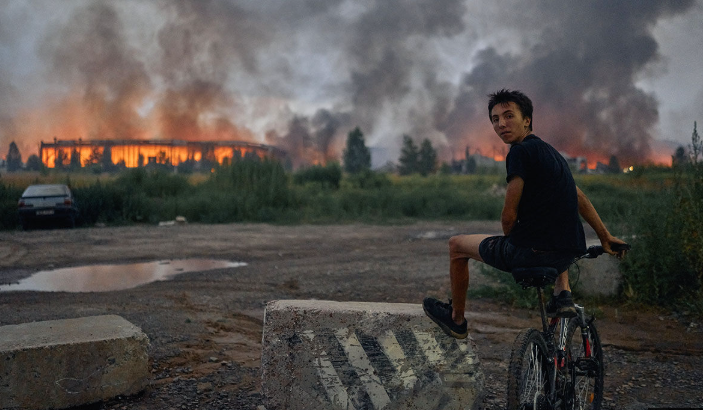
KYIV: Ukraine’s economy is facing mounting pressure as intensified Russian missile and drone attacks target critical infrastructure, industrial facilities, transport networks and revenue-generating sectors, with government officials warning that the country could suffer a significant economic slowdown in 2026.
Kyiv estimates that the destruction of infrastructure and productive assets could approach $10 billion this year, while disruptions to exports and industrial activity could reduce Ukraine’s gross domestic product (GDP) growth by as much as 1.5 percentage points.
Ukraine’s leadership has warned that the country is heading toward an exceptionally difficult winter as Russian strikes continue to damage energy infrastructure and other critical economic assets.
Energy and Industrial Infrastructure Under Attack
Russia has repeatedly targeted Ukraine’s energy infrastructure during the war, leaving the country increasingly vulnerable as winter approaches. Since the summer, Kyiv says Moscow has intensified its use of missiles and drones, placing additional pressure on Ukraine’s air-defence capabilities.
The latest attacks have extended beyond energy facilities to include steel plants, grain-export infrastructure, warehouses and supply chains, particularly the railway network that remains vital to the movement of goods across the country.
Prime Minister Sergiy Koretsky described the economy as being in an extremely difficult situation, saying the scale and intensity of attacks and resulting destruction had increased.
Economy Minister Oleksandr Kravchenko similarly warned that Ukraine faced a “very difficult” winter, both because of continuing damage to critical infrastructure and worsening economic conditions.
Grain Exports and Black Sea Routes Hit
Ukraine’s agricultural sector remains particularly vulnerable because grain exports through the Black Sea represent an important source of foreign revenue.
Officials say repeated attacks and restrictions affecting ports and maritime routes have significantly complicated the movement of Ukrainian agricultural products to international markets.
The disruption carries implications beyond Ukraine, as both Russia and Ukraine are major suppliers of grain to global markets, particularly to countries in Africa, Asia and the Middle East.
President Volodymyr Zelensky has therefore urged international efforts to restore the safe operation of Black Sea ports and prevent further disruption to food supplies.
Steel Industry Suffers Fresh Blow
Ukraine’s strategically important steel industry has also come under increasing pressure.
ArcelorMittal Kryvyi Rih, one of the country’s largest steel producers, reported that a Russian missile strike killed two employees and damaged company facilities.
The incident underscores the growing challenges facing Ukrainian industrial companies already operating under wartime conditions, including shortages of energy, disrupted logistics and difficulties securing investment for reconstruction.
Ukraine’s parliamentary budget committee chief Roksolana Pidlasa said Russia was deliberately targeting industries that generate revenue for the Ukrainian state, including grain-export routes, ports and metallurgical facilities.
She warned that damage to such industrial infrastructure could not be repaired quickly.
Kyiv Calls for Energy and Food Truce
Amid the escalating economic pressure, President Zelensky has called for international diplomatic efforts to secure at least a temporary cessation of attacks against energy and food-related infrastructure.
Zelensky has expressed hope that US President Donald Trump could help persuade Moscow to facilitate the reopening of Black Sea ports and support a reciprocal suspension of attacks on energy facilities.
He has argued that even if a comprehensive peace agreement remains out of reach, an “energy truce” and “food truce” could help protect civilians, stabilize markets and reduce the risk of wider food-security problems.
“These decisions can be made,” Zelensky said, stressing that action should be taken before winter rather than after the humanitarian and economic consequences become more severe.
War Costs Continue to Rise
At the same time, Ukraine’s fiscal burden is increasing as military expenditures continue to consume a growing share of government resources.
Pidlasa said the estimated daily cost of the war had risen from approximately $140 million in 2024 to $190 million this year, reflecting the growing scale of military operations and defence requirements.
She said Ukraine had increasingly been forced to rely on international financial assistance even to meet the salaries of its military personnel.
The rising cost of the war comes as Ukraine faces significant damage to its productive capacity and a widening need for reconstruction financing.
International Aid Linked to Economic Reforms
Ukraine is also seeking nearly $30 billion in international assistance to help finance this year’s budget deficit. However, officials said the release of some of the funds is linked to the Ukrainian parliament’s adoption of reforms requested by Western partners.
Among the conditions are measures aimed at strengthening anti-corruption safeguards, following several major corruption scandals that have placed additional scrutiny on Ukraine’s wartime governance.
Parliament is also facing difficulties in approving some revenue-raising measures, including proposals to impose duties on certain parcels arriving from abroad.
A Difficult Economic Road Ahead
Ukraine’s economic challenges are therefore extending well beyond the immediate destruction caused by missile and drone attacks.
The combination of damaged infrastructure, disrupted exports, pressure on industrial production, rising defence expenditures and dependence on international financial assistance is creating an increasingly difficult fiscal environment for Kyiv.
The government faces the twin challenge of financing the ongoing war while preserving enough economic capacity to sustain essential services and prepare for eventual reconstruction.
With winter approaching, the condition of Ukraine’s energy infrastructure and the continued security of its transport and export routes will be crucial to the country’s economic resilience.
For Kyiv, the immediate priority is not only defending its territory but also protecting the economic foundations needed to keep the state functioning and support millions of people affected by the war.
BY: The Times Union – AFP