- Trump has ‘other options’ if talks fail, says Rubio, as US president vows to retrieve, possibly destroy Iran’s highly enriched uranium; IDF chief says military ‘on highest alert’ over holiday
US Secretary of State Marco Rubio said Thursday that there were “good signs” for a deal to end the war with Iran, but that an agreement would be “unfeasible” if Tehran pursues its plan to toll ships in the Strait of Hormuz. Israel, meanwhile, remained at the highest level of alert over the possibility that fighting could resume.
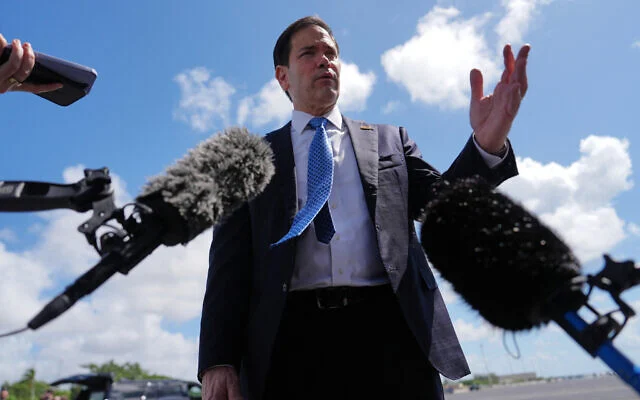
Rubio told reporters in Miami that while US President Donald Trump prefers diplomacy to war, there are “other options” if talks reach a dead end.
“The president’s preference is to do a good deal. That’s his preference. It’s always been his preference. If we can get a good deal done, that would be great,” Rubio said. “But if we can’t get a good deal, the president’s been clear he has other options.”
“I believe the Pakistanis will be traveling to Tehran today, so hopefully that’ll advance this further,” said Rubio, referring to a possible visit to Tehran on Thursday by Pakistan’s Army Chief Asim Munir, a key mediator.
“There are some good signs, but I don’t want to be overly optimistic,” Rubio said. “Let’s see what happens over the next few days.”
Asked about Iran’s scheme to impose tolls in the blockaded strait, Rubio said: “No one is in favor of a tolling system, it can’t happen, it would be unacceptable and it would make a diplomatic deal unfeasible.”
“It’s a threat to the world if they were to try to do that, and it’s completely illegal by the way,” he added.
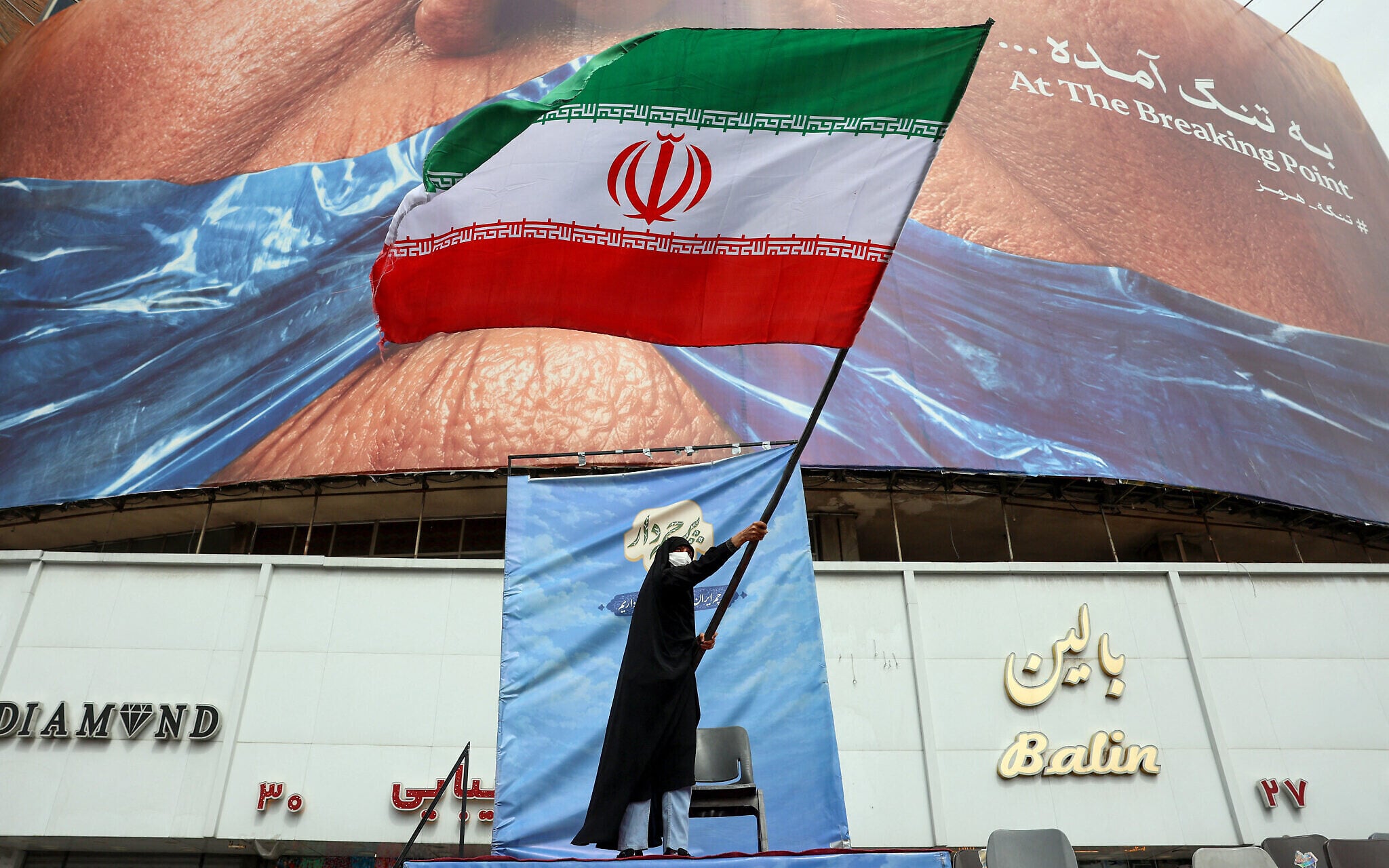
Donald Trump and the Strait of Hormuz at Valiasr Square in Tehran, Iran, on May 5, 2026.
Rubio also accused NATO allies of having gone “into hiding” while the US struck Iran’s ballistic missiles, even though the Islamic Republic possesses missiles that can reach Europe but not the US.
Trump was “not asking them to commit troops. He’s not asking them to send their fighter jets in. But they refuse to do anything,” Rubio said. “We were very upset about that.”
A senior Iranian source told Reuters on Thursday that no deal has been reached with the US, but gaps have been narrowed, adding that Iran’s uranium enrichment and Tehran’s control over the Strait of Hormuz remain among the sticking points.
Israel on the highest alert
The US and Israel launched a bombing campaign in Iran on February 28 in a bid to destabilize its regime and destroy its ballistic missile and nuclear programs.
Iran responded with missile and drone strikes across the region and by imposing a blockade on the Strait of Hormuz, which normally carries about a fifth of the world’s oil shipments.
The fighting entered a truce on April 8. Negotiations to end the war have faltered over Iran’s nuclear program and the post-war control of the Strait of Hormuz, where the US launched its own blockade on Iran-linked shipping on April 13.
Amid the possibility that talks would collapse, IDF Chief of Staff Lt. Gen. Eyal Zamir said Thursday that the military would remain on highest alert over the day-long Shavuot holiday, which began Thursday at sundown.
“Even during the Shavuot holiday, the IDF remains on the highest level of alert and continues to operate decisively across all fronts, with high readiness and full preparedness for any mission,” Zamir said in remarks published by the military from a visit to wounded soldiers.
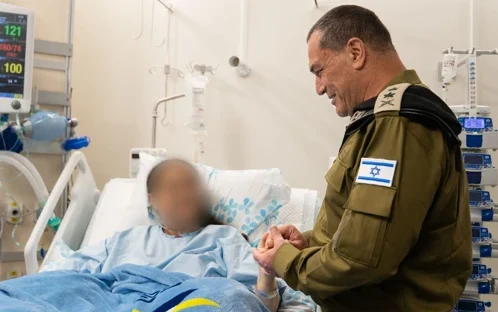
a wounded soldier, May 21, 2026.
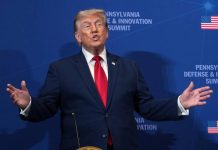
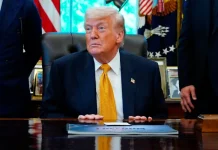
At the White House, meanwhile, Trump said of the Strait of Hormuz that “we want it free; we don’t want tolls.”
Trump made the comment at a press conference where he announced the loosening of federal rules on greenhouse gases from cooling equipment, in a bid to counter inflation triggered by the closure of the Strait of Hormuz.
We are not going to let them have it
During the press conference, Trump repeated his vows to extract Iran’s highly enriched uranium and prevent the Islamic Republic from obtaining nuclear arms.
A nuclear Iran would lead to “nuclear war in the Middle East, and that war will come here, that war will go to Europe — we can’t let that happen, and it won’t happen,” said Trump. “I can think of nothing that’s more important than the fact that we cannot let Iran have a nuclear weapon.”
While Iran, whose leaders are sworn to Israel’s destruction, denies seeking nuclear weapons, it has amassed uranium enriched to nearly weapons-grade levels with no peaceful application.
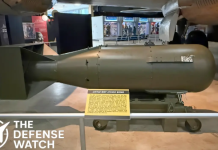
Roughly 440 kilograms (970 pounds) of the highly enriched material is believed to have been buried following US strikes on key Iranian nuclear sites during the 12-day Israel-Iran war last June.
“We’re gonna get it one way or the other, they’re not gonna have a nuclear weapon,” Trump said of Iran’s highly enriched uranium.
Responding to a separate question on the highly enriched uranium, Trump said: “We’ll probably destroy it after we get it, but we’re not going to let them have it.”
The comments came after two senior Iranian sources cited by Reuters said the country’s Supreme Leader, Mojtaba Khamenei, has issued a directive that the country’s highly enriched uranium should not be sent abroad, hardening Iran’s stance on a central US demand in talks to end the war.
Meanwhile, US intelligence indicates Iran is rebuilding its military at a faster pace than initially expected, CNN reported.
BY: Stav Levaton contributed to this report.