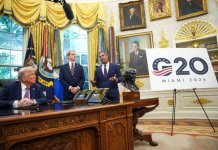
- US president claims to have almost finalized a ‘Memorandum of Understanding pertaining to PEACE’ with Iran; he’s also mused that Iran might ‘perhaps’ join the Abraham Accords. Wishful thinking cannot mask an unfolding catastrophe for Iranians, the free world and Israel
“If an injury has to be done to a man,” wrote Niccolò Machiavelli in The Prince, his instruction manual for rulers, “it should be so severe that his vengeance need not be feared.” That was 500 years ago, and the dictum is as valid as ever, though it has evolved over the centuries. US President Trump himself invoked an iteration, attributed to Ralph Waldo Emerson, after he was acquitted in his 2020 impeachment trial. “When you strike at the King,” Trump tweeted, “you must kill him.”
On February 28, the US and Israel opened a military campaign against Iran’s murderously rapacious Islamic extremist regime, aiming to destroy its nuclear weapons program, crush its ballistic missiles industry, halt its support for proxy terrorist armies Hezbollah and Hamas, put an end to its decades of global terrorism, and create the conditions for the Iranian masses to oust it from power, once and for all.
“We will ensure that Iran does not obtain a nuclear weapon,” Trump vowed in an address that day, specifying what the campaign would achieve. And “when we are finished, take over your government,” he preemptively urged the Iranian public, assuring them, “It will be yours to take.”
Apparently over-confident after their 12-day war last June battered Iranian military targets, eliminated numerous key nuclear scientists, and bombed three key underground nuclear facilities, however, the US and Israel, it has become evident, underestimated the regime’s tenacity, and failed to carry out even basic strategic steps to ensure the success of the operation.
Its initial strikes on the Iranian leadership, spearheaded by Israel, eliminated Ali Khamenei, the supreme leader, and numerous other senior figures. But a reliance on invading Kurdish forces, and a bizarre reported outreach to the Israel-hating, Holocaust-denying former president Mahmoud Ahmadinejad as a potential new leader, were no substitute for the effective strategic planning, including the careful nurturing of a reliable alternative leadership, that was needed to persuade the Iranian public to indeed venture yet again into the streets and “take over” their government.
Worse, much worse, the US Central Command (CENTCOM) failed to deploy effectively to secure the Strait of Hormuz at the start of the war. This was a highly complex operation, requiring a major naval presence and heavy air power. And it would have had to be carried out under attack by Iran’s missiles and drones, which the joint airstrikes were targeting as a priority but were not capable of entirely eliminating.
Yet it was crystal clear that the regime would seek to assert control over the strait, would leverage that control in order to radically disrupt global energy supplies, and would thus heighten concerns in countries worldwide about the adverse consequences of the war — with opposition at home bound to prove deeply discomfiting for Trump, and by extension, constraining him.
And that, of course, is precisely what happened. The US president’s desperation to get Hormuz reopened was reflected front and center in his Saturday Truth Social declaration that a “Memorandum of Understanding pertaining to PEACE” had been “largely negotiated” with Iran, that it would be announced “shortly,” and that it would provide for the Strait of Hormuz to be “opened.”
The imminent reopening of Hormuz — which was not an issue before the war — was the only specific detail of the ostensible agreement that Trump chose to mention. All the actual goals of the war — including the removal of Iran’s nuclear threat and the demise of its terrorist proxies — were conspicuous in their absence. And to add unsurprising insult to injury, Iran’s semi-state Fars news agency immediately retorted that the strait would remain under Iranian management, and that Trump’s announcement was “incomplete and inconsistent with reality.”
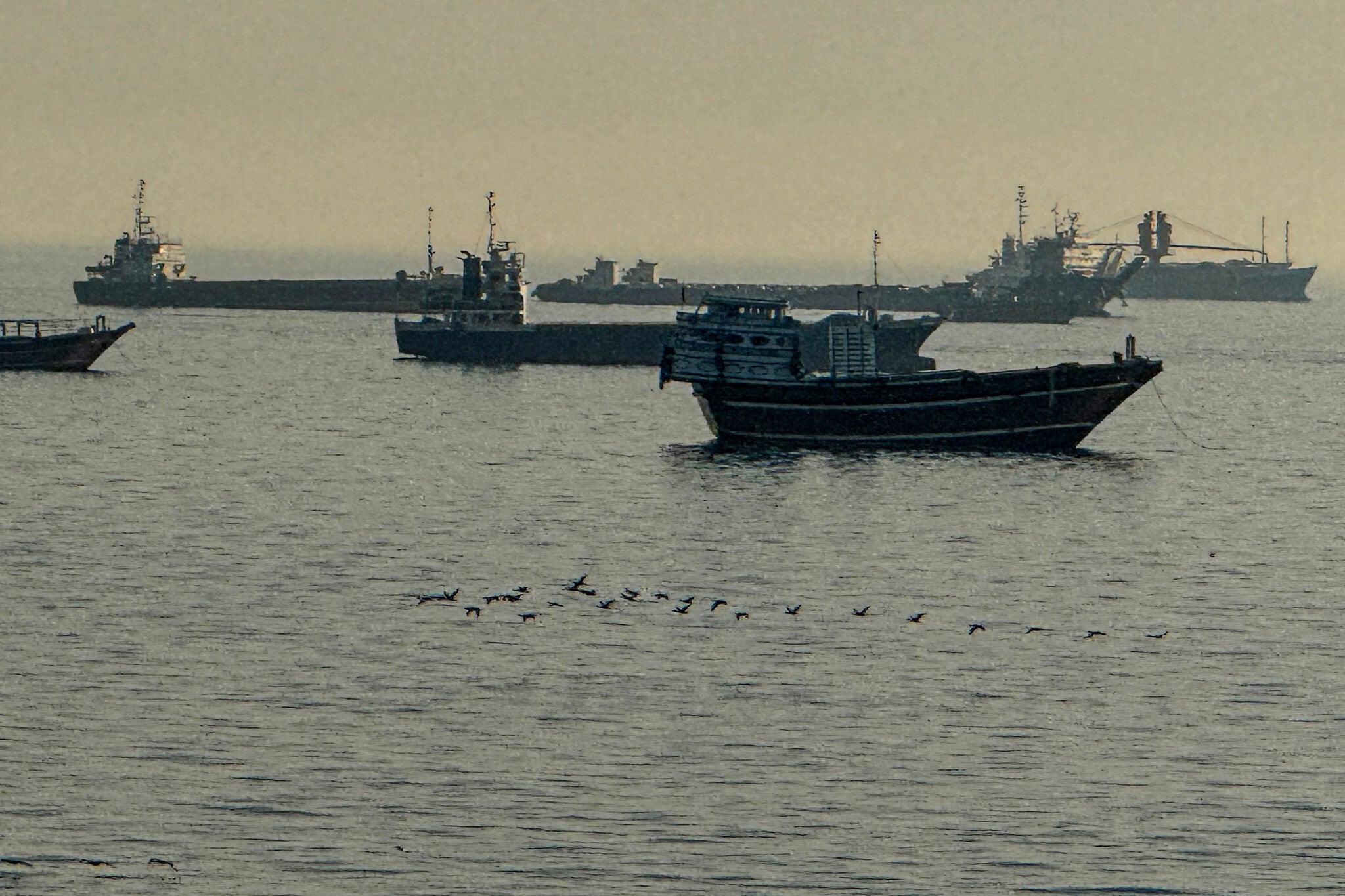
northern Musandam Peninsula on May 17, 2026.
Diverging US and Israeli priorities
As of this writing, the “shortly” to be announced deal has not, in fact, been announced, and Trump has zigged and zagged about it. Its reported terms, quite apart from being humiliating for him, are nothing short of catastrophic.
They provide for vast sums of money pouring into Tehran’s coffers in the short-term, the better to develop more potent military capabilities, further arm and empower its proxies, and foster more global terrorism, including against Jews.
And there is no agreement whatsoever at this stage on the key concerns that prompted the war, most importantly thwarting Iran’s path to the bomb. Rather, there is merely a vague requirement to discuss the nuclear issue in the coming weeks and months — a surefire recipe for endless foot-dragging by a regime that is tasting victory and knows it has the means to deter the US from resumed conflict and, in turn, complicate future Israeli attacks.
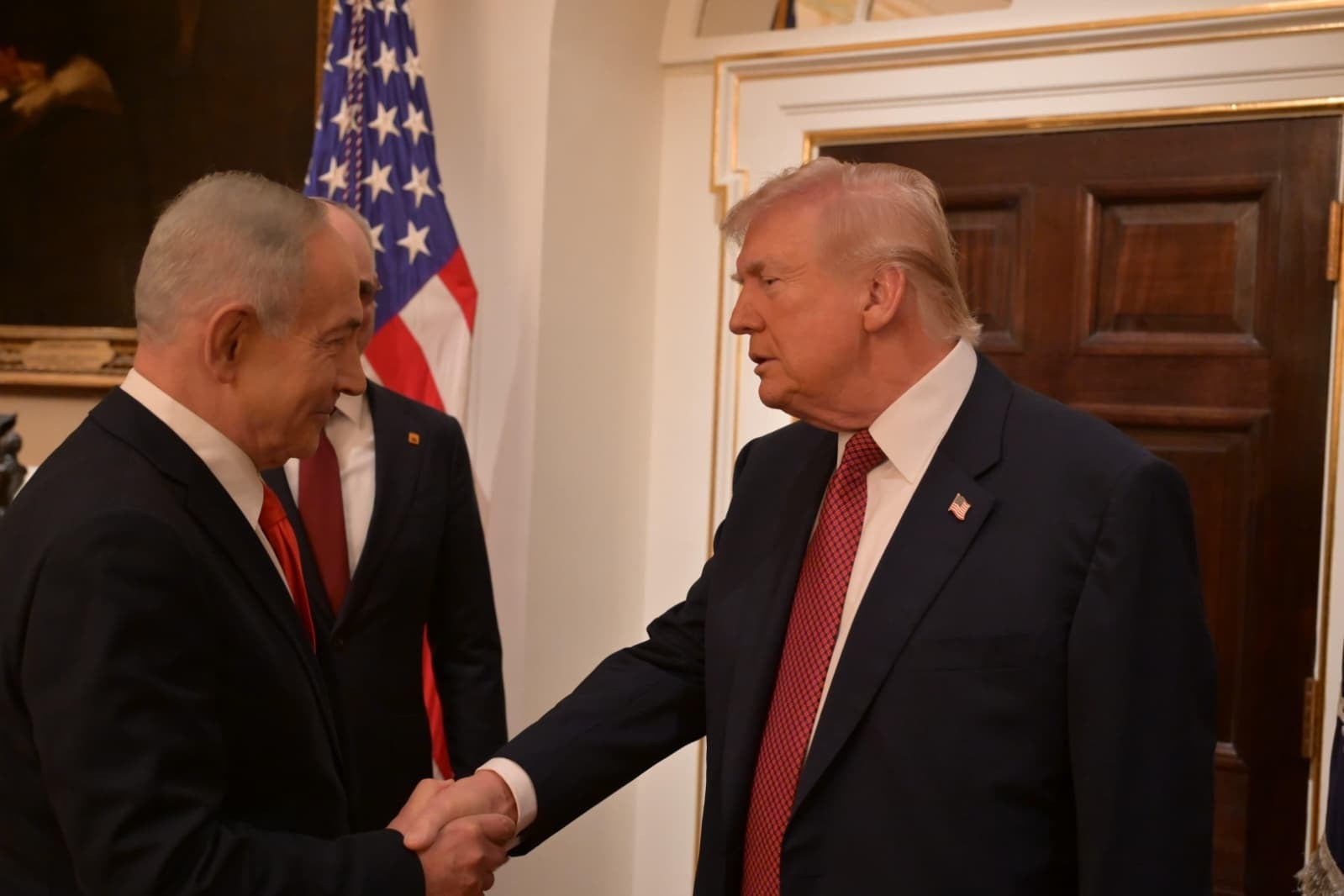
House, February 11, 2026.
Prime Minister Benjamin Netanyahu has hailed last year’s and this year’s conflicts with Iran as extraordinary instances of the US and Israel fighting together against the world’s gravest enemy. But the priorities, interests, and concerns of the two allies, though broadly aligned, are not identical, and as the current war has floundered, they have increasingly diverged.
Israel’s leadership and citizenry, almost all the way across the spectrum, rightly regard the Islamic Republic as a direct, existential threat — a regime that has to be removed for the sake of the Iranian people, the region, and the free world, but first and foremost, for the survivability of Israel.
We know all too well the devastation that Iran’s weaker border proxy, Hamas, was able to wreak on October 7, 2023. We are currently rediscovering the revived deadly capabilities of Hezbollah, across the northern border. And we have every reason to fear that if Iran attains its sought-after nuclear weapons capability, it will seek to use it against the world’s only Jewish state.

The United States, most certainly under Trump, also recognizes the Islamic Republic’s genocidal ambitions for Israel, its murderous hostility to the US, and its rapacious goals in the region and far beyond. But ensuring that the regime goes down is not Trump’s first priority, especially as ousting it, even if that can be done, will almost certainly cost many, many American lives.
Many Americans have been and are prepared to risk and even lose their lives in the essential defense of their country. So, too, many Israelis. The crucial distinction at this juncture of the conflict with Iran is that Americans do not broadly consider the regime to constitute an immediate or even imminent direct existential threat to the nation. Israelis, broadly, do.
No deal at all
Attempting to psychoanalyze the endlessly garrulous and contradictory US president is a fool’s game. But you can see his internal conflict playing out in full public view.
He knows the regime in Tehran is as dangerous as it ever was, if not more so, but he wants to believe that it isn’t. He knows and says that Iran would use nuclear weapons to destroy Israel if it got them, but has said that a 20-year Iranian “guarantee” to end enrichment would suffice. He “reTruthed” the Iranian president’s willingness to “assure the world” that the Islamic Republic will not seek nuclear weapons, as though such words are of value. Fancifully, to use a polite term, he mused this week that Iran might “perhaps” prove willing to join the Abraham Accords normalization agreements with the Jewish state it has sworn to destroy.
To state the blindingly obvious: wishful thinking, disconnected from reality, cannot replace coherent policymaking and strategic planning.
Israel, right now at least, does not possess the munitions to single-handedly destroy Iran’s nuclear facilities. It required a willing partner, in Trump’s America, last year, to bunker-bust the regime’s deeply protected enrichment and other core nuclear facilities, and even then, they were not completely destroyed. The regime’s 440-kilogram stockpile of highly-enriched uranium, for the nuclear weapons arsenal it claims not to want, apparently survived, and the regime is refusing to give it up.
Israel did not have the means, either, to single-handedly create the conditions in which the Iranian public could rise up with a reasonable chance of success against the regime. That goal, too, though a prime global interest, required a willing partner, and again found one in Trump’s America.
It will be a global tragedy if, as seems increasingly likely, inadequate strategic planning and the consequent success of Iran’s energy extortion will instead enable the regime not only to survive, but to emerge emboldened and more dangerous. Most immediately, it will elevate the clear and present danger to Israel.
Yet it’s not too late.
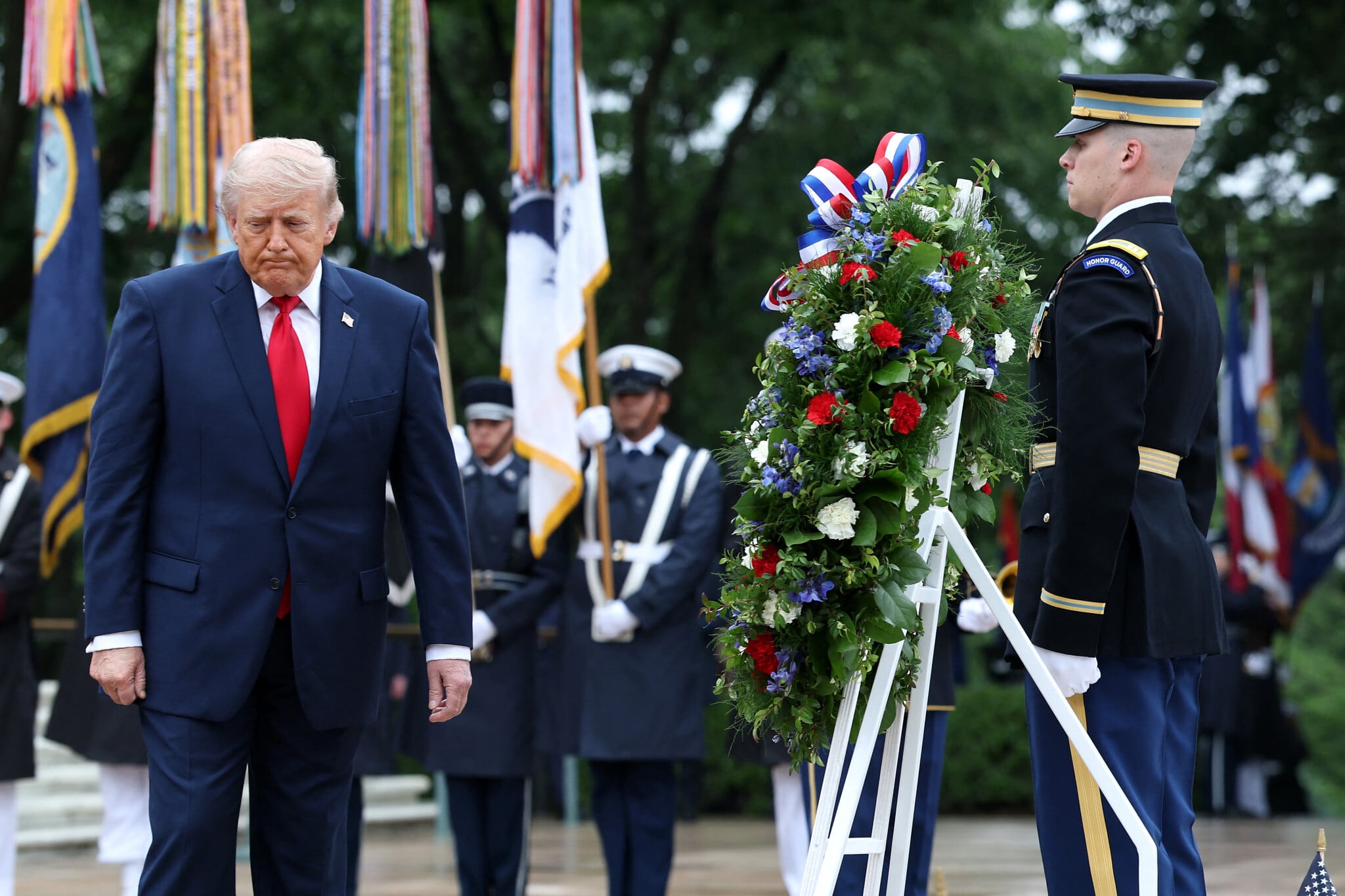
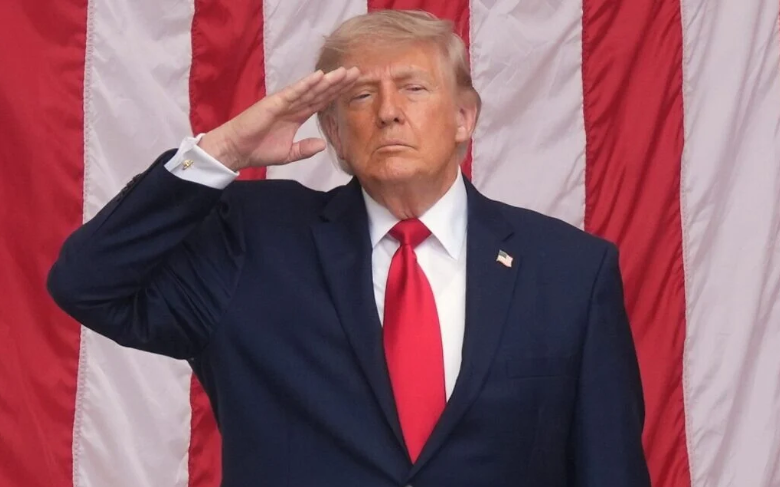
Tomb of the Unknown Soldier at Arlington National Cemetery on May 25, 2026 in Arlington,
Virginia. Memorial Day honors those who died while serving in the US Armed Forces.
Addressing a Memorial Day event at Arlington National Cemetery on Monday, the president noted that Americans lost their lives in part “to ensure that the world’s No. 1 state sponsor of terror will never have a nuclear weapon. Oh, and they won’t,” he promised for the umpteenth time. “They will never have a nuclear weapon… I’m sure you know that.”
Terribly, we don’t know that. Quite the opposite. Removing military pressure and unfreezing tens of billions of funds, without first depriving the regime of its enriched uranium, and without so much as starting to negotiate an agreement that would block its path to the bomb, risks giving the Islamic Republic all the space it needs to go nuclear.
Since his Saturday announcement was met with derision by Iran and something akin to panic in Israel, Trump has taken to asserting that he is not in fact rushing to an agreement, that there will be a “Great Deal for all or, no Deal at all,” and that he does not “make bad deals.” Right now would be a very good time to prove that.
BY: The Times Union