- Container-ship tonnage rises 54.2% in first eight months, signaling renewed activity along the strategic waterway
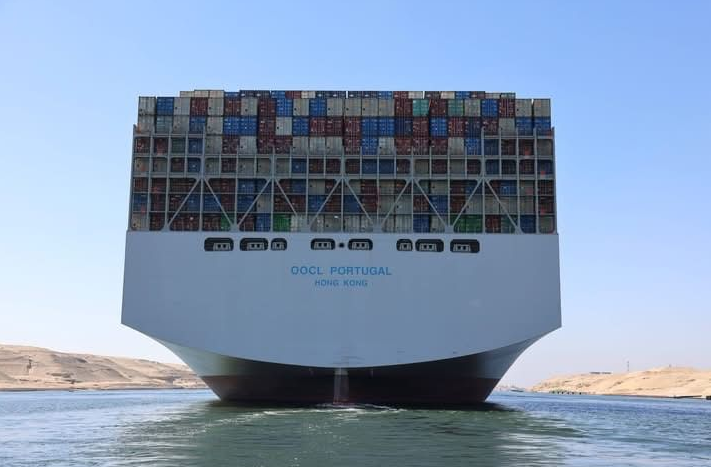
CAIRO: The COSCO-affiliated container vessel OOCL PORTUGAL crossed the Suez Canal for the first time on Wednesday, sailing from Belgium to China, as the Suez Canal Authority (SCA) reported a significant increase in container-ship tonnage passing through the vital maritime route.
SCA Chairman Osama Rabie said the voyage marked the first southbound transit by a COSCO SHIPPING Lines vessel since heightened tensions in the Red Sea and Bab el-Mandeb disrupted commercial shipping along the route.
The OOCL PORTUGAL was part of the canal’s northern convoy during Wednesday’s transit, according to the SCA.
Container-Ship Tonnage Surges 54.2%
The latest transit comes amid a notable recovery in container-ship traffic through the Suez Canal.
Rabie said the combined net tonnage of container ships passing through the canal reached 72.1 million tonnes between January and August 2026, compared with 46.7 million tonnes during the same period in 2025—an increase of 54.2 percent.
The figures refer to the total tonnage of vessels using the canal rather than the volume or number of containers transported.
The increase points to renewed activity on one of the world’s most important maritime trade corridors, which provides a key link between Asian and European markets.
OOCL PORTUGAL Among World’s Largest Container Ships
The OOCL PORTUGAL is approximately 400 metres long and 61.3 metres wide, with a gross tonnage of around 247,000 tonnes.
The giant container vessel has a carrying capacity of up to 24,000 twenty-foot equivalent units (TEUs), placing it among the largest container ships operating on international trade routes.
Its passage through the Suez Canal highlights the continuing importance of the waterway to global container shipping and international supply chains.
Strategic Maritime Route
The Suez Canal remains a critical artery for global commerce, providing the shortest maritime connection between the Mediterranean and the Red Sea and significantly reducing sailing distances between Europe and Asia.
The return of major container operators to the route is being closely watched by the global shipping industry as carriers assess security conditions and the reliability of the Red Sea–Suez corridor.
The latest transit, together with the sharp rise in container-ship tonnage recorded by the SCA, marks a notable development in the canal’s ongoing recovery from the disruption that affected international shipping in the region.
BY: The Times Union