- Rabat and Tel Aviv agree to exchange ambassadors and deepen economic, security and technology cooperation
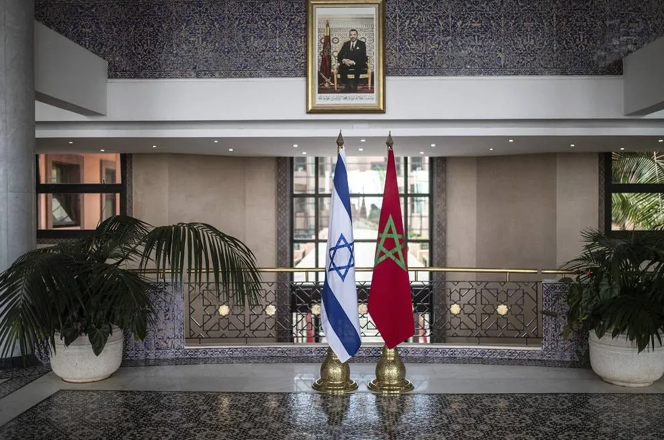
NEW YORK: Morocco and Israel have agreed to upgrade their diplomatic missions to full embassy status and work toward restoring direct commercial air services between Rabat and Tel Aviv before the end of 2026, marking a further step in the development of bilateral relations under the Abraham Accords.
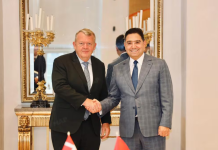
The commitments were announced following a high-level meeting in New York between US Ambassador to the United Nations Mike Waltz, Moroccan Foreign Minister Nasser Bourita and Israeli Foreign Minister Gideon Sa’ar.
The discussions were held within the framework of the Morocco-US-Israel Joint Declaration signed on December 22, 2020, following Morocco’s decision to establish diplomatic relations with Israel as part of the US-backed Abraham Accords.
Embassies and Ambassadors to Be Exchanged
In a joint statement, the three countries confirmed their agreement to elevate Morocco-Israel diplomatic missions to full embassies and to exchange ambassadors.
The governments also pledged to take the necessary steps to restore direct flights between Morocco and Israel before the end of the year, including services operated by Moroccan and Israeli airlines.
The planned restoration of direct air links is expected to facilitate tourism, business travel and people-to-people exchanges while strengthening commercial and economic ties.
Investment and Tax Agreements on the Agenda
Morocco and Israel also intend to finalize agreements on investment protection and the avoidance of double taxation by the end of 2026.
The agreements are aimed at creating a more predictable framework for investors and supporting the expansion of bilateral economic cooperation.
The three governments further agreed to pursue enhanced collaboration in technology, security and innovation, while advancing plans for high-level visits in the coming months.
Washington Reaffirms Position on Western Sahara
The United States and Israel reiterated their recognition of Moroccan sovereignty over Western Sahara and expressed support for Morocco’s autonomy initiative as the basis for resolving the decades-old territorial dispute.
The joint statement described the autonomy proposal as “the only basis for a just and lasting solution,” while arguing that alternative approaches would prolong the existing situation.
Washington and Rabat have continued to attach strategic importance to the Western Sahara issue, with US recognition of Moroccan sovereignty forming a central element of the 2020 Morocco-US-Israel agreement.
The three countries said a resolution of the dispute could contribute to greater regional stability, economic development and integration across Africa.
Trump Credited for Advancing Rapprochement
The governments credited US President Donald Trump with playing an important role in facilitating the rapprochement between Morocco and Israel.
Morocco and Israel jointly described Trump as “a visionary leader uniquely capable of bringing peace where no one else thought it was possible.”
The statement also emphasized the longstanding historical links between the Moroccan monarchy and Moroccan Jewish communities in Morocco, Israel and the United States, describing these ties as an important foundation for continued engagement.
Abraham Accords Enter New Phase
The New York meeting came one day after the sixth anniversary of the signing of the original Abraham Accords on September 15, 2020, when the United Arab Emirates and Bahrain agreed to normalize relations with Israel.
Morocco joined the normalization process in December 2020 through a US-brokered arrangement that established diplomatic relations with Israel while Washington recognized Moroccan sovereignty over Western Sahara.
The latest commitments indicate continued efforts to expand the relationship beyond diplomatic normalization toward broader cooperation in aviation, investment, technology, security, innovation and people-to-people exchanges.
BY: The Times Union