- Netanyahu said the war was meant to halt the Iranian threat and suggested it brought the US and Israel closer than ever. Now Trump is freezing the PM out of talks that may leave that threat intact
When Prime Minister Benjamin Netanyahu made the case for fighting a second war with Iran in eight months, he put forward two arguments.
The first was that, for Israel’s survival, the threat posed by the regime in Tehran needed to be stopped.
“The goal of the operation is to put an end to the threat from the Ayatollah regime in Iran,” he said in a video message in February, back-to-back with one delivered by US President Donald Trump.
“If we do not act,” Netanyahu said, “we will face a nuclear Iran, an Iran with tens of thousands of ballistic missiles, an Iran that seeks to destroy us and would be immune to our countermeasures.”
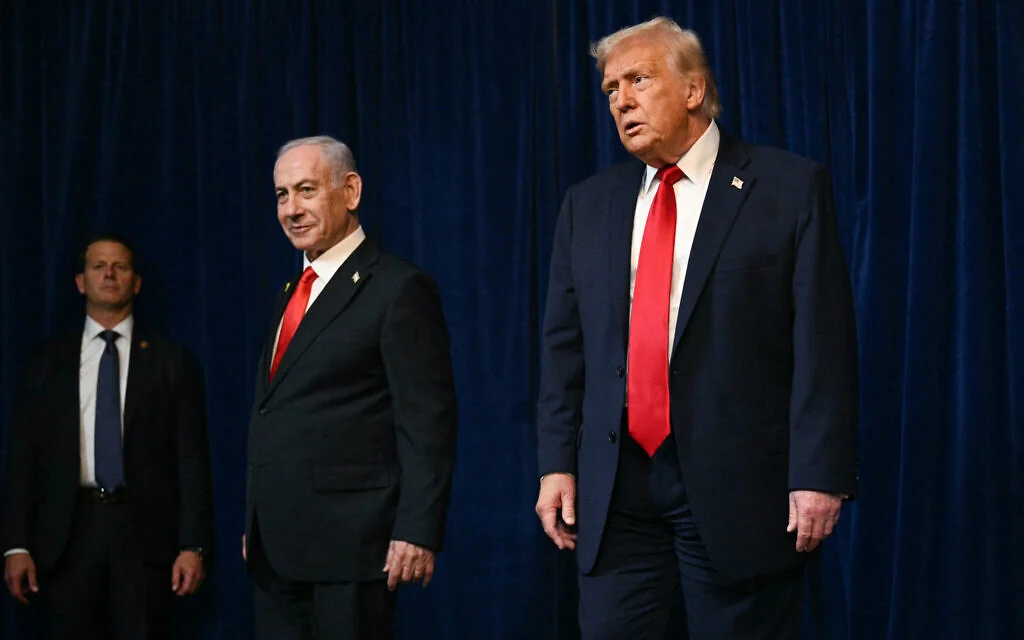
The second argument, only slightly more implicit, was that this war represented an offer Israel couldn’t pass up: a chance to fight its chief adversary shoulder-to-shoulder with the most powerful army in the history of the world. By prosecuting this war, the US and Israel, Netanyahu suggested, were closer than ever.
“We are doing this in full coordination with our friends in the US, under the courageous leadership of Trump,” he said. “As a people that cherishes life, we have no choice but to go to battle. But this time, we do so with the combined mighty power of the State of Israel and the United States of America.”
Near the beginning of the speech, he assured his country: “This operation will continue as long as necessary.”
Three months later, it has become all but conventional wisdom in Israel that the first set of goals for the war — toppling the regime and eliminating its threat — has not been met. The Iranian regime still exists. It still possesses much of its ballistic missile arsenal and its stockpile of enriched uranium. And it also controls the Strait of Hormuz.
Now, it appears that Netanyahu’s second reason for the war — building an unprecedentedly strong US-Israel relationship — is also crumbling. Netanyahu has claimed that he and Trump are partners, but he’s finishing the war on the sidelines. And he’s not the only one being shunned: In addition to emerging from the Iran war in a strategically precarious position, Israel is historically unpopular among the citizens of its greatest ally.
The US and Israel did, indeed, begin this war together. But they are ending it separately or, more accurately, Trump is ending it himself, with Netanyahu watching.
.
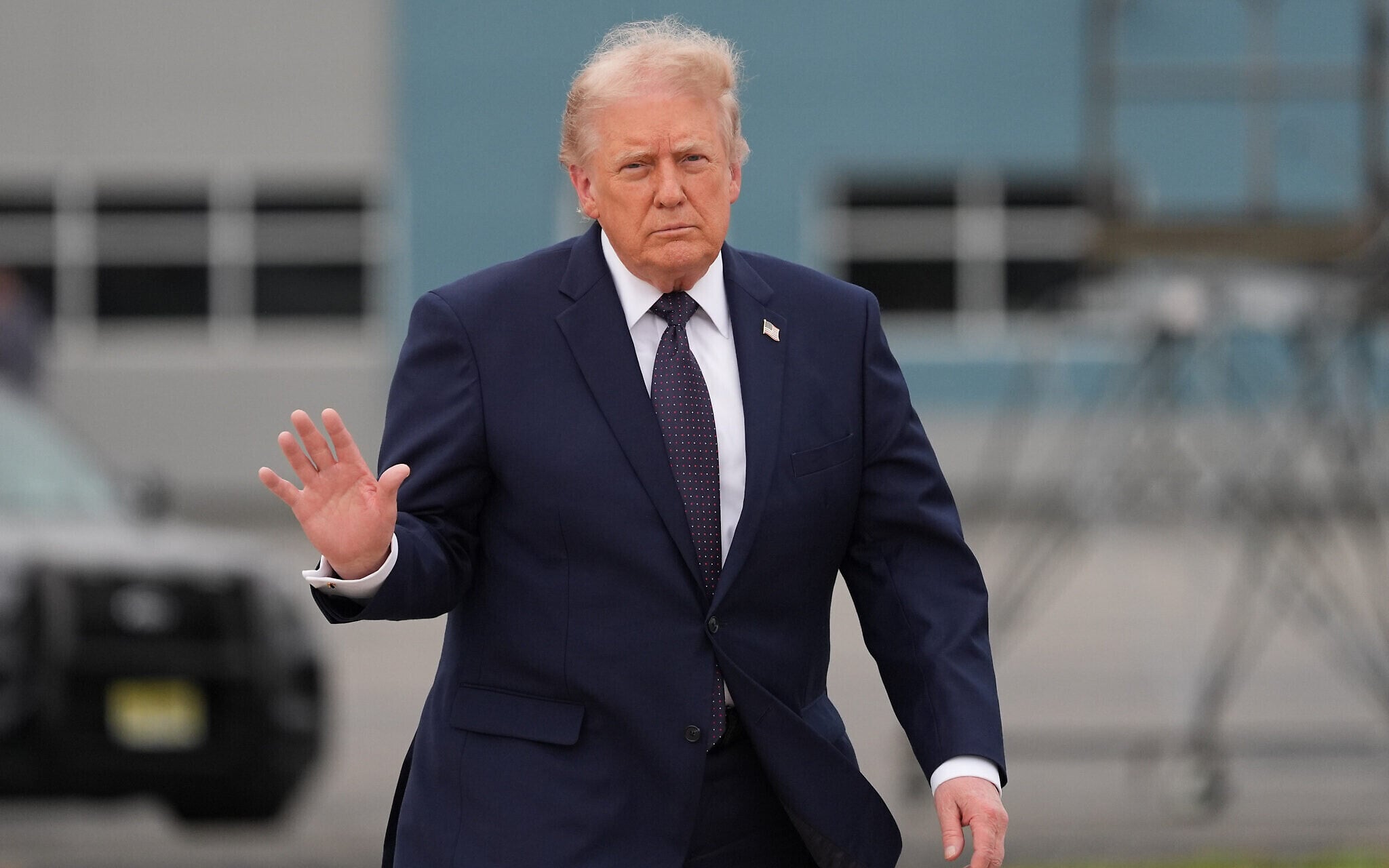
Airport in Morristown, New Jersey, on May 22, 2026.
Trump, always true to character, has made this explicit, telling the press last week that the leader of Israel will “do whatever I want him to do.”
Further proof of this dynamic came on Saturday, when Trump, in the throes of fateful negotiations with Tehran, held a summit-style call with a group of Middle East leaders to brief them on the talks. Netanyahu wasn’t included.
Netanyahu and Trump did speak later that night, after it was all but clear that Washington and Tehran were closing in on a memorandum of understanding, based on talks that pointedly excluded Israel.
Trump reportedly urged the Arab and Muslim nations on the call to normalize ties with Israel. And Netanyahu, in a post on X on Sunday, insisted that he and Trump “agreed that any final agreement with Iran must eliminate the nuclear danger.” He added: “That means dismantling Iran’s nuclear enrichment sites and removing its enriched nuclear material from its territory.”
Trump and Netanyahu may have agreed to all of those things. But Trump frequently contradicts himself in public, and has a famous relish for dealmaking, a craft that generally entails changing positions and making concessions. He said as much in a Truth Social post on Sunday, in which he wrote that any deal he reached with Iran would be “good and proper” but that “nobody has seen it, or knows what it is. It isn’t even fully negotiated yet.”
In other words, a final agreement with Iran may well lead to the dismantling of its nuclear program, or perhaps even to relations between Jerusalem and Riyadh. But Israel has no guarantee of that, and Netanyahu won’t be at the table where the deal is decided.
This isn’t just about Netanyahu, who, after all, may or may not be prime minister a year from now. He’s far from the only Israeli premier to feud with a US president, even when the alliance is going well.
The issue for Israel’s leaders across the political spectrum is that, at least for the near future, Trump might be the friendliest American leader they can hope for. Last week, a fresh batch of polling data told what is now becoming an old story: Following the wars in Gaza, Lebanon and Iran, Americans are souring on Israel.
The New York Times/Siena survey found that most Americans disapproved of the way Trump was handling the Iran war and the Israeli-Palestinian conflict, and opposed American military and economic support for Israel. In each case, disapproval was overwhelming among Democrats, but a quarter or so of Republicans also opposed Trump’s policies on those fronts. Only 56 percent of Republicans said they want to see their next candidate for president follow Trump’s lead on Israel.

Another way to read that data, of course, is that most Republicans — if not most Americans — still support Israel. So if Republicans somehow manage to retain control of the US government after the November midterm elections, the status quo could continue.
But that status quo is not the one of the shoulder-to-shoulder US-Israeli partnership described in Netanyahu’s speech. Rather, it’s one in which the US president is freezing Israel out of talks with Iran, and in which he publicly boasts about controlling Israel’s prime minister. The status quo is one in which US voters’ support for Israel is plummeting at the very moment the US negotiates a deal that could determine Israel’s standing in the Middle East for years.
Trump has often made clear his desire to be seen as a peacemaker, and if he succeeds in ending a war he started, he may again assert his claim to that mantle. But while Israel began the war with the US, its conclusion will be primarily decided by America. The same bellicose, eliminationist threats to Israel will probably still be there, all while American support for fighting them slips away.
BY: Ben Sales